SIR 2025: Over 3.01 lakh electors file forms in Dadra & Nagar Haveli, Daman & Diu
Synopsis
More than 3.01 lakh of 4.28 lakh registered electors in the Union Territory of Dadra and Nagar Haveli and Daman and Diu submitted verification forms under the ECI's Special Intensive Revision — but nearly 96,200 remain untraceable. With the final roll due on 11 September, the next 30 days of claims and objections will determine how many eligible voters make the cut.
Key Takeaways
The Election Commission of India published the draft electoral roll for Dadra and Nagar Haveli and Daman and Diu on 10 July 2025 under the Special Intensive Revision (SIR).
3,01,142 electors — 70.35% of the 4,28,036 on the rolls — submitted Enumeration Forms by the 3 July deadline.
96,199 electors (22.47%) were untraceable or absent; 7,267 were deceased and 19,771 had permanently shifted.
A claims and objections window is open from 10 July to 9 August 2025 ; missing electors can apply via Form 6 .
The final electoral roll is due on 11 September 2025 ; 614 Booth Level Agents from six parties participated in the enumeration.
Citizens turning 18 on or before 1 July 2026 are being encouraged to register as first-time voters through Form 6.
The Election Commission of India (ECI) on 10 July 2025 published the draft electoral roll for the Union Territory of Dadra and Nagar Haveli and Daman and Diu after completing the enumeration phase of the Special Intensive Revision (SIR). Of the 4,28,036 electors on the rolls as of 4 June, a total of 3,01,142 electors — or 70.35% — submitted their Enumeration Forms by the 3 July deadline. A month-long claims and objections window is now open until 9 August 2025.
Enumeration Outcomes and Unresolved Entries
The remaining 29.65% of registered electors were categorised across several groups: 7,267 deceased electors (1.70%), 19,771 permanently shifted electors (4.62%), 96,199 untraceable or absent electors (22.47%), 2,551 electors enrolled at multiple locations (0.60%), and 1,106 others (0.26%).
According to officials, Booth Level Officers (BLOs) were unable to collect Enumeration Forms from some electors because they had registered in another state or Union Territory, were not found at their recorded address, missed the submission deadline, or were unwilling to register for other reasons. Electors found registered at multiple locations will have their names retained at only one place.
Ground-Level Machinery Deployed
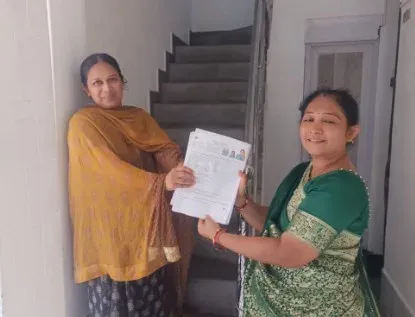
The enumeration exercise covered all three districts of the Union Territory and involved two Electoral Registration Officers (EROs), seven Assistant Electoral Registration Officers (AEROs), BLO Supervisors, BLOs, and Assistant BLOs deployed across 464 polling stations. Representatives of four recognised political parties and two registered unrecognised political parties participated through 614 Booth Level Agents (BLAs), who were permitted to submit up to 50 Enumeration Forms per day.
BLOs conducted house-to-house visits to distribute forms and made at least three follow-up visits to collect them. Awareness campaigns, help desks, enrolment camps, social media outreach, district media engagement, and public information banners were also deployed across the Union Territory.
How Electors Can Still Get Included
The ECI has clarified that no name can be deleted from the draft roll without prior notice and a reasoned order from an ERO or AERO. Genuine electors whose names are missing may submit Form 6, along with the prescribed declaration and supporting documents, during the claims and objections period ending 9 August 2025. Applications for correction, deletion, transfer of residence, and overseas voter registration can be filed through BLOs or online.
Young citizens who have attained or will attain 18 years of age on or before 1 July 2026 are being actively encouraged to register through Form 6. Electors aggrieved by any decision may appeal to the District Magistrate and subsequently to the Chief Electoral Officer under Section 24 of the Representation of the People Act, 1950.
Key Dates in the Revision Schedule
The draft electoral roll was released on 10 July 2025. Claims and objections will be accepted until 9 August, scrutiny and disposal of claims will continue until 7 September, and the final electoral roll is scheduled for publication on 11 September 2025. The draft roll is accessible at the offices of the Chief Electoral Officer, District Election Officers and EROs, through local BLOs, on the Chief Electoral Officer's website, the ECINET mobile application, and the ECI's voter services portal.
The Chief Electoral Officer reiterated: 'The Commission reiterates its firm commitment to a transparent, participative and inclusive revision process, ensuring that no eligible elector is left out and no ineligible name remains in the Electoral Rolls.'
Point of View
200 electors simply could not be traced at their registered addresses. This is not a data anomaly; it reflects a structural problem of electoral rolls lagging behind internal migration patterns. The SIR process provides a claims window, but citizens who are mobile, seasonal workers, or registered in multiple states are precisely the ones least likely to navigate bureaucratic appeal procedures. The ECI's commitment to inclusion is stated; the harder question is whether the process design reaches those it most needs to.
NationPress
9 Oct 2026
Frequently Asked Questions
What is the Special Intensive Revision (SIR) being conducted in Dadra and Nagar Haveli and Daman and Diu?
The Special Intensive Revision is an Election Commission of India exercise to update electoral rolls by verifying existing entries and adding eligible new voters. It is part of the ECI's nationwide Phase-III SIR programme, covering all three districts of the Union Territory across 464 polling stations.
How many electors submitted Enumeration Forms in the UT?
Out of 4,28,036 registered electors as of 4 June 2025, a total of 3,01,142 — or 70.35% — submitted their Enumeration Forms by the 3 July deadline. The remaining entries were categorised as deceased, permanently shifted, untraceable, or enrolled at multiple locations.
What can electors do if their name is missing from the draft electoral roll?
Electors whose names do not appear in the draft roll can submit Form 6, along with a prescribed declaration and supporting documents, during the claims and objections period running from 10 July to 9 August 2025. Forms can be filed through local BLOs or online via the ECI's voter services portal or the ECINET mobile app.
When will the final electoral roll for the Union Territory be published?
The final electoral roll is scheduled for publication on 11 September 2025. Before that, claims and objections will be accepted until 9 August, and scrutiny and disposal of claims will continue until 7 September 2025.
What safeguards exist to prevent wrongful deletion of names from the electoral roll?
Under SIR guidelines, no name can be removed from the draft roll without prior notice and a reasoned written order from an Electoral Registration Officer or Assistant Electoral Registration Officer. Electors who disagree with any decision may appeal to the District Magistrate and then to the Chief Electoral Officer under Section 24 of the Representation of the People Act, 1950.