Why Did 34 Maoist Cadres Surrender in Bijapur?
Synopsis
In a bold move towards peace, 34 Maoist cadres, including women, surrendered in Bijapur, carrying a hefty bounty. They chose a life away from violence, seeking rehabilitation and reintegration into society. Discover how this event reflects the changing dynamics of the region and the government's efforts to promote peace.
Key Takeaways
34 Maoist cadres surrendered in Bijapur district.
Collective bounty of Rs 84 lakh among them.
Each cadre received Rs 50,000 as an immediate incentive.
Government’s rehabilitation policy supports their reintegration.
This marks a significant shift in the fight against Naxalism.
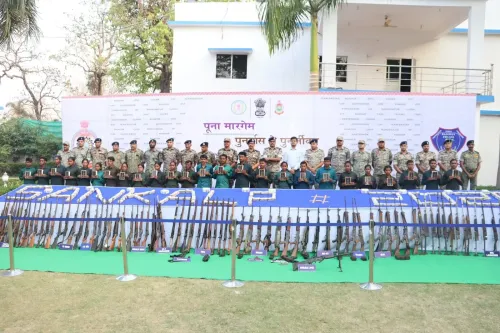
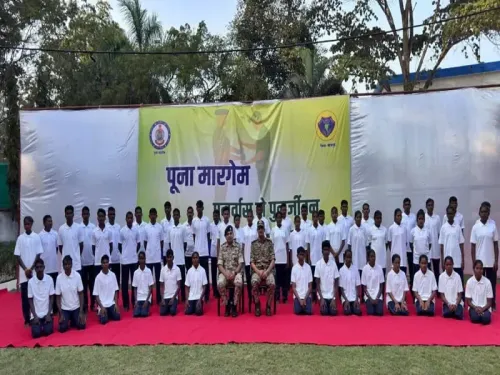
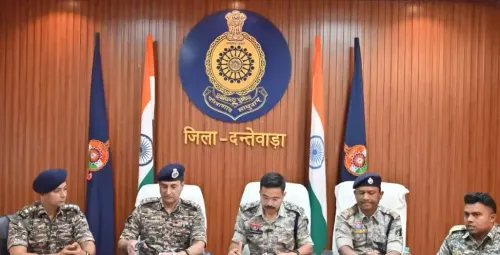
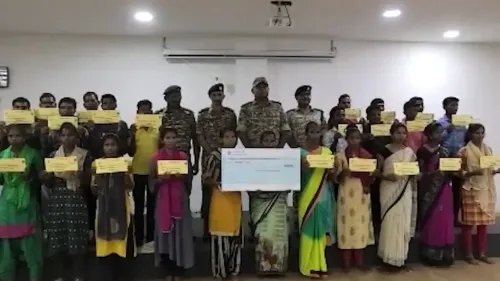
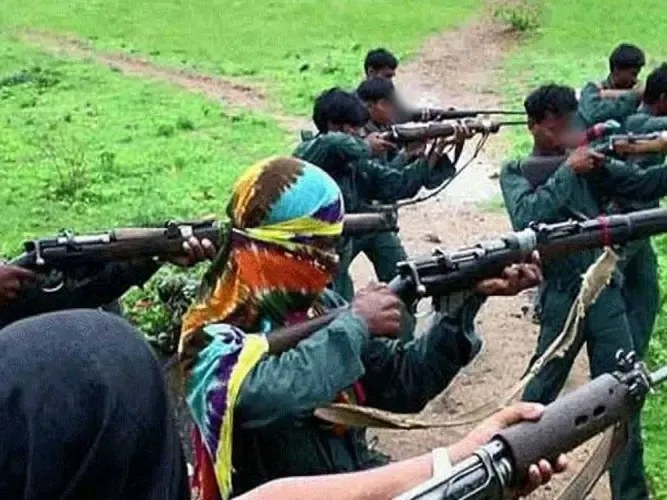
Raipur/Bijapur, Dec 16 (NationPress) In a remarkable achievement for anti-Naxal initiatives, 34 Maoist cadres, comprising 7 women, surrendered to senior police and CRPF officials in Bijapur district on Tuesday, collectively carrying a bounty of Rs 84 lakh.
The surrendered individuals, mainly affiliated with the South Sub-Zonal Bureau, also include members associated with the Dandakaranya Special Zonal Committee (DKSZC), Telangana State Committee, and the Andhra-Odisha Border (AOB) Division.
Prominent figures among them include a Divisional Committee Member (DVCM) from the Keralapal Area Committee who had a bounty of Rs 8 lakh, various members of the People's Liberation Guerrilla Army (PLGA), Area Committee Members (ACMs), platoon leaders, militia commanders, and officials from frontal organizations such as DAKMS and CNM.
Having turned away from Maoist ideology, they pledged their loyalty to the Indian Constitution, committing to a peaceful existence. Each received an immediate incentive of Rs 50,000 under the state’s rehabilitation policy, as stated by police officials.
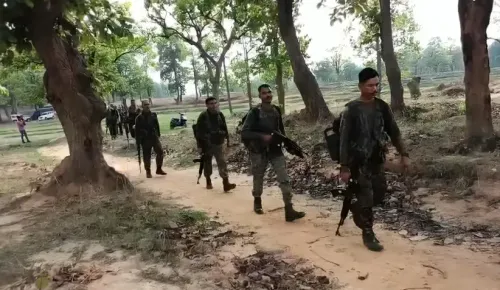
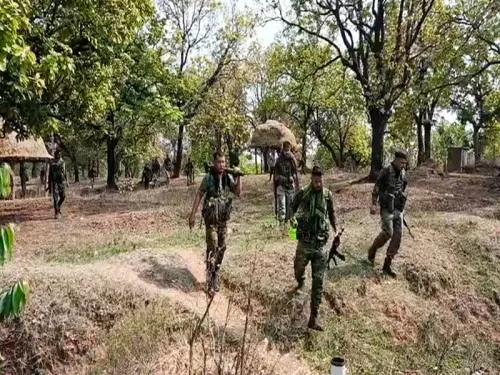
This surrender was facilitated through collaborative efforts by the District Reserve Guard (DRG), Bastar Fighters, Special Task Force (STF), CoBRA, and CRPF battalions, driven by the Chhattisgarh government's 'Puna Margam: Rehabilitation to Rejuvenation' campaign—a reintegration initiative—and the 'Niyad Nellanar' scheme aimed at delivering development to remote areas.
Bijapur Superintendent of Police Jitendra Kumar Yadav urged remaining Maoists to “abandon violence without fear,” emphasizing that government policies guarantee a secure and respectable future.
He underscored the aspirations of families for normal lives.
Since January 2024, Bijapur has recorded over 824 surrenders (local claims suggest alignment with reports of 790+ by late 2025), alongside numerous arrests and encounters, indicating ramped-up operations.
Across the state, thousands have surrendered in 2025, significantly undermining Maoist structures in Bastar.
Officials attribute this success to proactive security measures, trust-building, and welfare programs, transforming fear into dialogue and development in South Bastar.
The rehabilitation process, including legal formalities and support for reintegration, is currently in progress. This marks another significant step towards achieving lasting peace in Naxal-affected regions of Chhattisgarh.
Point of View
It is crucial to recognize the significance of this surrender in the broader context of national security and social rehabilitation. The transformation of former Maoist cadres into peaceful citizens reflects the effectiveness of government policies in addressing the root causes of Naxalism. This development signifies hope for lasting peace in regions plagued by violence, aligning with our commitment to a secure and prosperous nation.
NationPress
30 Sept 2026
Frequently Asked Questions
What prompted the Maoist cadres to surrender?
The Maoist cadres surrendered due to disillusionment with Maoist ideology and the promise of rehabilitation offered by the government.
What incentives do the surrendered Maoists receive?
Each surrendered cadre receives an immediate incentive of Rs 50,000 under the state's rehabilitation policy.
How many surrenders have occurred in Bijapur since January 2024?
Since January 2024, there have been over 824 surrenders reported in Bijapur.
What is the significance of this surrender in the context of Naxalism?
This surrender represents a shift towards a peaceful resolution to conflict, undermining Maoist structures and promoting reintegration into society.
What measures are being taken for their rehabilitation?
The rehabilitation process includes legal formalities and support for reintegration into society, aimed at ensuring a smooth transition for former Maoists.