Delhi Police deploys 3,500 cops, 200 cameras for INDIA bloc rally at Ramlila Maidan on Nov 1
Synopsis
With over a million people projected to attend, Delhi Police has built one of its most elaborate event-security grids in recent memory — 3,500 personnel, 200-plus cameras, 14 zones — for an INDIA bloc rally that doubles as a high-stakes political showdown over the SIR exercise and a direct demand for the Chief Election Commissioner's head.
Key Takeaways
Delhi Police has deployed around 3,500 personnel and more than 200 CCTV cameras at Ramlila Maidan for the 1 November rally.
The venue is divided into 14 security zones , each headed by an ACP-rank officer ; 10 companies of reserve forces are also on standby.
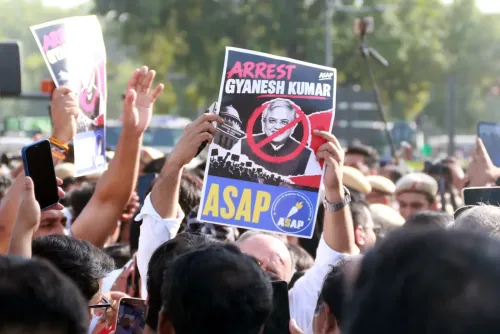
The INDIA bloc rally is a protest over the Special Intensive Revision (SIR) exercise, with the Opposition demanding the resignation of Chief Election Commissioner Gyanesh Kumar .
Delhi Traffic Police will enforce restrictions and diversions between 10 am and 5 pm at key central Delhi intersections on 1 November .
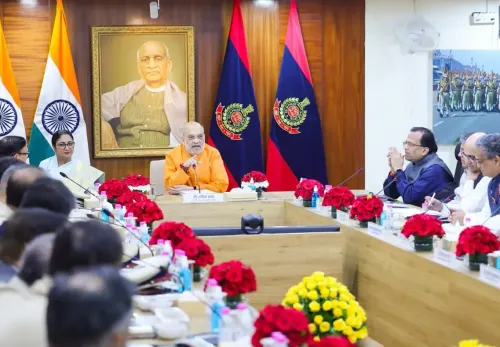
Union Home Minister Amit Shah chaired a law-and-order review at Delhi Police headquarters on 24 October , attended by Delhi CM Rekha Gupta .
The Chamber of Trade and Industry (CTI) has urged postponement, citing Dhanteras and Diwali season business disruption across 20 markets near the venue.
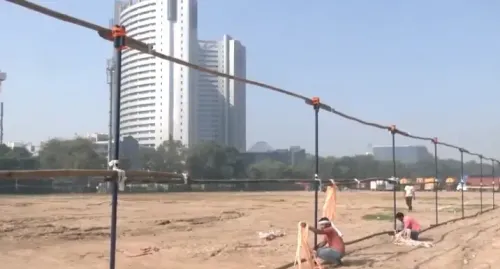
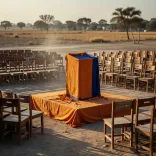
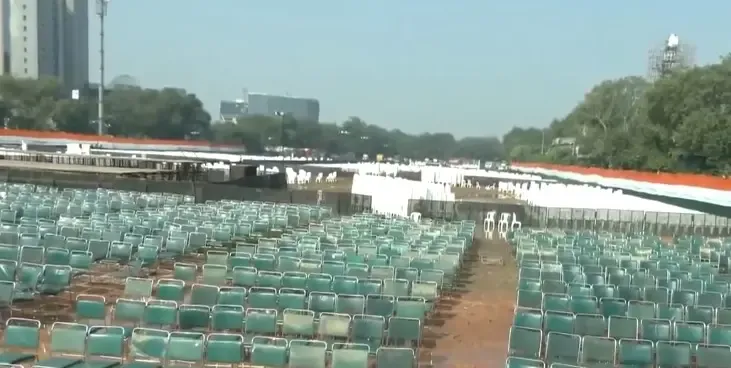
Delhi Police has rolled out a sweeping security and surveillance framework at Ramlila Maidan ahead of the Congress-led INDIA bloc's mega rally on 1 November 2026, deploying around 3,500 police personnel, installing more than 200 CCTV cameras, and carving the venue into 14 distinct security zones to manage what the Opposition has projected could be a crowd exceeding one million people.
The Security Architecture
Each of the 14 zones will be supervised by an officer of the rank of Assistant Commissioner of Police (ACP), while two zones will have officers of the rank of Additional Deputy Commissioner of Police (ADCP) in direct command. In addition to the regular deployment, 10 companies of reserve forces are expected to be stationed at the venue.
The surveillance grid goes beyond fixed cameras — police personnel will carry body-worn cameras, and vehicles fitted with surveillance equipment will patrol the perimeter. Control rooms are being established to monitor activities both inside the venue and across surrounding areas in real time.
Procession Routes and Movement Plan
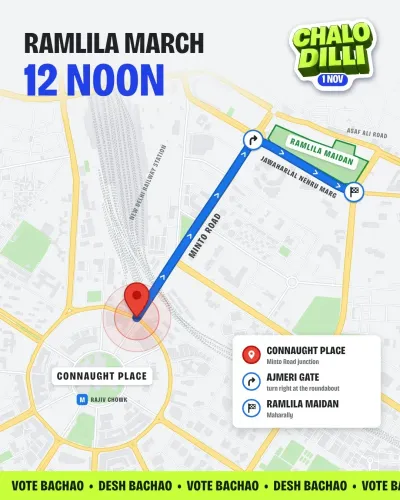
INDIA bloc leaders are expected to travel in open buses from Congress President Mallikarjun Kharge's residence to Minto Road before proceeding towards Ramlila Maidan. Members of Parliament will travel separately in open buses from the Constitution Club to Minto Bridge, from where they are scheduled to march on foot to the rally venue. The movement of thousands of buses and private vehicles is expected to exert significant pressure on traffic in central Delhi.
Traffic Restrictions and Diversions
The Delhi Traffic Police has announced restrictions and diversions across several parts of the city between 10 am and 5 pm on 1 November. Depending on ground conditions, diversions may be enforced at key intersections including Netaji Subhash Marg T-point, Rajghat, Delhi Gate, ITO A-point, Ajmeri Gate, Ranjeet Singh Flyover, Jhandewalan roundabout, Turkman Gate, and Mirdard Chowk. Delhi Police had earlier issued a no-objection certificate (NOC) for the event on Friday.
Political and Institutional Context
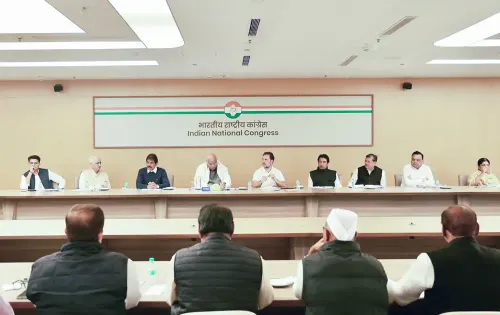
The rally is part of sustained Opposition protests in the national capital over the Special Intensive Revision (SIR) exercise, with the alliance demanding the resignation of Chief Election Commissioner Gyanesh Kumar. The security review follows a high-level meeting chaired by Union Home Minister Amit Shah at the Delhi Police headquarters on 24 October, which was attended by Delhi Chief Minister Rekha Gupta and senior police officers and ran for nearly four hours. The SIR-linked protests and the November 1 rally were among the major law-and-order topics discussed at that meeting.
Congress MP Mallu Ravi, who visited Ramlila Maidan alongside Telangana MPs to review preparations, said: 'All our Telangana MPs came here to see the arrangements for tomorrow's protest rally at Ramlila Maidan. Seeing this, we feel arrangements are being made on a large scale. People are also coming, much more and bigger than this Ramlila Maidan area.'
Notably, Congress leader and Leader of the Opposition in the Lok Sabha Rahul Gandhi indicated the alliance will proceed regardless, saying in a post on X that the protest could be stopped in '30 seconds' if Prime Minister Narendra Modi 'sacked' Chief Election Commissioner Gyanesh Kumar.
Trader Concerns and Business Impact
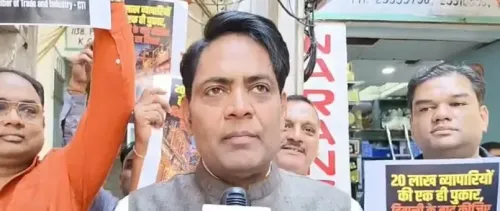
The rally has drawn pushback from the business community. The Chamber of Trade and Industry (CTI) has urged Rahul Gandhi to postpone the gathering until after 10 November, citing the proximity of Dhanteras and Diwali. CTI Chairman Brijesh Goyal warned that barricading and traffic restrictions could deter customers from accessing markets around Ramlila Maidan. The traders' body said it would launch a poster campaign across 20 markets in the area to press its case.
With crowd projections of over a million and a tightly wound political backdrop, all eyes will be on how effectively the security grid holds as the INDIA bloc seeks to translate street strength into electoral momentum.
Point of View
Even as they insist this is routine crowd management. What is rarely scrutinised is the asymmetry: a four-hour review chaired by the Home Minister a week before a single Opposition rally is an unusual level of federal attention for what is nominally a law-and-order matter. The SIR controversy at the centre of the protest also deserves closer examination — demands for a sitting Chief Election Commissioner's resignation are constitutionally rare, and the legitimacy questions around the SIR exercise have not been adequately addressed in official communication. The traders' anxiety adds a third dimension: in the festive economy, political street mobilisation and commercial activity are on a collision course, and neither side has offered a credible buffer.
NationPress
31 Oct 2026
Frequently Asked Questions
What is the INDIA bloc rally at Ramlila Maidan on 1 November about?
The rally is a large Opposition protest over the Special Intensive Revision (SIR) exercise, with the Congress-led INDIA bloc demanding the resignation of Chief Election Commissioner Gyanesh Kumar. It is one of the biggest political gatherings in Delhi in recent months, with the alliance projecting attendance of over one million people.
How many police personnel are deployed for the Ramlila Maidan rally?
Delhi Police has deployed around 3,500 personnel, supplemented by 10 companies of reserve forces. The venue has been divided into 14 security zones, each supervised by an ACP-rank officer, with two zones under ADCP-rank officers.
What traffic restrictions are in place in Delhi on 1 November 2026?
Delhi Traffic Police will enforce restrictions and diversions between 10 am and 5 pm on 1 November. Key intersections likely to see diversions include Rajghat, Delhi Gate, ITO A-point, Ajmeri Gate, Ranjeet Singh Flyover, Jhandewalan roundabout, Turkman Gate, and Mirdard Chowk.
Why did Union Home Minister Amit Shah hold a meeting on October 24 about the rally?
Home Minister Amit Shah chaired a nearly four-hour high-level meeting at Delhi Police headquarters on 24 October to review the overall law-and-order situation in the national capital. The discussions covered SIR-linked protests and the November 1 rally as major upcoming events requiring security assessment.
What is the SIR exercise and why are Opposition parties protesting against it?
The Special Intensive Revision (SIR) is an Election Commission exercise for voter roll revision. Opposition parties in the INDIA bloc have objected to the exercise and are demanding Chief Election Commissioner Gyanesh Kumar's resignation, alleging it could affect electoral rolls adversely. The November 1 rally is the latest and largest public expression of that demand.