Ahmedabad Rath Yatra 2025: 41 medical emergencies reported, fainting tops list
Synopsis
Forty-one people needed emergency medical care during Ahmedabad's 149th Jagannath Rath Yatra by mid-afternoon on 16 July, with fainting accounting for more than a third of all cases. With over 31,000 police and AI surveillance in place, the scale of preparation underscores just how large — and medically demanding — India's second-biggest Rath Yatra has become.
Key Takeaways
EMRI 108 responded to 41 medical emergencies at Ahmedabad's 149th Jagannath Rath Yatra by 5 pm on 16 July 2025 .
Fainting was the most common complaint, accounting for 15 of 41 cases .
Other cases included 4 falls , 4 breathing problems , 3 road accidents , and 2 convulsions , among others.
Key patients were transferred to Sardaben Hospital and LG Hospital in Ahmedabad.
More than 31,000 police personnel , drones, and AI-enabled surveillance were deployed for the event.
The procession, starting from Shree Jagannath Temple, Jamalpur , is India's second-largest such yatra after Puri .
Emergency medical teams attended to 41 incidents along the procession route of Ahmedabad's 149th Jagannath Rath Yatra by 5 pm on Thursday, 16 July, with fainting emerging as the single most common medical complaint of the day. The figures were reported by EMRI 108, the emergency response service coordinating medical cover for the annual event.
Breakdown of Medical Emergencies
Of the 41 cases attended to, 15 involved fainting — the highest for any single condition. The remaining cases included five requiring first aid, four falls, four breathing-related problems, three road traffic accidents, two cases each of abdominal pain and convulsions, and one case each of chest pain, dehydration, vomiting, and headache.
Emergency response teams stationed at strategic points along the route provided on-site treatment before transferring patients to nearby hospitals where required.
Key Incidents Along the Route
Among the cases, a 40-year-old individual fainted near the Saraspur police chowki. Responders administered positioning, reassurance, vital signs monitoring, and oral rehydration solution (ORS) before transferring the patient to Sardaben Hospital.
At Kalupur Bridge at 2.26 pm, a separate fainting case received on-site care — including positioning, reassurance, and vital signs monitoring — before the patient was taken to Sardaben Hospital. Near BBC Market in the Kalupur area, a fall victim received wound care and condition monitoring before being transferred to LG Hospital for further treatment.
Scale of the Event and Security Arrangements
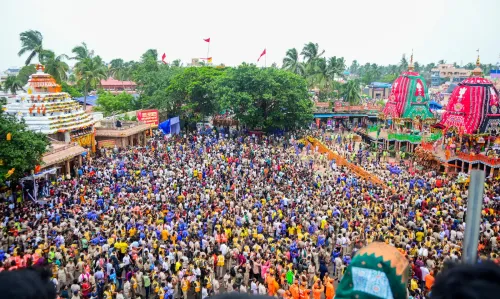
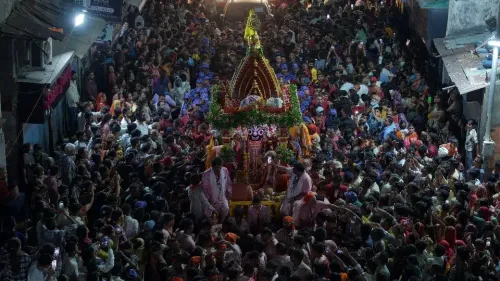
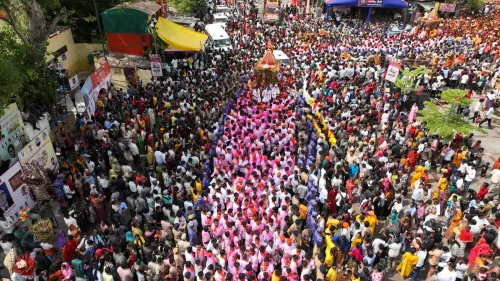
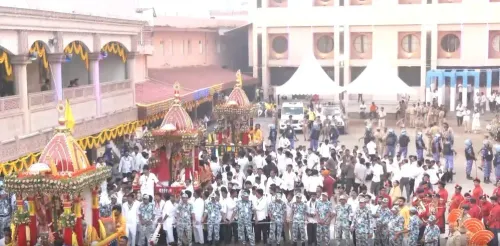
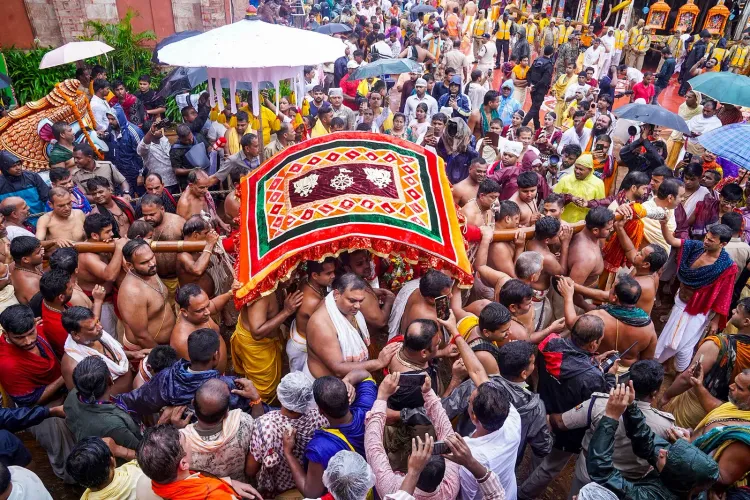
The 149th Jagannath Rath Yatra began from the historic Shree Jagannath Temple in the Jamalpur area earlier in the morning, proceeding along its traditional route through Ahmedabad. The procession is regarded as India's second-largest Jagannath Rath Yatra after Puri, drawing lakhs of devotees each year.
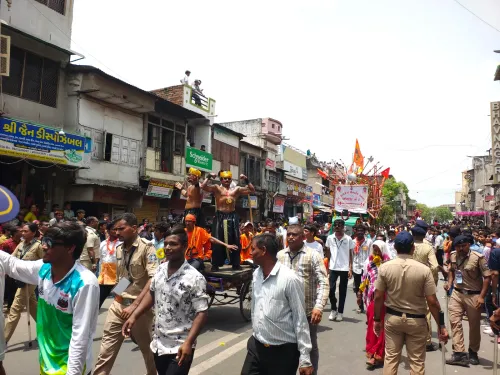
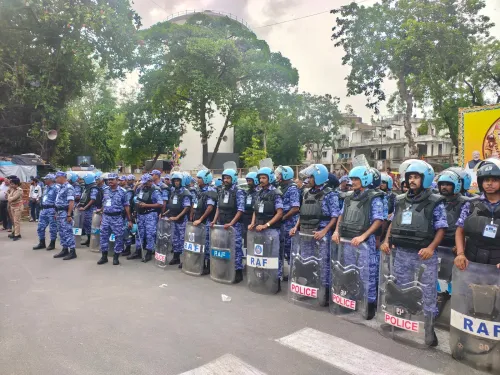
Authorities deployed more than 31,000 police personnel along with AI-enabled surveillance, drones, and CCTV monitoring to ensure the safe conduct of the event. EMRI 108 coordinated with police, civic authorities, and hospitals throughout the day.
Context and Coordination
Mass gatherings of this scale routinely generate heat- and crowd-related medical stress, particularly during summer months. Fainting and dehydration dominate emergency call logs at such events across India, making pre-positioned medical teams and ORS distribution critical. This year's medical response drew on lessons from prior editions, with ambulances placed at high-footfall nodes along the route. Authorities have not reported any fatalities as of the latest update.
Point of View
In fact, a testament to how well EMRI 108's pre-positioning worked, given that lakhs attended. What the data quietly reveals is that heat and crowd stress remain the dominant public-health risk at mass religious gatherings in India's summer calendar, and that fainting — often a precursor to more serious heat illness — deserves a dedicated ORS and shade infrastructure, not just reactive ambulance response. The real metric to watch in future editions is not the number of cases attended but the average response time and the proportion requiring hospital admission versus on-site discharge.
NationPress
15 Oct 2026
Frequently Asked Questions
How many medical emergencies were reported at the Ahmedabad Rath Yatra 2025?
EMRI 108 attended to 41 medical emergencies along the procession route of Ahmedabad's 149th Jagannath Rath Yatra by 5 pm on 16 July 2025. Fainting was the most common condition, accounting for 15 of the 41 cases.
What types of medical cases were reported at the Rath Yatra?
Cases included 15 fainting incidents, 5 requiring first aid, 4 falls, 4 breathing-related problems, 3 road traffic accidents, 2 cases each of abdominal pain and convulsions, and 1 case each of chest pain, dehydration, vomiting, and headache.
Which hospitals received patients from the Rath Yatra medical emergencies?
Patients were transferred primarily to Sardaben Hospital and LG Hospital in Ahmedabad, depending on the nature of the emergency. On-site treatment was provided first before hospital transfer where necessary.
How large is the Ahmedabad Jagannath Rath Yatra?
The Ahmedabad Jagannath Rath Yatra is considered India's second-largest after the Puri Rath Yatra in Odisha. The 149th edition began from the Shree Jagannath Temple in the Jamalpur area and attracted lakhs of devotees.
What security and medical arrangements were made for the 2025 Rath Yatra?
Authorities deployed more than 31,000 police personnel, AI-enabled surveillance systems, drones, and CCTV monitoring. EMRI 108 stationed ambulances and emergency response teams at strategic locations along the route and coordinated with police, civic bodies, and hospitals throughout the event.