Punjab DGP: 629 major drug traffickers held in 500 days of 'Yudh Nashian Virudh'

Synopsis
Five hundred days into Punjab's 'Yudh Nashian Virudh' campaign, the numbers are striking: 629 major traffickers arrested, ₹319 crore in assets seized, and an 89% NDPS conviction rate that the DGP claims is the highest in India. What sets this drive apart is the dual track — aggressive enforcement paired with rehabilitation immunity for over 10,000 individuals — and a community helpline that generated nearly 23,000 arrests from public tip-offs alone.
Key Takeaways
629 major drug traffickers arrested over 500 days of the 'Yudh Nashian Virudh' campaign, launched 1 March 2025 .
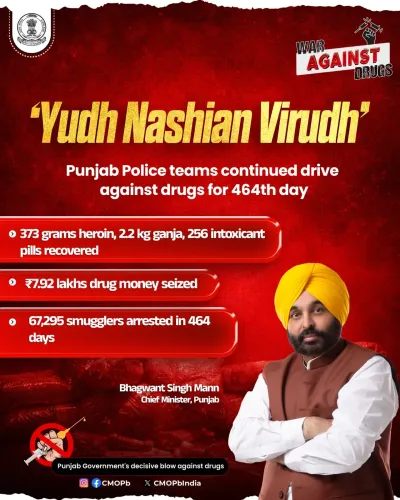
Total apprehensions exceed 68,850 , with 52,432 FIRs registered under the NDPS Act.
Properties worth ₹319 crore attached or confiscated from traffickers by the ANTF .
10,917 individuals granted immunity under Section 64-A of the NDPS Act to seek rehabilitation.
46,342 tip-offs received on the Safe Punjab helpline, leading to 22,960 arrests .
Punjab Police report an 89% conviction rate in NDPS cases, described as the highest in the country.
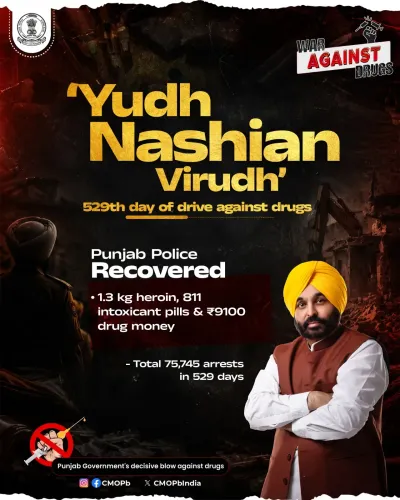
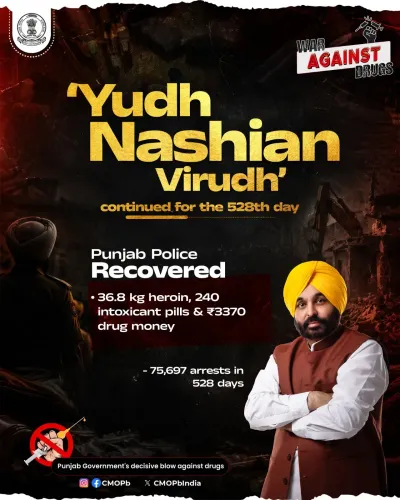
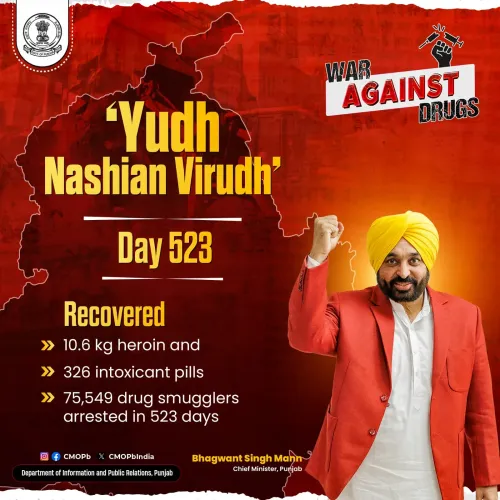
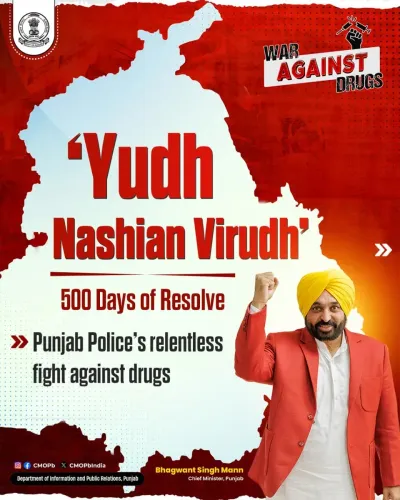
Punjab Director General of Police Gaurav Yadav on 19 July announced that 629 major drug traffickers had been arrested over the 500-day run of the state's flagship anti-narcotics campaign 'Yudh Nashian Virudh', alongside sweeping seizures and the dismantling of organised trafficking networks across the state. The campaign, launched on 1 March 2025, has registered more than 52,432 FIRs under the NDPS Act and apprehended over 68,850 traffickers in total.
Key Developments in 500 Days
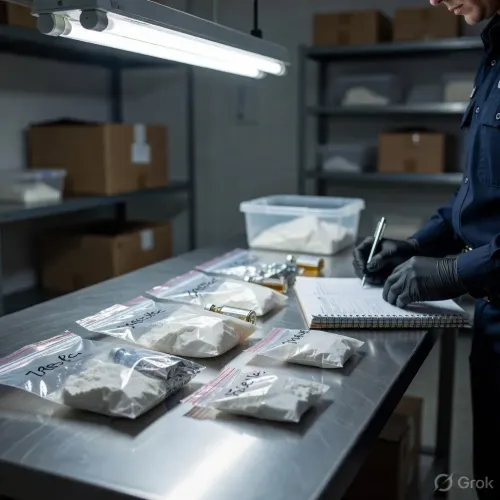
Of the 68,850 individuals apprehended, 629 were classified as major traffickers — each found in possession of more than two kg of heroin, with the combined haul valued at approximately ₹12 crore, according to DGP Yadav. The scale of enforcement marks one of Punjab's most sustained narcotics crackdowns in recent memory, spanning every district of the state.
Simultaneously, the campaign has struck at the financial infrastructure of drug cartels. Anti-Narcotics Task Force (ANTF) chief Nilabh Kishore said properties worth ₹319 crore belonging to traffickers were attached or confiscated during the period. Illegal structures built on government land using drug proceeds have also been demolished.
Rehabilitation Alongside Enforcement
The Punjab government has extended immunity from prosecution under Section 64-A of the NDPS Act to 10,917 individuals, enabling them to pursue treatment and rehabilitation in place of criminal proceedings. Officials described this as a deliberate balance between punitive action and public health — an approach that distinguishes this campaign from earlier enforcement-only drives.
Public Participation and Helpline Impact
A notable feature of the campaign has been community engagement through the Safe Punjab Anti-Drug Helpline (97791-00200). The helpline received 46,342 anonymous tip-offs, directly leading to the arrest of 22,960 traffickers, according to an official statement. Officials said the volume of calls reflects growing public confidence in the police and the effectiveness of community policing.
Punjab Police are also working in coordination with over 24,000 Village Defence Committees, comprising more than 1.25 lakh members, who report suspicious activity and support intelligence gathering at the village level. Awareness drives, sports events, youth programmes and public meetings are being organised in collaboration with educational institutions and civil society organisations to build community resilience.
Conviction Rate and What Comes Next
DGP Yadav said the force had achieved an 89 per cent conviction rate in NDPS cases — which he described as the highest in the country — attributing it to 'high-quality investigations, improved evidence collection and close coordination with prosecution agencies.' Analysts note that a high conviction rate is critical to deterrence, since arrests without successful prosecutions often allow traffickers to return to the trade. The state is expected to continue expanding both its enforcement and rehabilitation arms as the campaign moves beyond the 500-day mark.
Point of View
But the more telling metric is the one Punjab has not yet published: recidivism. High arrest and conviction numbers can mask a revolving-door problem if the supply chain simply recruits replacements. The campaign's dual-track model — enforcement plus Section 64-A rehabilitation — is structurally sounder than pure crackdowns, but 10,917 individuals diverted to treatment is a modest number relative to 68,850 arrests. The real test of 'Yudh Nashian Virudh' will come when Punjab publishes follow-up data on whether those rehabilitated stayed clean and whether drug availability in border districts has measurably declined.
NationPress
18 Oct 2026
Frequently Asked Questions
What is the 'Yudh Nashian Virudh' campaign?
'Yudh Nashian Virudh' is Punjab Police's ongoing anti-narcotics campaign, launched on 1 March 2025. Over its first 500 days, it has resulted in over 68,850 arrests, 52,432 FIRs under the NDPS Act, and the seizure of properties worth ₹319 crore linked to drug trafficking.
How many major drug traffickers were arrested under the campaign?
629 major traffickers were arrested — each found carrying more than two kg of heroin — with the combined seizure valued at approximately ₹12 crore, according to DGP Gaurav Yadav.
What is Punjab's NDPS conviction rate and why does it matter?
Punjab Police report an 89% conviction rate in NDPS cases, which DGP Yadav described as the highest in India. A high conviction rate strengthens deterrence by ensuring that arrests translate into actual punishment rather than acquittals on procedural grounds.
How has the public contributed to the anti-drug campaign?
The Safe Punjab Anti-Drug Helpline (97791-00200) received 46,342 anonymous tip-offs, leading directly to the arrest of 22,960 traffickers. Over 24,000 Village Defence Committees with more than 1.25 lakh members also support ground-level intelligence gathering.
What rehabilitation measures have been taken alongside enforcement?
The Punjab government has extended immunity from prosecution under Section 64-A of the NDPS Act to 10,917 individuals, allowing them to seek treatment and rehabilitation instead of facing criminal proceedings.