Punjab Police marks 464 days of Yudh Nashian Virudh drive
Synopsis
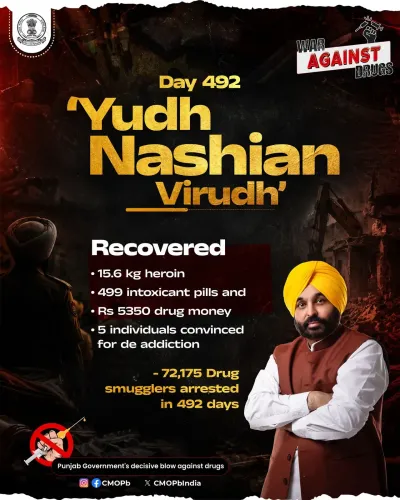
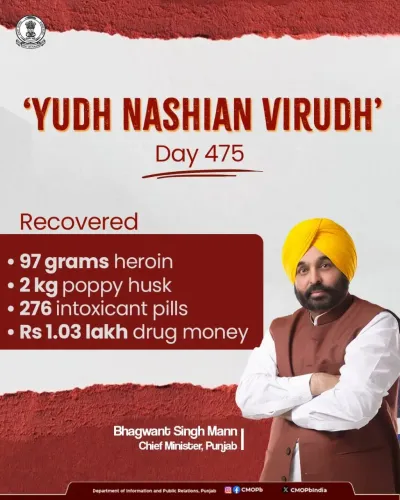
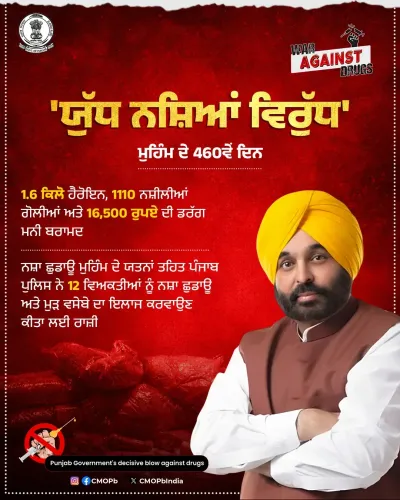
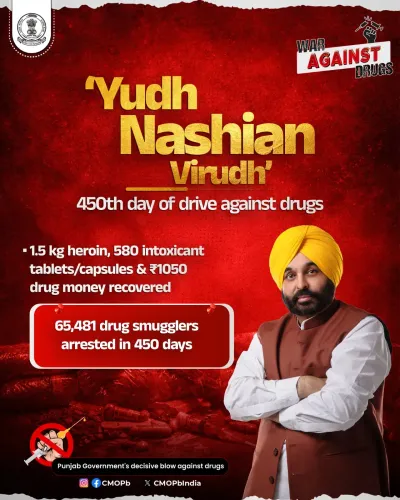
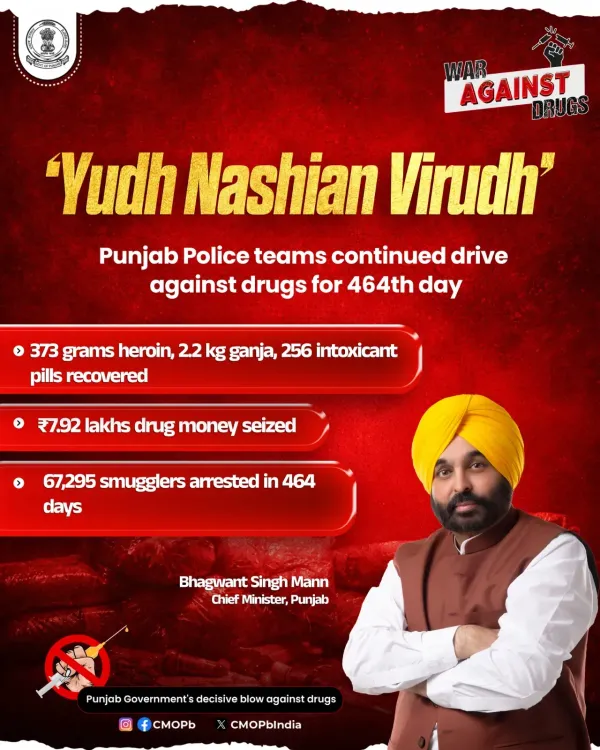
Punjab Police's Yudh Nashian Virudh anti-drug campaign reached its 464th day on June 9, 2026, with fresh seizures of heroin, ganja and intoxicant pills, cumulative arrests touching 67,295, and three more persons referred to de-addiction centres.
Key Takeaways
Day 464 of the Yudh Nashian Virudh campaign was reported by the Chief Minister's Office of Punjab on June 9, 2026 .
Police seized 373 grams of heroin , 2.2 kg of ganja , and 256 intoxicant pills on the latest drive day. ₹7.92 lakh in drug money was also recovered from suspects.
Cumulative arrests since the campaign began have reached 67,295 drug smugglers .
Three individuals were persuaded to voluntarily undergo de-addiction and rehabilitation as part of the drive's public-health component.
The campaign was launched by the AAP government in Punjab after it took office in 2022 , pairing daily enforcement with rehabilitation referrals.
The Chief Minister's Office of Punjab announced on Tuesday, June 9, 2026, that Punjab Police has completed 464 consecutive days of its statewide anti-narcotics campaign Yudh Nashian Virudh, reporting fresh seizures and pushing the cumulative arrest count to 67,295.
What the latest drive day recorded
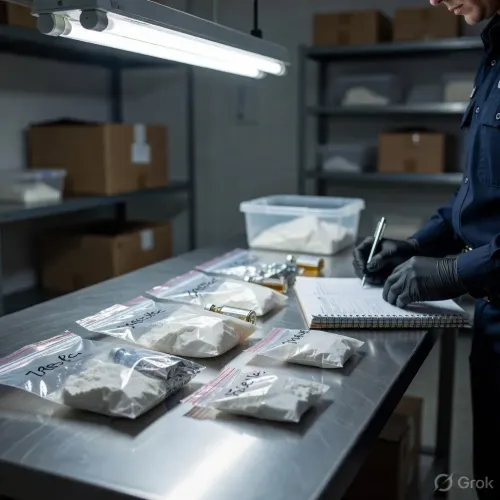
On day 464, police teams recovered 373 grams of heroin, 2.2 kg of ganja, and 256 intoxicant pills, along with ₹7.92 lakh in drug money seized from suspects. Three individuals were also persuaded to voluntarily enrol in de-addiction and rehabilitation programmes as part of the campaign's public-health component.Context: what Yudh Nashian Virudh is
Yudh Nashian Virudh — Punjabi for 'War Against Drugs' — was launched as a flagship law-enforcement initiative by the Aam Aadmi Party government in Punjab after it took office in 2022. The campaign pairs daily enforcement raids with active referrals to state de-addiction centres, distinguishing it from earlier drives that focused primarily on seizures. Daily reporting of arrest and seizure figures has become a signature feature, designed to signal sustained administrative will rather than episodic crackdowns.Policy backdrop: Punjab's long drug problem
Punjab shares an international border with Pakistan, a geography that has historically made it a transit and consumption zone for narcotics, particularly heroin originating from the Golden Crescent region. Successive state governments since the 2010s have launched special anti-drug cells and awareness programmes in response to documented addiction levels among the state's youth population. The current campaign operates within the framework of the central Narcotic Drugs and Psychotropic Substances (NDPS) Act, with state police as the primary enforcement arm. The combination of daily seizure data and rehabilitation referrals reflects a broader policy shift toward treating the crisis as both a law-and-order and a public-health challenge.Stakeholders and ground impact
The campaign directly affects Punjab's youth, who have historically borne the highest burden of drug addiction in the state, as well as families of those arrested or enrolled in rehabilitation. With 67,295 drug smugglers arrested over 464 days, the scale of enforcement is significant, though civil society groups and health experts have consistently argued that rehabilitation infrastructure must expand in proportion to arrests to achieve lasting impact. The three persons convinced to seek de-addiction on day 464 represent the programme's community-outreach dimension, which remains modest relative to the enforcement numbers.What to watch next
Attention will now turn to whether the state's next budget cycle allocates additional funding for de-addiction centres capable of handling the volume of cases the enforcement drive is generating. Publication of cumulative rehabilitation outcomes — how many of those referred have completed treatment — would provide a fuller measure of the campaign's effectiveness beyond arrest and seizure tallies. The Punjab government has not yet announced a formal endpoint or target for the drive, suggesting it will continue as an open-ended operational priority.Point of View
295 arrests over 464 days signals institutional persistence, but the disparity between enforcement scale and rehabilitation referrals — three persons on a single day — points to a structural gap that critics have flagged repeatedly. Punjab's border geography means supply-side pressure is unlikely to ease without complementary central-level interdiction, making state-level drives necessary but insufficient on their own. The campaign's long-term credibility will hinge on whether rehabilitation outcomes are eventually published alongside arrest figures.
NationPress
26 Sept 2026
Frequently Asked Questions
What is Yudh Nashian Virudh in Punjab?
Yudh Nashian Virudh, meaning 'War Against Drugs' in Punjabi, is a statewide anti-narcotics campaign launched by the Punjab government after the AAP came to power in 2022. It combines daily police enforcement raids with referrals to de-addiction and rehabilitation centres.
How many drug smugglers have been arrested in Punjab's anti-drug drive?
As of day 464 of the Yudh Nashian Virudh campaign on June 9, 2026, the total number of drug smugglers arrested has reached 67,295, according to the Chief Minister's Office of Punjab.
What drugs were seized by Punjab Police on June 9, 2026?
Punjab Police recovered 373 grams of heroin, 2.2 kg of ganja, 256 intoxicant pills, and ₹7.92 lakh in drug money on the 464th day of the Yudh Nashian Virudh campaign.
Why is Punjab particularly affected by drug trafficking?
Punjab shares an international border with Pakistan, making it a historically significant transit and consumption zone for narcotics, especially heroin from the Golden Crescent region. This geography has prompted successive state governments to run high-visibility enforcement campaigns.
Does Punjab's anti-drug campaign include rehabilitation?
Yes, the Yudh Nashian Virudh drive includes a de-addiction component where police teams convince arrested or at-risk individuals to voluntarily undergo rehabilitation. On day 464 alone, three persons were referred to de-addiction centres.