AAP Vows Constitution Fight After 7 MPs, Including Raghav Chadha, Join BJP
Synopsis
Seven AAP Rajya Sabha MPs including Raghav Chadha and Swati Maliwal defected to BJP in a stunning political blow. Punjab Minister Harpal Singh Cheema fired back, invoking BR Ambedkar's Constitution, warning defectors face political oblivion, and citing 2022 Punjab data where all 12 AAP turncoats lost their election deposits.
Key Takeaways
Seven AAP Rajya Sabha MPs — including Raghav Chadha , Swati Maliwal , and Ashok Mittal — defected to the BJP on April 24, 2025 .
Punjab Finance Minister Harpal Singh Cheema blamed the BJP for engineering the defections and vowed AAP would continue its fight to protect the Indian Constitution .
Cheema accused the BJP of conducting cross-voting in Haryana and Himachal Pradesh to win Rajya Sabha seats .
In the 2022 Punjab elections , all 12 AAP MLAs who had previously defected lost their security deposits , while the 10 loyalists won by large margins.
Cheema defended Arvind Kejriwal against the Sheesh Mahal allegations, calling them a BJP-driven defamation campaign.
The defections come as AAP faces mounting pressure ahead of the Delhi Assembly elections , with Kejriwal also battling legal cases linked to the Delhi liquor policy .
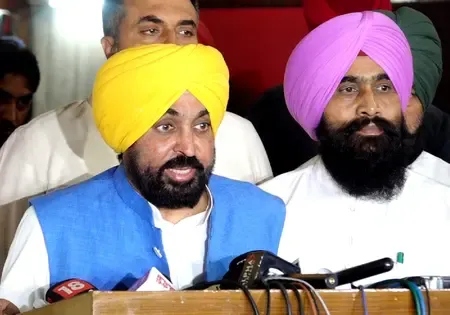
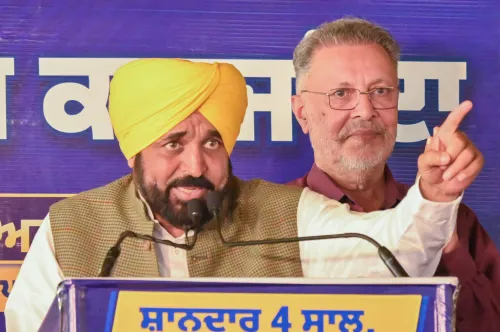
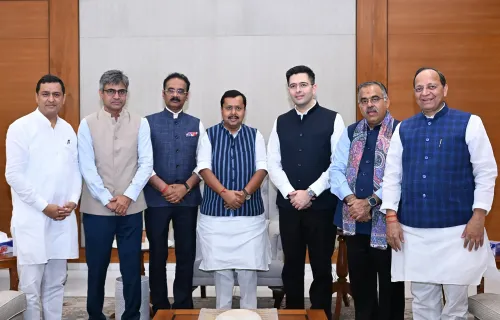
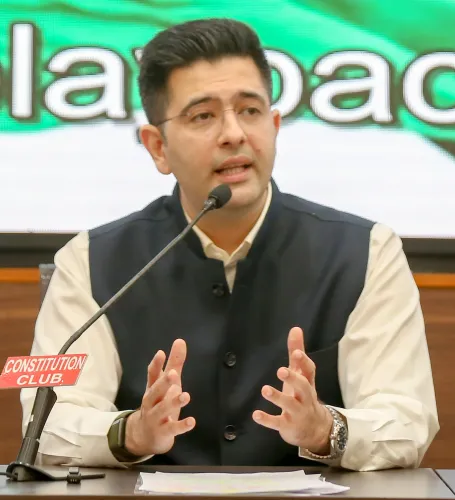
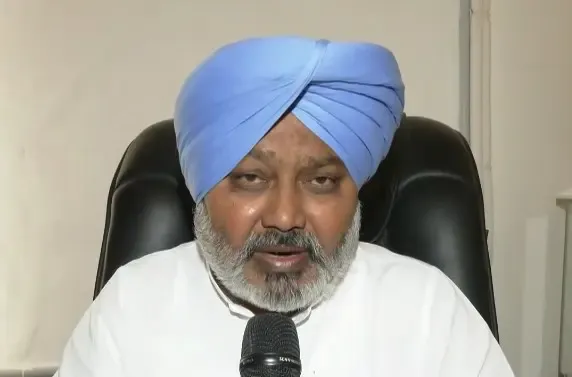
Chandigarh, April 25: The Aam Aadmi Party (AAP) on Saturday declared it would intensify its battle to defend the Indian Constitution after a political earthquake struck the party — seven of its Rajya Sabha MPs, including high-profile names like Raghav Chadha, Swati Maliwal, and Ashok Mittal, formally defected to the Bharatiya Janata Party (BJP). Punjab Finance Minister Harpal Singh Cheema emerged as the party's most vocal defender, launching a sharp counter-offensive against the BJP.
Cheema's Fierce Rebuttal to BJP
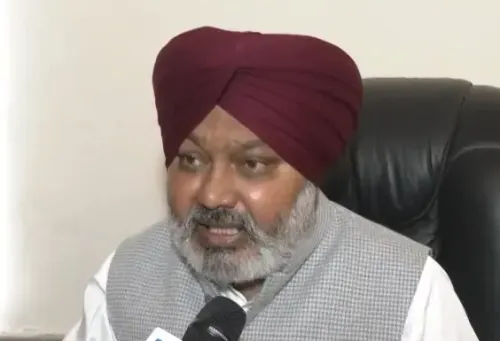
Harpal Singh Cheema, speaking exclusively to news agency IANS, squarely blamed the BJP for engineering the mass defection. He accused the ruling party at the Centre of undermining democratic institutions and the foundational values enshrined in the Constitution drafted by Dr. BR Ambedkar.
"This shows that the BJP does not have trust in the country's democracy. They want to break the Constitution framed by BR Ambedkar," Cheema said, striking a tone that resonated with AAP's broader narrative of constitutional protection.
He further invoked the legacy of Punjab's freedom fighters, saying the people of the state had sacrificed their lives during India's independence struggle and were prepared to do so again to uphold democratic values. "The AAP will continue its fight to save the Constitution," he declared.
Cross-Voting Allegations and Electoral Manipulation Claims
Cheema escalated his attack by accusing the BJP of orchestrating cross-voting in Haryana and Himachal Pradesh to capture Rajya Sabha seats — a charge that has been widely reported and debated in political circles. These allegations point to a pattern where the BJP allegedly leverages its financial and organisational muscle to poach legislators from rival parties ahead of Upper House elections.
He also took a swipe at the political dynamics in Bihar, accusing the BJP of using former Chief Minister and JD-U supremo Nitish Kumar to consolidate votes in the state Assembly polls. This came in the context of BJP's Samrat Choudhary recently being sworn in as the new Bihar Chief Minister, a development many analysts view as a recalibration of political power in the state.
AAP's Track Record on Defections: The Data Point
Cheema offered a pointed historical argument to dismiss the significance of the defections. He recalled that before the landmark 2022 Punjab Assembly elections, AAP had 22 MLAs in the state, of whom 12 had switched sides. The outcome was telling — all 12 defectors lost their security deposits in the subsequent polls, while the remaining 10 loyalists won by massive margins.
"The seven MPs who have left the AAP will not find a place anywhere in the future. They will be seen wandering on the streets," Cheema warned, framing defection as a political death sentence rather than a career move.
This historical parallel carries weight: in the 2022 Punjab polls, AAP swept to power winning 92 out of 117 seats, one of the most decisive mandates in the state's electoral history — achieved despite, or arguably because of, the internal purge of fence-sitters.
Sheesh Mahal Row and Kejriwal's Defence
Cheema also came to the defence of AAP National Convenor Arvind Kejriwal over the ongoing "Sheesh Mahal" controversy — allegations that Kejriwal had spent extravagantly on renovating his official Delhi residence. The BJP has repeatedly used this issue as a political weapon against the AAP leadership.
"One has done some renovation in a house provided by the government; they call it 'Sheesh Mahal'. This is their way to defame," Cheema said, dismissing the allegations as a coordinated disinformation campaign. The controversy has been a persistent thorn for AAP, with the BJP using it to challenge the party's anti-corruption image — the very identity on which AAP was founded in 2012.
Bigger Picture: What This Mass Defection Signals
The departure of seven Rajya Sabha MPs in a single day represents one of the most significant organisational crises AAP has faced since its founding. Notably, this comes at a time when Arvind Kejriwal is navigating legal battles linked to the Delhi liquor policy case and AAP is preparing for upcoming electoral contests.
Critics argue the defections expose a deeper structural vulnerability within AAP — the party's highly centralised leadership model, which concentrates decision-making power around Kejriwal, may be alienating senior figures who seek greater autonomy. The BJP, on the other hand, appears to be executing a deliberate strategy of weakening opposition parties from within, a playbook that has been observed in states like Goa, Manipur, and Meghalaya in recent years.
With Delhi Assembly elections on the horizon, the political fallout of this mass exodus — and whether AAP can retain its core voter base despite the defections — will be closely watched by analysts and opposition parties alike.
Point of View
Systematic BJP strategy of dismantling opposition structures from within, a pattern visible from Goa to Manipur. What makes this moment particularly ironic is that AAP, a party born on the promise of clean, transparent politics, now faces the same institutional erosion it once accused the Congress of enabling. Cheema's invocation of BR Ambedkar and Punjab's freedom struggle is politically potent but strategically reactive — the real test for AAP is whether it can rebuild trust with voters before Delhi votes. The defectors may have calculated that the BJP's organisational machine offers more security than AAP's increasingly embattled leadership, but history — including AAP's own 2022 Punjab sweep — suggests that voters often punish opportunism at the ballot box.
NationPress
1 Oct 2026
Frequently Asked Questions
Which AAP MPs joined the BJP?
Seven AAP Rajya Sabha MPs including Raghav Chadha, Swati Maliwal, and Ashok Mittal formally joined the BJP. This mass defection represents one of the most significant political setbacks in AAP's history since the party's founding in 2012.
What did Punjab Minister Harpal Singh Cheema say about the defections?
Harpal Singh Cheema blamed the BJP for engineering the defections and warned that all seven MPs who left AAP would face political oblivion. He cited the 2022 Punjab example where 12 AAP defectors lost their election security deposits as proof.
What is the Sheesh Mahal controversy involving Arvind Kejriwal?
The Sheesh Mahal controversy refers to BJP allegations that AAP Convenor Arvind Kejriwal spent lavishly on renovating his official Delhi government residence. Cheema dismissed the allegations as a BJP-orchestrated defamation campaign against Kejriwal.
Did AAP accuse BJP of cross-voting in Rajya Sabha elections?
Yes, Punjab Minister Cheema accused the BJP of orchestrating cross-voting in Haryana and Himachal Pradesh to win Rajya Sabha seats. He framed this as part of a broader BJP strategy to undermine opposition parties and democratic processes.
How has AAP performed after previous defections in Punjab?
Before the 2022 Punjab Assembly elections, 12 of AAP's 22 MLAs had defected from the party — all 12 lost their election security deposits in the polls. The remaining 10 loyal AAP MLAs won by large margins, and AAP went on to win 92 of 117 seats in Punjab.