Gujarat deploys 8 IPS officers to 16 Pakistan-border villages for security review
Synopsis
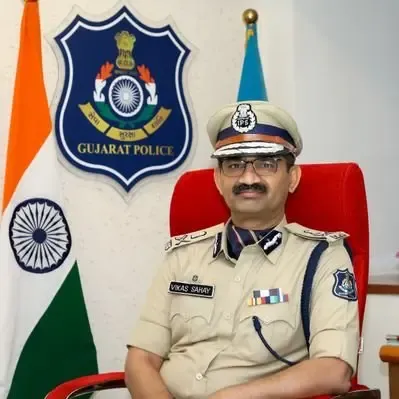
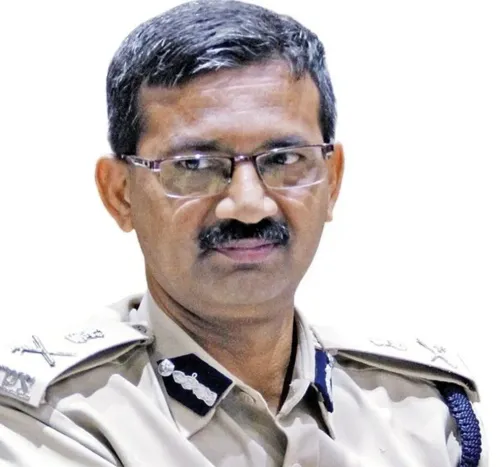
Eight IPS officers, from ADGP to ACP rank, will sleep in 16 villages strung along Gujarat's Pakistan border on June 11-12 — a rare exercise where senior command physically embeds in frontier communities to assess security gaps and hear residents directly. With assignments stretching across Vav-Tharad, Kutch, and Patan, it is one of the most granular border security reviews the state has undertaken at this level.
Key Takeaways
Eight senior IPS officers will visit and stay overnight in 16 villages along Gujarat's Pakistan border on 11 and 12 June .
The exercise covers Vav-Tharad , Patan , and Kutch districts and is planned under Deputy CM Harsh Sanghavi .
Officers will inspect border patrolling, hold night-time review meetings, and interact with both police personnel and local residents.
Officials describe it as an intensive field exercise focused on security infrastructure assessment and community engagement.
All officers are assigned specific villages and are scheduled to stay in local homes during the programme.
Eight senior Indian Police Service (IPS) officers will spend two days visiting and staying overnight in 16 villages along Gujarat's international border with Pakistan on 11 and 12 June, in a state-led exercise to assess security preparedness and engage directly with frontier communities. The programme, planned under the guidance of Gujarat Deputy Chief Minister Harsh Sanghavi, covers villages in the Vav-Tharad border region and parts of Patan and Kutch districts.
Scope of the Exercise
Officials have described the two-day initiative as an intensive field exercise rather than a ceremonial visit. Officers will conduct on-ground assessments of security infrastructure, inspect border patrolling operations, interact with police personnel posted in isolated locations, and hold night-time review meetings with local residents. The state government says the programme is aimed at strengthening both international and inter-state border security while also reviewing the welfare of people living in remote frontier areas.
Officer-wise Village Assignments
Additional Director General of Police (ADGP) Wabang Zamir will visit Asaragam and Rachhena villages in Vav-Tharad district, while ADGP Ajay Kumar Chaudhary will travel to Shirani Vandh and Jatawada villages in Kutch East district.
Inspector General of Police (IGP) Bipin Shankarrao Ahire will visit Dhokavada and Charanka villages in Patan district, and Deputy Inspector General of Police (DIGP) A.M. Muniya will tour Radosan and Golap villages in the Vav-Tharad area. In Kutch West district, DIGP K.N. Damor will visit Juna and Dedhiya villages, while DIGP Leena Patil will travel to Udhmo and Patagar villages.
Assistant Commissioner of Police (ACP) R.T. Susara will visit Punrajpar and Gunau villages, and DIGP Sudha S. Pandey will visit Dinara and Bhitara Mota villages. All officers are scheduled to stay overnight in their assigned villages.
Why This Initiative Matters
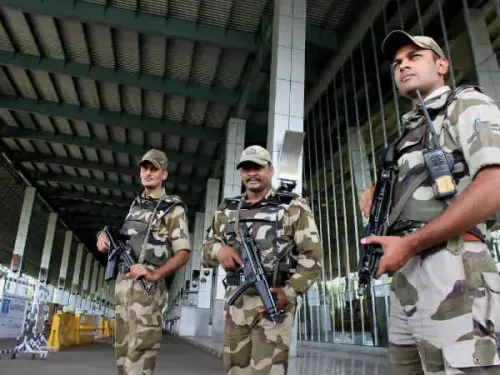
Gujarat shares a sensitive international border with Pakistan spanning several hundred kilometres across the Rann of Kutch and the Thar desert fringe — terrain that historically poses significant patrolling challenges. Communities in these frontier zones often report limited access to state services and security personnel. This exercise is notably hands-on: senior officers staying in local homes signals a deliberate effort to bridge the gap between high command and ground-level realities.
This comes amid heightened border security awareness across India's western frontier, making direct community engagement in these villages particularly significant at this juncture.
What Comes Next
The findings from the field visits and night-time review meetings are expected to inform future security deployments and welfare measures for border communities. The exercise also serves as a direct channel for residents to raise concerns with senior law enforcement officials — a mechanism that is rarely available in geographically isolated frontier villages.
Point of View
Welfare infrastructure, and communication lines, or whether this remains a well-photographed one-off. Border communities in Kutch and Vav-Tharad have historically been underserved; the real measure of this initiative will be in the policy follow-through, not the field visit itself.
NationPress
26 Sept 2026
Frequently Asked Questions
Why are IPS officers staying overnight in Gujarat border villages?
Eight senior IPS officers are staying overnight in 16 villages along Gujarat's Pakistan border on June 11-12 as part of an intensive security review exercise. The programme aims to assess security infrastructure, inspect patrolling operations, and engage directly with frontier residents — going beyond a routine inspection visit.
Which districts are covered in the Gujarat border security exercise?
The exercise covers villages in the Vav-Tharad border region and parts of Patan and Kutch districts. Specific villages include Asaragam, Rachhena, Shirani Vandh, Jatawada, Dhokavada, Charanka, Radosan, Golap, Juna, Dedhiya, Udhmo, Patagar, Punrajpar, Gunau, Dinara, and Bhitara Mota.
Who is overseeing the Gujarat border village security programme?
The programme has been planned under the guidance of Gujarat Deputy Chief Minister Harsh Sanghavi. Eight officers ranging from ADGP to ACP rank are participating, each assigned to specific villages across the border districts.
What will the IPS officers do during their village stays?
The officers will conduct on-ground security assessments, inspect border patrolling operations, hold night-time review meetings, interact with police personnel posted in isolated locations, and meet with local residents to understand their concerns and welfare needs.
When is the Gujarat border village security exercise scheduled?
The exercise is scheduled for June 11 and 12. All eight officers are assigned to stay overnight in their respective villages during the two-day programme.