West Bengal polls: 96% of defeated TMC candidates skip court challenge
Synopsis
Mamata Banerjee urged her defeated candidates to fight in court — but 203 of 211 have quietly ignored her. With the TMC reduced to 88 seats and the BJP holding 202, the near-total absence of legal challenges is itself a verdict: the party's own nominees appear to have accepted the scale of the defeat that their chief refuses to.
Key Takeaways
203 of 211 defeated TMC candidates — 96.20% — have not filed election petitions before the Calcutta High Court .
Mamata Banerjee filed one of only eight TMC petitions, challenging her own loss in Bhabanipur by over 15,000 votes to Chief Minister Suvendu Adhikari .
The BJP won 202 of 294 Assembly seats; the TMC won only 88 of the 291 it contested.
A total of 14 election petitions have been filed — 8 by TMC and 6 by BJP.
A senior TMC insider said most candidates held back due to a lack of sufficient evidence of electoral irregularities.
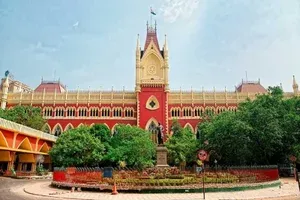
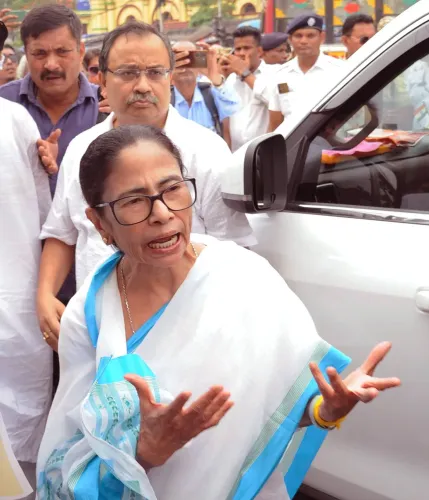
All India Trinamool Congress (TMC) candidates who lost in the West Bengal Assembly elections have largely declined to pursue legal remedies, with 203 of 211 defeated nominees — or 96.20 per cent — choosing not to file election petitions before the Calcutta High Court. The development is notable given that party chief Mamata Banerjee had repeatedly urged defeated candidates to challenge their losses in court.
Scale of the Snub
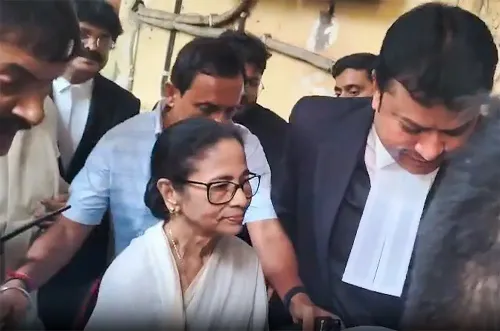
Only eight election petitions have been filed by TMC leaders in total. One of those was filed by Banerjee herself, contesting her personal defeat from the Bhabanipur Assembly constituency in south Kolkata. She lost the seat to current Chief Minister Suvendu Adhikari by a margin of more than 15,000 votes, making it one of the most closely watched contests of the election cycle.
BJP's Dominant Performance
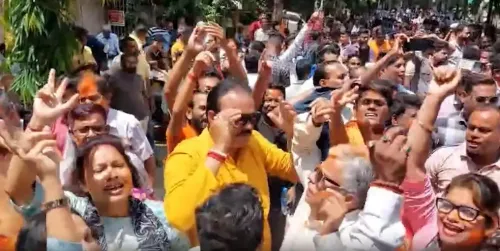
The Bharatiya Janata Party (BJP) emerged as the dominant force in the polls, winning 202 of the state's 294 Assembly seats. The BJP has itself filed six election petitions at the Calcutta High Court. Combined with the TMC's eight petitions, the total number of election-related legal challenges currently stands at 14.
TMC's Electoral Collapse in Numbers
The TMC contested 291 constituencies, leaving the three hill seats of Darjeeling, Kurseong, and Kalimpong to its ally, the Bharatiya Gorkha Prajatantrik Morcha (BGPM), founded by Anit Thapa. Of those 291 seats, the party won only 88 and lost 203. The Indian National Congress (Congress) and the Aam Janata Unnayan Party, founded by Humayun Kabir, secured two seats each. The Communist Party of India (Marxist) and the All India Secular Front (AISF) won one seat apiece.
Why Most Candidates Stepped Back
A senior TMC insider, speaking on condition of anonymity, said most defeated candidates have avoided legal battles because they lack substantial evidence to support allegations of electoral irregularities. The near-total absence of petitions effectively signals that the party's rank and file have accepted the verdict on the ground, even as the leadership publicly maintains reservations about the poll outcome.
What This Means for TMC's Future
The disconnect between Banerjee's directive and her candidates' inaction underscores a deepening crisis within the TMC. Historically, losing parties in Indian state elections have used election petitions as a political tool to keep pressure on rivals; the TMC's reluctance to do so at scale suggests both a resource constraint and an acknowledgement of the mandate's scale. How the party recalibrates ahead of the next electoral cycle will be closely watched by political observers across the country.
Point of View
It strips credibility from the leadership's narrative of electoral foul play. Mamata Banerjee's solitary petition from Bhabanipur now looks less like a principled legal stand and more like a lone political signal. The TMC's deeper problem is structural: the BJP's 202-seat haul is not the kind of mandate that a handful of court challenges can unwind, and the rank and file appear to understand that even if the top leadership does not.
NationPress
20 Sept 2026
Frequently Asked Questions
How many defeated TMC candidates have challenged the West Bengal election results in court?
Only 8 of the 211 defeated TMC candidates have filed election petitions before the Calcutta High Court, meaning 203 — or 96.20% — have not pursued legal remedies despite calls from party chief Mamata Banerjee to do so.
Why did most TMC candidates choose not to file election petitions?
According to a senior TMC insider speaking on condition of anonymity, most defeated candidates held back because they lacked sufficient evidence to substantiate allegations of electoral irregularities.
What was Mamata Banerjee's result in the Bhabanipur constituency?
Mamata Banerjee lost the Bhabanipur Assembly seat to current Chief Minister Suvendu Adhikari by a margin of more than 15,000 votes. She has filed an election petition challenging that defeat.
How did the BJP perform in the West Bengal Assembly elections?
The BJP emerged as the dominant force, winning 202 of 294 Assembly seats. The party has also filed six election petitions at the Calcutta High Court.
How many total election petitions have been filed over the West Bengal Assembly polls?
A total of 14 election petitions have been filed — 8 by TMC leaders and 6 by the BJP — at the Calcutta High Court in connection with the West Bengal Assembly elections.