AAIB Releases Initial Findings on Baramati Plane Crash
Synopsis
The AAIB has released its preliminary report on the Baramati plane crash, revealing critical insights into the tragic incident that claimed the lives of Deputy Chief Minister Ajit Pawar and four others. The investigation aims to enhance aviation safety and prevent future accidents.
Key Takeaways
AAIB's preliminary report submitted on Baramati plane crash.
Deputy Chief Minister Ajit Pawar among the deceased.
Investigation aims to enhance aviation safety.
Visibility at the airport was below VFR requirements.
Ongoing collaboration with NTSB and aviation experts.
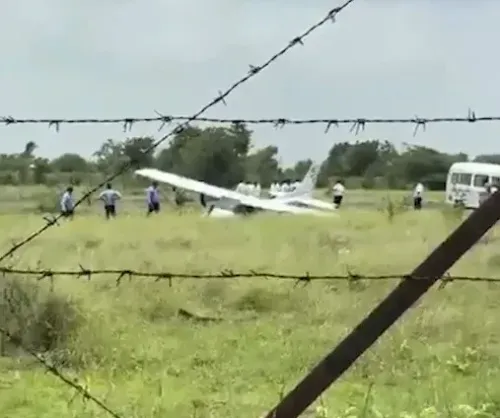
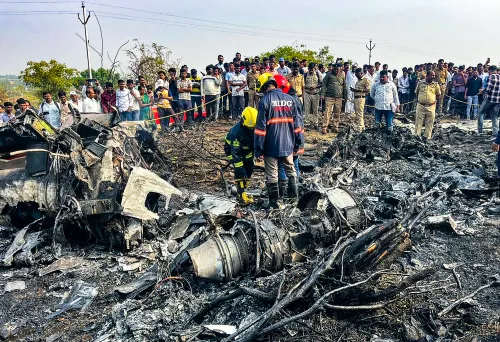
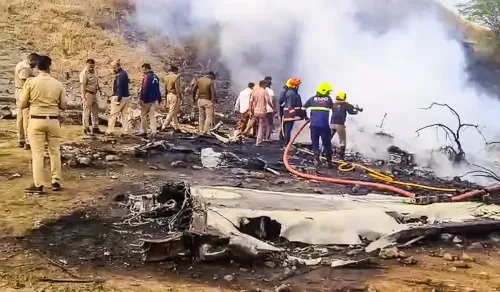
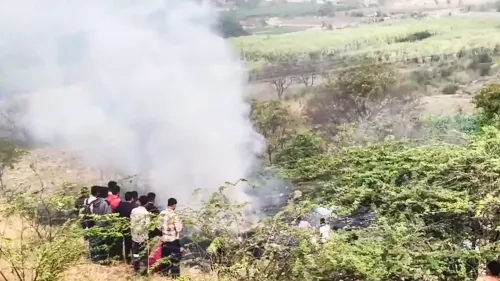
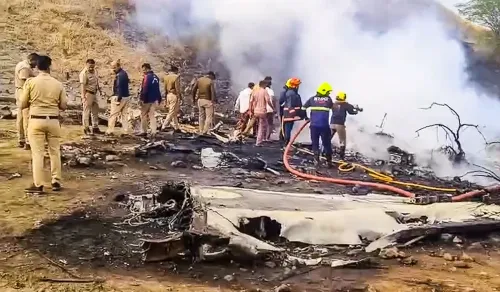
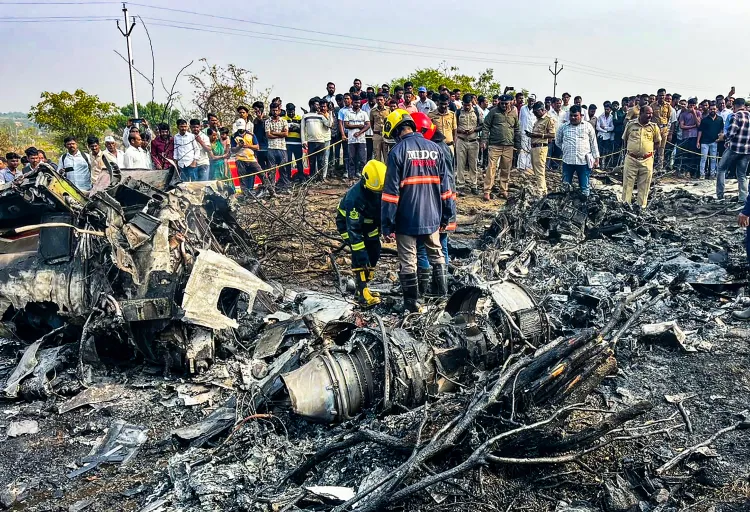
New Delhi, Feb 28 (NationPress) The Aircraft Accident Investigation Bureau (AAIB) has submitted its preliminary findings regarding the plane crash in the vicinity of Baramati, which tragically resulted in the deaths of Maharashtra's Deputy Chief Minister Ajit Pawar and four others on January 28 of this year.
The report indicates that it has been compiled based on initial factual data and evidence gathered during the early phases of the investigation. It emphasizes that the information is provisional and may be subject to modification. Therefore, unless otherwise stated, no conclusions should be drawn from this document.
In alignment with Annex 13 of the International Civil Aviation Organization (ICAO) and Rule 3 of the Aircraft (Investigation of Accidents and Incidents) Rules 2025, the primary aim of this investigation is to prevent future accidents rather than to assign blame or liability.
This investigation will proceed independently of any judicial or administrative actions related to blame or liability. Thus, utilizing this report for purposes other than the prevention of future accidents could lead to misinterpretations.
The report reveals that both pilots had previously flown to Baramati and were familiar with the airfield's layout. According to the available records, both the Pilot in Command (PIC) and the First Officer (FO) had ample experience conducting various VIP flights and operating at uncontrolled airfields, including Baramati.
It is noted that a pre-flight breath analyzer test was conducted for both pilots by a paramedic on board the aircraft. Based on the video evidence and the breath analyzer slip provided by the operator, both pilots tested negative (satisfactory) for alcohol.
The report highlights that on the day of the incident, visibility at Baramati airport measured at 3,000 meters, as indicated by visibility markers. This was significantly below the minimum required 5,000 meters (5 Km) for Visual Flight Rules (VFR) operations at the time of landing.
The AAIB’s interim safety recommendations advocate for stricter regulatory oversight of operations at smaller airfields, a comprehensive review of their licensing, and urgent enhancements to landing and meteorological (MET) facilities.
Currently, the investigation is ongoing, with the Cockpit Voice Recorder data pending download, which will be facilitated by the National Transportation Safety Board (NTSB) from the USA.
“Every aspect of the accident will be scrutinized to uncover the facts, root causes, and contributing factors,” states the preliminary report.
Several interim safety recommendations have been proposed for implementation by the aviation safety regulator, Directorate General of Civil Aviation (DGCA).
The AAIB team has conducted on-site activities and evidence collection under the direction of the Director General of AAIB. In compliance with ICAO Annex 13 and the Aircraft (Investigation of Accidents & Incidents) Rules 2025, the initial notification regarding the accident was dispatched to the state of design and manufacture, which is represented by the NTSB, USA. The NTSB appointed an Accredited Representative along with Technical Advisors from Bombardier, Honeywell, and the Federal Aviation Administration (FAA) to assist in this investigation.
The AAIB investigation team is collaborating with subject matter experts such as qualified pilots, Aircraft Maintenance Engineers (AME), Air Traffic Controllers, and Aviation Medicine Specialists to support the investigation.
Point of View
It's crucial to highlight the AAIB's ongoing investigation into the Baramati plane crash. While the loss of Deputy Chief Minister Ajit Pawar and others is tragic, the focus must remain on uncovering the facts and implementing effective safety measures to prevent future incidents, ensuring that such a tragedy does not occur again.
NationPress
7 Oct 2026
Frequently Asked Questions
What caused the Baramati plane crash?
The AAIB's preliminary report is still ongoing, but it highlights factors such as visibility conditions and pilot experience as critical elements to investigate.
Who were the victims of the crash?
The crash resulted in the deaths of Maharashtra Deputy Chief Minister Ajit Pawar and four other individuals.
What safety recommendations have been made?
The report advocates for stricter regulatory oversight, a review of airfield licensing, and improvements to landing and meteorological infrastructure.