Adani Defence, DRDO sign AEW&C-MKII deal for IAF's next-gen surveillance
Synopsis
Adani Defence and Aerospace has become the first Indian private company to lead development of a full-scale airborne mission platform — the AEW&C-MKII — for the IAF, in partnership with DRDO. Built on six modified Airbus A321s with 30-year lifecycle support, the programme would place India alongside only five nations with indigenous airborne early warning capability.
Key Takeaways
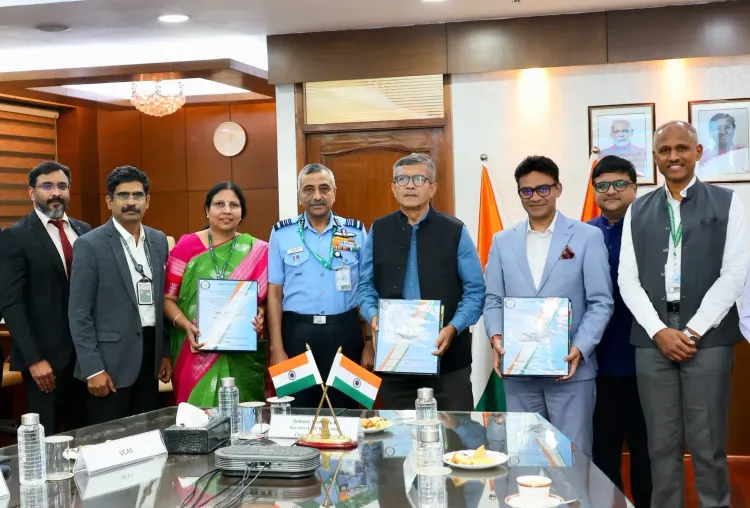
Adani Defence and Aerospace and DRDO signed an agreement on 22 July to jointly develop the AEW&C-MKII for the Indian Air Force .
Adani Defence is the first private Indian company to lead development and lifecycle support of an airborne mission platform of this complexity.
The programme covers six modified Airbus A321 aircraft with integrated logistics and MRO support for up to 30 years .
Induction of AEW&C-MKII is planned for 2032–33 .
Only five countries — the US, France, Israel, China, and Sweden — currently possess indigenous AEW&C capability; India aims to join them.
The platform will integrate with the IAF's Integrated Air Command and Control System (IACCS) for real-time national air defence coordination.
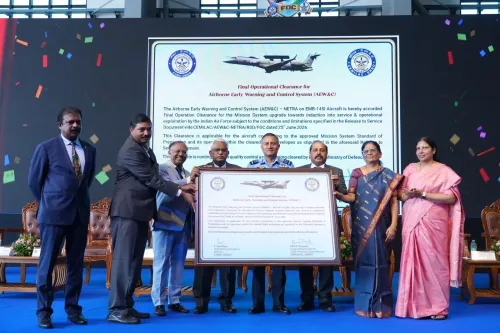
Adani Defence and Aerospace and the Defence Research and Development Organisation (DRDO) have signed a landmark agreement on 22 July to jointly develop the AEW&C-MKII — India's next-generation Airborne Early Warning and Control platform for the Indian Air Force (IAF). The deal makes Adani Defence the first private Indian company to be entrusted with the development, integration, and lifecycle support of an airborne mission platform of this scale and complexity.
What the Programme Involves
Under the agreement, Adani Defence and Aerospace and DRDO will jointly develop, manufacture, and integrate airborne mission systems on six modified Airbus A321 aircraft for the IAF. The programme also covers integrated logistics, maintenance, repair and overhaul (MRO), and technical support for a period of up to 30 years. Induction of the AEW&C-MKII is planned for 2032–33.
Why This Platform Matters
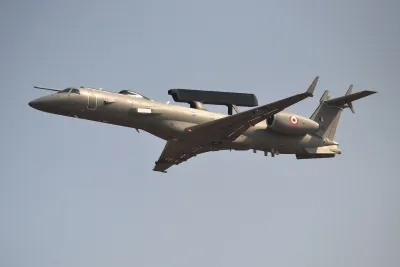
Known as the 'eyes in the skies', AEW&C aircraft are among the most critical assets in modern air warfare. They deliver long-range surveillance, early threat detection, and real-time command and control — enabling faster, better-informed operational decisions across a theatre of conflict. The AEW&C-MKII is expected to significantly enhance the IAF's situational awareness, force coordination, and network-centric operations.
Notably, only five countries — the United States, France, Israel, China, and Sweden — have developed indigenous AEW&C capabilities to date. Successful delivery of this programme would place India in that select group.
Integration with National Air Defence Network
The platform will be integrated with the IAF's Integrated Air Command and Control System (IACCS), the nationwide network that links surveillance, air defence, and operational assets in real time. This integration is designed to strengthen national air defence through faster decision-making, seamless battlespace coordination, and enhanced operational responsiveness.
A Historic Step for Private Defence Manufacturing
The collaboration combines DRDO's expertise in defence research and mission systems with Adani Defence and Aerospace's capabilities in advanced manufacturing, systems integration, and lifecycle support. This is one of the most complex indigenous airborne surveillance programmes India has undertaken, and the first of its kind to be led by a private-sector integrator. This comes amid India's broader push under the Atmanirbhar Bharat defence policy to reduce import dependence and build sovereign capabilities in high-technology military platforms.
What Comes Next
With induction targeted for 2032–33, the programme enters a multi-year development and integration phase. Industry observers will watch closely whether the private-sector-led model delivers on schedule — a benchmark that will influence future complex defence contracts awarded outside the public-sector domain.
Point of View
But AEW&C integration demands deep mission-systems software expertise that India has historically struggled to develop indigenously, even within the public sector. The 2032–33 induction target is ambitious; India's track record on complex indigenous defence timelines suggests slippage is a real risk. The true test of this model will not be the signing but the delivery — and whether a private-sector-led approach can outperform the public-sector inertia it is meant to replace.
NationPress
21 Oct 2026
Frequently Asked Questions
What is the AEW&C-MKII programme signed between Adani Defence and DRDO?
The AEW&C-MKII is India's next-generation Airborne Early Warning and Control programme, under which Adani Defence and Aerospace and DRDO will jointly develop and integrate airborne mission systems on six modified Airbus A321 aircraft for the Indian Air Force. The programme includes 30-year lifecycle support and is planned for induction in 2032–33.
Why is the Adani Defence and DRDO deal significant?
It marks the first time a private Indian company has been entrusted with the full development, integration, and lifecycle support of an airborne mission platform of this scale. It also positions India to join a group of only five nations — the US, France, Israel, China, and Sweden — with indigenous AEW&C capability.
When will the AEW&C-MKII be inducted into the Indian Air Force?
Induction is planned for 2032–33, following a multi-year development, manufacturing, and integration phase led jointly by Adani Defence and Aerospace and DRDO.
What does an AEW&C aircraft do?
An AEW&C aircraft provides long-range surveillance, early threat detection, and real-time command and control from the air, enabling faster and better-informed decisions during military operations. It is considered one of the most critical assets in modern air warfare.
How will the AEW&C-MKII connect with India's air defence network?
The platform will be integrated with the IAF's Integrated Air Command and Control System (IACCS), a nationwide network linking surveillance, air defence, and operational assets in real time, strengthening overall national air defence coordination.