Adani Energy wins LoA for 2,500 MW round-the-clock renewable supply in West Bengal
Synopsis
Adani Energy Solutions has locked in one of the larger long-term renewable power contracts of 2026 — a 25-year RE-RTC deal with West Bengal's state discom that could reach 2,500 MW if the greenshoe option is exercised. With supply starting as early as July 2028, the award highlights how Indian state utilities are racing to secure round-the-clock clean energy at scale.
Key Takeaways
PTSL , a wholly-owned subsidiary of Adani Energy Solutions Ltd (AESL) , received an LoA from WBSEDCL on 21 November 2026 .
The base contract covers 1,750 MW of RE-RTC power for 25 years ; a 750 MW greenshoe option can raise the total to 2,500 MW .
Power supply is scheduled to begin on 1 July 2028 (base) and 1 April 2029 (greenshoe, if exercised).
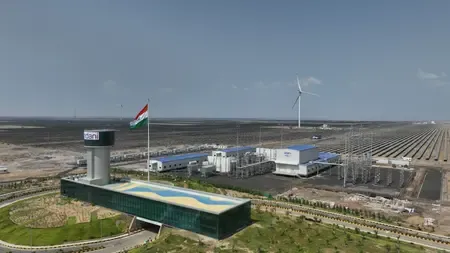
PTSL has tied up 4.6 GW of solar and wind and 3.5 GWh of BESS capacity on the sourcing side.
AESL is India's largest private transmission company with 30,683 ckm of network and serves about 13 million retail consumers.
Adani Energy Solutions Ltd (AESL) on Saturday, 21 November 2026 announced that its wholly-owned subsidiary Powerpulse Trading Solutions Ltd (PTSL) has received a Letter of Award (LoA) from West Bengal State Electricity Distribution Co Ltd (WBSEDCL) for supplying 1,750 MW of Renewable Energy Round-the-Clock (RE-RTC) power over a 25-year period. The award also includes a 750 MW greenshoe option, which, if exercised, would expand the total contracted capacity to 2,500 MW.
How the Award Was Won
The contract was secured through a competitive bidding process in which PTSL emerged as the successful bidder following an e-reverse auction. The order adds meaningfully to PTSL's growing portfolio of long-term bulk power supply contracts. This win signals the subsidiary's rising profile as a structured energy solutions provider for large consumers including industries, data centres, commercial entities, and power distribution companies.
Power Supply Timeline
According to the company's statement, power supply under the base contract is scheduled to commence from 1 July 2028 for the initial 1,750 MW capacity. Should WBSEDCL exercise the greenshoe option, the additional 750 MW supply is set to begin from 1 April 2029, taking the aggregate contracted capacity to 2,500 MW.
What the Company Said
Kandarp Patel, CEO of AESL, said round-the-clock renewable power would be critical to India's energy transition, 'combining the sustainability of renewables and optimising transmission systems usage.' He added that the order 'strengthens our commitment to deliver scalable energy solutions and allows us to partner with WBSEDCL in supporting West Bengal's long-term sustainable power needs.' Patel also described PTSL as 'rapidly emerging as a partner of choice for bulk power consumers, with the ability to structure bespoke and scalable solutions around their specific energy requirements.'
AESL's Broader Energy Footprint
On the sourcing side, PTSL has already tied up 4.6 GW of solar and wind capacity and 3.5 GWh of Battery Energy Storage System (BESS) capacity, steadily building out long-term supply-side contracts. AESL itself is the country's largest private transmission company, with a cumulative transmission network of 30,683 circuit kilometres (ckm) and a transformation capacity of 1,46,585 MVA. In retail electricity distribution, the company serves approximately 13 million consumers in metropolitan Mumbai and the industrial hub of Mundra SEZ. The company is also scaling its smart metering business, positioning itself to become India's leading smart metering integrator.
Why This Deal Matters
India's push toward RE-RTC power — which guarantees round-the-clock renewable supply rather than intermittent generation — is seen as a critical bridge between renewables adoption and grid reliability. West Bengal, a major industrial and commercial state, securing a 25-year RE-RTC contract of this scale underlines how state discoms are increasingly locking in long-duration clean energy agreements to meet both demand growth and sustainability mandates. This comes amid India's broader target of achieving 500 GW of non-fossil fuel capacity by 2030.
Point of View
A product category that is significantly harder to deliver than standard solar or wind. AESL is essentially betting that it can aggregate intermittent generation, storage, and transmission assets into a bankable, dispatchable product for a state discom. If PTSL executes at scale, it sets a template that could accelerate RE-RTC adoption across other large states. The bigger question is whether the grid infrastructure in West Bengal — and the broader eastern grid — will be ready to absorb 2,500 MW of new renewable flow by the contracted timelines. Execution risk on that front deserves closer scrutiny than the award itself.
NationPress
21 Nov 2026
Frequently Asked Questions
What is the AESL-WBSEDCL renewable energy deal announced in November 2026?
Adani Energy Solutions' subsidiary PTSL has received a Letter of Award from West Bengal State Electricity Distribution Co Ltd for supplying 1,750 MW of Renewable Energy Round-the-Clock power over 25 years, with a greenshoe option to expand the total to 2,500 MW. The deal was won through a competitive e-reverse auction process.
When will power supply begin under this contract?
Supply of the base 1,750 MW capacity is scheduled to commence from 1 July 2028. If WBSEDCL exercises the 750 MW greenshoe option, that additional supply will begin from 1 April 2029.
What is Renewable Energy Round-the-Clock (RE-RTC) power?
RE-RTC power refers to renewable energy that is supplied continuously — 24 hours a day, 7 days a week — by combining multiple renewable sources and battery storage to overcome the intermittency of solar and wind generation. It is considered a key enabler for India's clean energy transition without compromising grid reliability.
How large is AESL's existing energy and transmission footprint?
AESL is India's largest private transmission company, operating a network of 30,683 circuit kilometres with 1,46,585 MVA of transformation capacity. Its subsidiary PTSL has tied up 4.6 GW of solar and wind and 3.5 GWh of BESS capacity on the sourcing side, while AESL's retail distribution arm serves about 13 million consumers in Mumbai and Mundra SEZ.
Why is this deal significant for West Bengal's energy future?
West Bengal securing a 25-year RE-RTC contract of up to 2,500 MW signals that one of India's major industrial states is committing to long-duration clean energy at scale. It aligns with India's national target of 500 GW of non-fossil fuel capacity by 2030 and reflects a broader shift among state discoms toward guaranteed round-the-clock renewable supply.