Adani Skills & Education signs MoUs with Gujarat to upgrade 11 ITIs in Kutch

Synopsis
Adani Skills & Education has formalised two MoUs with the Gujarat government to overhaul all 11 ITIs in Kutch, deploying a 10-point transformation agenda that the organisation says is already being replicated as a 'Gujarat Model' in other states. The initiative directly targets talent migration from the region by aligning training with live sector demand in renewable energy, logistics, and infrastructure.
Key Takeaways
Adani Skills & Education (ASE) signed two MoUs with the Gujarat government on 29 May 2025 in Bhuj .
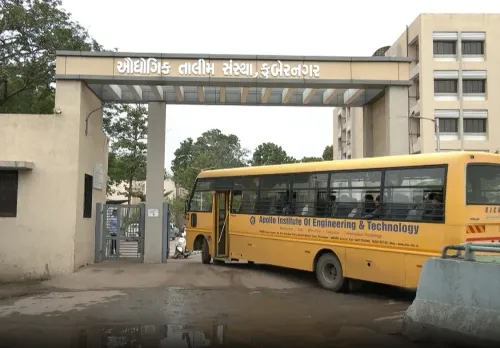
The partnership covers 11 government ITIs across Kutch , focusing on renewable energy, logistics, and infrastructure sectors.
ASE's 'Skill2Employ' model combines simulations, Centres of Excellence, and globally benchmarked curricula to produce job-ready graduates.
The 10-point ITI transformation agenda is reportedly being adopted as a 'Gujarat Model' by other Indian states.
The initiative aims to reduce talent migration from Kutch by creating local, industry-aligned employment pipelines.
ASE CEO Robin Bhowmik described Kutch as the organisation's 'karma bhoomi' and reaffirmed its long-term regional commitment.
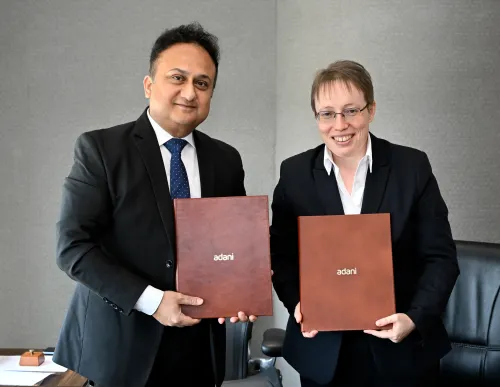
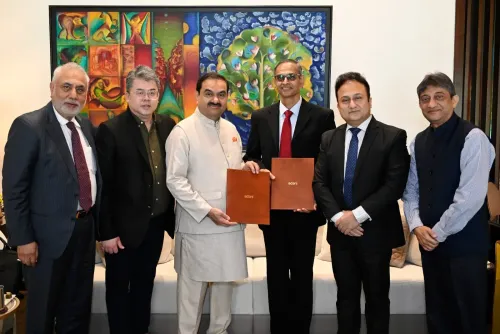
Adani Skills & Education (ASE) on Friday, 29 May formalised two MoUs with the Gujarat government to transform 11 industrial training institutes (ITIs) across Kutch, anchoring an industry-linked skilling programme aimed at building employment-ready talent pipelines in renewable energy, logistics, and infrastructure sectors. The agreements were signed in Bhuj in the presence of senior state ministers and Adani Group leadership.
Key Developments
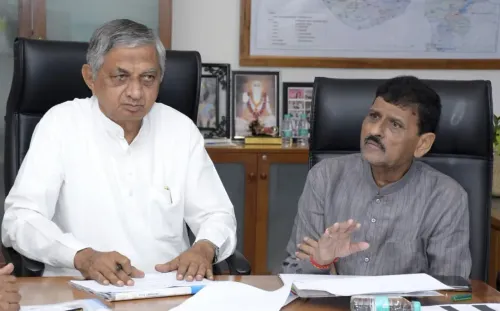
Cabinet Minister for Labour, Skill Development and Employment and Rural Development, Kunvarjibhai Bavaliya, and Minister of State Kantilal Amrutiya attended the signing alongside faculty members and students from all 11 government ITIs of Kutch. The event marked a formal step in ASE's long-stated commitment to making Kutch a model skilling district.
The partnership is structured around a 10-point transformation agenda developed by ASE, which the organisation says is now being adopted as a 'Gujarat Model' by other states across the country — a claim that, if borne out, would give the initiative national policy significance beyond its regional footprint.
What the Programme Covers
ASE's 'Skill2Employ' methodology underpins the initiative, combining classroom instruction with real-world operational exposure through simulations, Centres of Excellence (CoEs), Train-the-Trainer (TTT) programmes, and globally benchmarked curricula. The stated goal is to produce a 'first-day, first-hour productive' workforce — graduates who can contribute immediately upon joining an employer.
The focus sectors — renewable energy, logistics, and infrastructure — align closely with the large-scale industrial and port operations that the Adani Group itself runs in and around Kutch, raising both the relevance and the scale of potential employment absorption for trained graduates.
What the Government Said
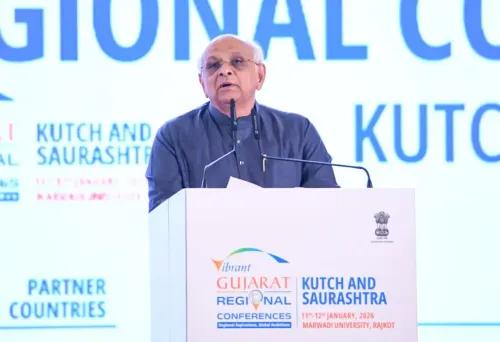
Minister Bavaliya underscored the state's ambition to deliver globally competitive technical training. 'Our key objective is to provide global-level technical training to the youth and ensure every young person becomes self-reliant under the Skill India mission. Skilled youth are the foundation of a prosperous nation,' he said.
Minister of State Amrutiya echoed the sentiment, stating: 'Skilled youth are the true strength of our nation and can contribute significantly to India's economic growth, national progress and nation building.'
ASE's Long-Term Vision for Kutch
Robin Bhowmik, Chief Executive Officer of ASE, described Kutch as central to the organisation's skilling strategy. 'Kutch is our karma bhoomi and we remain deeply invested in its future. Through our partnership with the Government of Gujarat and ITIs across the region, we aim to build a continuously skilled, industry-ready workforce capable of contributing across sectors and supporting long-term regional transformation,' he said.
ASE positions itself as the Adani Group's capability-building platform, focused on creating scalable talent ecosystems aligned to industry demand. The Kutch initiative is among its most geographically concentrated deployments to date.
Why It Matters
Kutch has historically faced the challenge of talent migration, with skilled youth moving to larger urban centres for employment. By anchoring training to sectors with active local demand, the programme directly targets that outflow. This comes amid a broader national push under the Skill India Mission to make vocational education more employment-linked rather than certification-led. Whether the Gujarat Model's reported replication in other states translates into measurable employment outcomes will be the real test of its impact.
Point of View
ASE effectively creates a captive talent pipeline — which is efficient, but also worth scrutinising for whether it broadens or narrows student career options. The claim that this 10-point model is being replicated as a 'Gujarat Model' in other states is significant if verifiable, but the source is ASE itself, and independent corroboration is absent. India's ITI ecosystem has seen many public-private partnerships that delivered certificates rather than careers; the real metric here will be placement rates and wage levels, not enrolment numbers.
NationPress
26 Sept 2026
Frequently Asked Questions
What did Adani Skills & Education sign with the Gujarat government?
ASE signed two MoUs with the Gujarat government on 29 May 2025 to transform 11 government ITIs across Kutch. The agreements focus on industry-linked skilling in renewable energy, logistics, and infrastructure to build local employment pipelines.
Which ITIs are covered under this partnership?
All 11 government ITIs across the Kutch district are covered under the partnership. The initiative is designed to collectively upgrade curriculum, infrastructure, and training methodology across each institute.
What is ASE's 'Skill2Employ' approach?
'Skill2Employ' is ASE's training methodology that blends classroom learning with real-world operational exposure through simulations, Centres of Excellence, and globally benchmarked curricula. It aims to produce graduates who are productive from their first day on the job.
What is the 'Gujarat Model' referred to in the initiative?
The 'Gujarat Model' refers to ASE's 10-point ITI transformation agenda developed in Kutch, which the organisation says is now being adopted by other states across India. It represents a replicable framework for public-private ITI upgradation.
Why is this initiative significant for Kutch?
Kutch has long faced talent migration, with skilled youth leaving for larger cities due to limited local opportunities. By aligning training with active sector demand in the region, the programme aims to retain skilled workers and reduce dependence on outside talent.