Dharavi Redevelopment: Adani Group to rehabilitate 1 million slum dwellers in Mumbai
Synopsis
The Adani Group's Dharavi Redevelopment Project is not just a housing scheme — it is a ₹-scale bet on transforming Asia's largest slum into a transit-oriented commercial district. With 130 msf of free sale land just 5 km from BKC and the first handovers due in December 2026, the project's ambition is matched only by its complexity.
Key Takeaways
The Adani Group holds an 80% stake in the Dharavi Redevelopment Project , approved in 2022 , with the Maharashtra Government holding the remaining 20% .
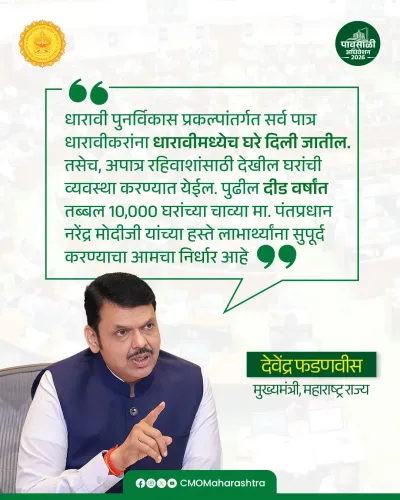
Over 1 million slum dwellers are to be rehabilitated into more than 1,25,000 newly constructed units.
The project spans 225 msf — 95 msf for rehabilitation and 130 msf of free sale area located 5 km from BKC .
The first building on Indian Railways land is scheduled for handover in December 2026 ; 30,000 units to be under construction by FY27 .
Infrastructure plans include three metro stations , clean-up of the Mithi river , a 6 km mangrove creek , and a Marine Drive-style promenade.
The Adani Group has committed to 10 years of O&M for all rehabilitated units.
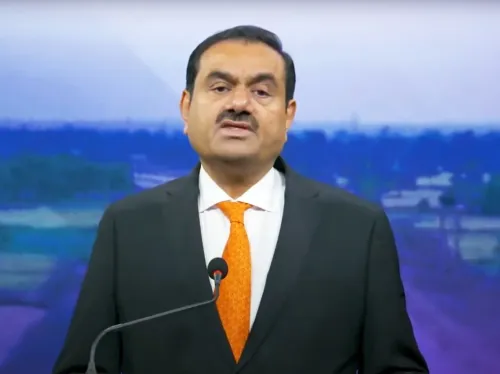
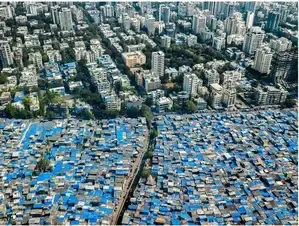
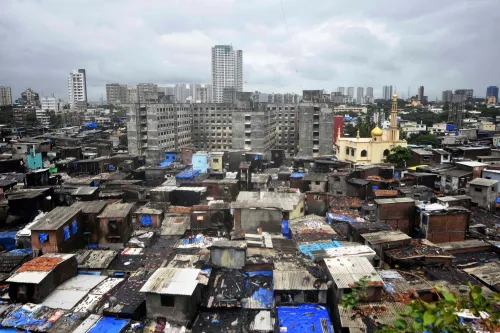
The Adani Group is undertaking the largest urban redevelopment project in Asia at Dharavi, central Mumbai, involving the rehabilitation of more than 1 million slum dwellers and the construction of over 1,25,000 homes. The Dharavi Redevelopment Project, approved in 2022, is structured as a public-private partnership between the Maharashtra Government (20% stake) and the Adani Group (80% stake), with the stated goal of transforming one of Asia's most densely populated informal settlements into a transit-oriented urban hub.
Scale and Scope of the Project
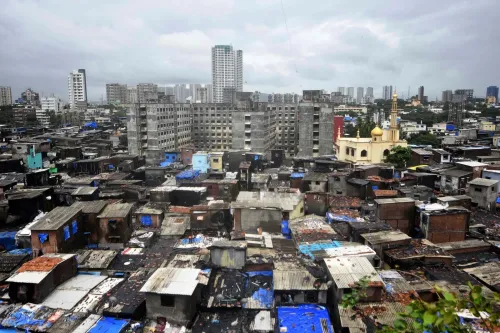
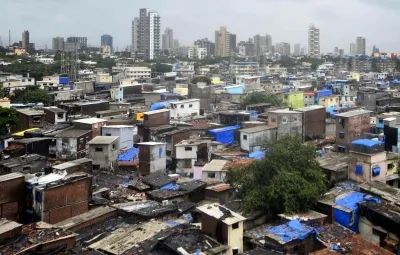
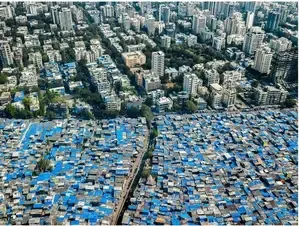
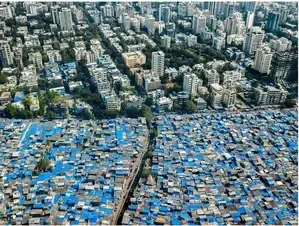
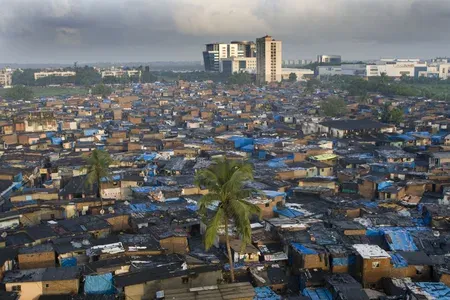
Dharavi spans roughly 600 acres in central Mumbai and is widely regarded as Asia's largest slum, home to over a million residents alongside four major industries — pottery, food processing, leather, and plastic scrap, according to an HSBC report. The total redevelopment footprint covers 225 million square feet (msf), of which 95 msf is earmarked for rehabilitation and 130 msf constitutes free sale area.
Of the 1,25,000 residential units planned for displaced slum dwellers, approximately half will be built within the existing Dharavi boundary, while the remainder will be distributed across six locations in the Mumbai Metropolitan Region (MMR).
Commercial Opportunity for Adani Group
The 130 msf of free sale area — situated roughly 5 km from Bandra Kurla Complex (BKC), Mumbai's central business district — represents a substantial commercial windfall. According to the HSBC report, this land parcel is approximately 2.5 times Mumbai's total residential absorption in FY26. The Adani Group plans to develop both residential and commercial projects on this land.
Notably, the free sale component effectively cross-subsidises the rehabilitation effort, a model common to large-scale slum redevelopment schemes in Maharashtra but rarely executed at this magnitude.
Infrastructure Upgrades Planned
Beyond housing, the project envisions sweeping infrastructure improvements. Plans include a multi-modal transport hub integrating three metro stations, bus depots, sports centres, schools, and healthcare facilities. Environmental components include a clean-up of the Mithi river and the Deonar dumping ground, development of a 6 km mangrove creek, and a Marine Drive-style promenade along the Mithi river, as per the report.
Timeline and Execution
The Adani Group aims to complete the rehabilitation portion over the next seven to eight years. The first building — on a land parcel belonging to Indian Railways — is scheduled for handover in December 2026, with construction of 30,000 units expected to be underway by FY27. The group has also committed to providing 10 years of operations and maintenance (O&M) for all rehabilitated units.
With construction milestones approaching and the first handovers less than two years away, the project's execution will be closely watched as a test case for large-scale public-private urban renewal in India.
Point of View
Litigation, and political shifts. The 130 msf free sale windfall near BKC gives Adani a compelling commercial incentive to deliver, but that same asymmetry — where the developer's upside is far larger than the rehabilitation obligation — will invite sustained scrutiny. The real accountability test arrives in December 2026, when the first handover is due.
NationPress
15 Sept 2026
Frequently Asked Questions
What is the Dharavi Redevelopment Project?
The Dharavi Redevelopment Project is a public-private partnership between the Maharashtra Government and the Adani Group, approved in 2022, to transform Dharavi — widely regarded as Asia's largest slum — into a transit-oriented urban hub. It involves rehabilitating over 1 million residents into more than 1,25,000 new homes across a 225 msf footprint.
What is Adani Group's stake in the Dharavi project?
The Adani Group holds an 80% stake in the project, with the Maharashtra Government holding the remaining 20%. The structure gives Adani operational control while the state retains a minority interest.
When will the first homes be handed over under the Dharavi project?
The first building — on a land parcel owned by Indian Railways — is scheduled for handover in December 2026. Construction of 30,000 units is expected to be underway by FY27, with the full rehabilitation phase targeted over seven to eight years.
What infrastructure will be built alongside the housing?
Plans include a multi-modal transport hub with three metro stations, bus depots, schools, healthcare facilities, and sports centres. Environmental upgrades cover the clean-up of the Mithi river and Deonar dumping ground, a 6 km mangrove creek, and a Marine Drive-style promenade along the Mithi river.
How large is the free sale area in the Dharavi project?
The free sale area covers 130 msf, located approximately 5 km from Bandra Kurla Complex (BKC), Mumbai's central business district. According to an HSBC report, this is roughly 2.5 times Mumbai's total residential absorption in FY26.