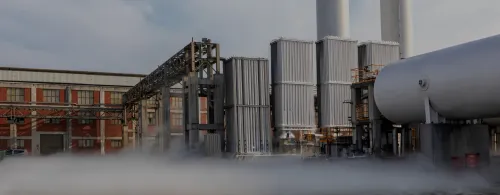
Kutch Copper to double smelting capacity to 1 million tonnes

Synopsis
Adani Group's Kutch Copper Limited is targeting a doubling of smelting capacity at Mundra to 1 million tonnes per annum — a scale that would make it the world's largest single-location custom copper smelter. Backed by a $1.2 billion group commitment and a 115 MW renewable energy integration plan, the move is a high-stakes industrial bet timed to India's energy transition and net-zero ambitions.
Key Takeaways
Kutch Copper Limited (KCL) plans to double copper smelting capacity from 0.5 million tonnes to 1 million tonnes per annum at its Mundra facility.
The expanded facility would become the world's largest single-location custom copper smelter .
Adani Group has committed $1.2 billion to the copper project.
KCL plans to integrate 115 MW of renewable energy into its operations as part of its decarbonisation roadmap.
The company operates on nearly 100 per cent desalinated water and follows a Zero Liquid Discharge approach; 99.8 per cent of sulphur emissions are treated.
The expansion aligns with India's net-zero by 2070 target and rising copper demand from clean energy infrastructure.
Kutch Copper Limited (KCL), a subsidiary of Adani Enterprises Limited, on Sunday, 11 October 2026, unveiled an ambitious expansion and sustainability strategy aimed at doubling its copper smelting capacity and reinforcing India's position in the global copper supply chain.
Capacity Expansion Plans
KCL currently operates a greenfield copper refinery in Mundra, in the Kutch region of Gujarat, with a copper smelting capacity of 0.5 million tonnes per annum. The company plans to scale this up to 1 million tonnes per annum, a move that would position the Mundra facility as the world's largest single-location custom copper smelter. The broader Adani Group has committed $1.2 billion to the project, signalling long-term confidence in domestic copper production.
Decarbonisation and Renewable Energy Roadmap
In its maiden sustainability report, KCL outlined a decarbonisation roadmap anchored by the integration of 115 MW of renewable energy into its operations. The initiative is designed to reduce the carbon footprint of the company's manufacturing activities while aligning with India's broader climate commitments. The company has framed copper as an essential input for the energy transition, noting the metal's growing role in renewable energy systems, electric mobility, power transmission, and other clean energy technologies.
Water Conservation and Emissions Control
KCL's sustainability strategy places particular emphasis on responsible resource management. According to the report, the company operates using nearly 100 per cent desalinated water and follows a Zero Liquid Discharge approach — measures intended to minimise dependence on freshwater resources and reduce environmental impact. On emissions, KCL reported that it currently treats 99.8 per cent of sulphur emissions through advanced environmental technologies, a metric the company has highlighted as evidence of its environmental, social and governance (ESG) commitment.
Community Development Initiatives
Beyond manufacturing, KCL is investing in community development programmes in areas surrounding the Mundra facility. These cover healthcare, education, livelihood enhancement, and broader social development, with the stated objective of generating long-term benefits for local communities. This community-first framing is consistent with the wider Adani Group's approach to large industrial projects, though critics have at times questioned the scale of such commitments relative to project footprints.
Strategic Context: India's Copper Demand and Net-Zero Goals
The expansion comes at a critical juncture. India has set a target of achieving net-zero emissions by 2070, and copper is central to the infrastructure required for that transition — from electricity grids to solar installations and electric vehicle charging networks. Domestic copper production capacity has historically lagged behind demand, making KCL's scale-up strategically significant. Notably, this is one of the largest single-site copper investments in India's industrial history, and its success could reduce the country's dependence on imported refined copper. The coming months will test whether the ambitious capacity targets translate into verified operational milestones.
Point of View
Solar and grid infrastructure is structurally rising, and India's import dependence on refined copper creates a genuine opening for domestic scale. But the $1.2 billion commitment is only meaningful if it translates into operational output on schedule; large Adani Group industrial projects have historically attracted scrutiny over execution timelines and regulatory clearances. The 'world's largest single-location smelter' claim, if achieved, would be a genuine industrial landmark — but the sustainability report's self-reported metrics on emissions and water need third-party verification to carry real credibility. The harder question is whether domestic copper capacity, however large, will be priced and structured to serve India's energy transition or primarily to export refined copper at a margin.
NationPress
11 Oct 2026
Frequently Asked Questions
What is Kutch Copper Limited's plan to expand smelting capacity?
Kutch Copper Limited plans to double its copper smelting capacity from 0.5 million tonnes per annum to 1 million tonnes per annum at its Mundra facility in Gujarat. If achieved, this would make it the world's largest single-location custom copper smelter.
How much has Adani Group invested in the Kutch Copper project?
The Adani Group has committed $1.2 billion to the Kutch Copper project. This underlines the group's ambition to significantly expand domestic copper production and strengthen India's industrial base.
What is KCL's renewable energy and decarbonisation plan?
KCL plans to integrate 115 MW of renewable energy into its Mundra operations as part of its decarbonisation roadmap. The company also treats 99.8 per cent of sulphur emissions through advanced environmental technologies and operates on nearly 100 per cent desalinated water under a Zero Liquid Discharge framework.
Why is copper important to India's energy transition?
Copper is a critical material for renewable energy systems, electric vehicles, power transmission infrastructure, and clean energy technologies. As India pursues its net-zero emissions target by 2070, demand for copper is expected to rise sharply alongside infrastructure and industrial expansion.
Where is KCL's copper smelter located?
KCL operates a greenfield copper refinery in Mundra, in the Kutch region of Gujarat. The facility is part of Adani Enterprises Limited's broader industrial presence in the Mundra area.