Ahmedabad completes 21,000 PMAY homes, targets 50,000 more in Phase 2
Synopsis
Ahmedabad's civic body has quietly crossed 21,000 completed PMAY homes — and is already chasing 50,000 more under Phase 2. With DPRs submitted for nearly 24,000 units across slum and lake-area settlements, and carpet areas expanding under PMAY 2.0, AMC's housing push is one of the most ambitious urban housing programmes currently active in any Indian city.
Key Takeaways
AMC has completed and allotted 21,056 homes under the EWS-I category of PMAY 1.0 in Ahmedabad.
Another 10,431 EWS-I units are currently under construction; 9,662 ISSR homes have also been completed.
A total of 27,955 beneficiaries have received housing allotments under AMC's programmes so far.
Under PMAY 2.0 , AMC targets 50,000 houses and has submitted DPRs for 23,958 units for government approval.
Carpet areas under PMAY 2.0 are larger than Phase 1; 2.5 BHK units will carry an estimated 61 sq m each.
Online applications are open for EWS housing ; total dwelling cost fixed at ₹3 lakh , with a computerised draw for allotment.
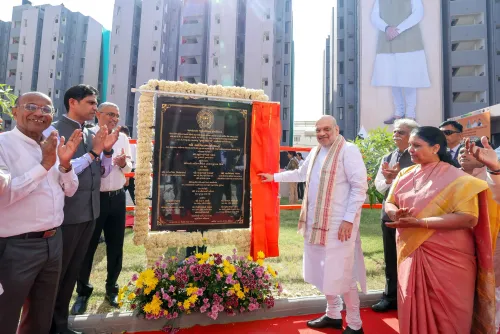
The Ahmedabad Municipal Corporation (AMC) has completed and allotted over 21,000 affordable housing units to economically weaker families under the Pradhan Mantri Awas Yojana (PMAY), while simultaneously submitting proposals for nearly 24,000 additional units under PMAY 2.0 — signalling a significant scale-up in urban housing delivery in Gujarat's largest city.
According to details released by AMC on Monday, 8 June, a total of 21,056 houses have been completed and allotted under the Economically Weaker Section (EWS-I) category of PMAY 1.0, with construction of another 10,431 units currently under way.
What Has Been Built So Far
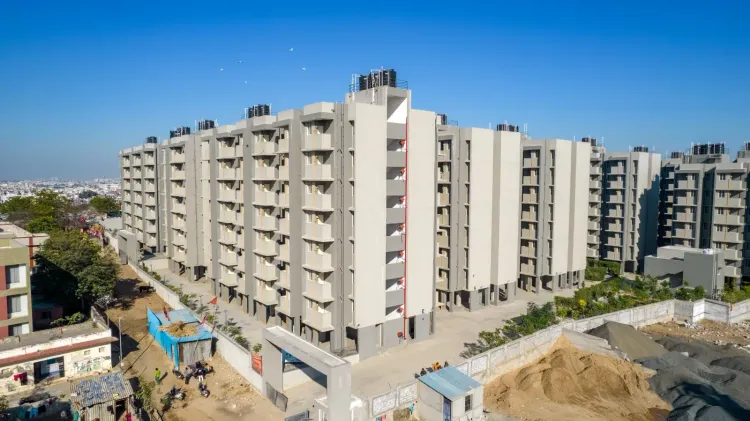
The EWS-I homes carry a carpet area of 28 square metres each, comprising a bedroom, hall, kitchen, toilet-bathroom, and wash area. Amenities include round-the-clock water supply, solar panels, PNG gas connections, centralised drainage systems, lifts, fire-fighting systems, and stainless steel sinks with Kota stone kitchen platforms. The beneficiary contribution for these homes has been fixed at ₹3.30 lakh.
Under the EWS-II category, AMC has completed 1,217 units with a carpet area of 38 square metres. Separately, 2,501 homes have been included under the LIG 2BHK category with a carpet area of 48 square metres.
Under the In-Situ Slum Rehabilitation and Redevelopment Scheme (ISSR)-2013, 9,662 houses with a carpet area of 30 square metres have been completed, while work on another 16,744 units is ongoing. These homes feature earthquake-resistant construction, vitrified tile flooring, mini sewage treatment plants, and PNG gas connections.
The Beneficiary-Led Construction (BLC) component has extended housing assistance to 274 beneficiaries, while the Urban Housing Scheme-2016 and the Public Housing Redevelopment Policy together account for 4,768 completed houses, with 64 units still under construction. In total, 27,955 beneficiaries have received housing allotments under AMC's programmes so far.
PMAY 2.0: Bigger Homes, Larger Targets
Under PMAY 2.0, AMC has been assigned a target of constructing 50,000 houses. The corporation has submitted Detailed Project Reports (DPRs) covering 23,958 units to the government for approval. These include DPRs for 6,755 houses across 18 slum locations and 3,190 houses at 8 locations for families residing in lake-area settlements.
The Affordable Housing in Partnership (AHP) component covers 12,201 houses across 21 locations, while the Affordable Rental Housing Complex (ARHC) scheme proposes 1,745 units at 3 locations. AMC is also developing 2,060 homes under a Low-Income Group (LIG) scheme, with 2.5 BHK units each carrying an estimated carpet area of 61 square metres — larger than anything offered under PMAY 1.0. Notably, the carpet area of homes proposed under PMAY 2.0 has been increased across the board compared with the first phase.
How to Apply for EWS Housing
AMC has opened online applications for EWS housing under the Affordable Housing in Partnership component of PMAY (Urban). Applications are invited from General, Scheduled Caste, Scheduled Tribe, and Other Backward Class categories. Persons with benchmark disabilities are entitled to a 5 per cent horizontal reservation across all categories.
The total cost of an EWS dwelling has been fixed at ₹3 lakh. Applicants must pay ₹7,550 at the time of online application, followed by ₹52,500 upon receipt of an allotment letter. The remaining ₹2.40 lakh is payable in 10 instalments of ₹24,000 each, along with ₹30,000 towards maintenance and other charges. Required documents include Aadhaar and PAN cards, proof of residence, income certificates, and caste or disability certificates where applicable. Allotments are conducted through a computerised draw system administered by AMC's e-governance department.
What Comes Next
With DPRs submitted and approvals awaited, the next phase of PMAY in Ahmedabad is expected to substantially expand the city's affordable housing stock. The corporation's move to increase carpet areas under PMAY 2.0 reflects a broader policy shift toward quality alongside quantity in urban housing delivery.
Point of View
056 completed units with named amenities and a beneficiary count is more verifiable than most urban housing announcements. But the real test is PMAY 2.0: a 50,000-unit target with only 23,958 DPRs submitted means the corporation has cleared roughly half the paperwork for a programme that is already under way. Historically, slum rehabilitation schemes in Indian cities have stalled at the construction stage due to land disputes and beneficiary verification delays — risks that are not addressed in AMC's current disclosures. The increase in carpet area is a genuine quality improvement, but affordability hinges on whether the ₹3 lakh price point holds as construction costs rise. Independent audit of allotment outcomes — not just completion numbers — would strengthen public trust in the programme.
NationPress
24 Sept 2026
Frequently Asked Questions
How many PMAY homes has the Ahmedabad Municipal Corporation completed?
AMC has completed and allotted 21,056 homes under the EWS-I category of PMAY 1.0, along with 1,217 EWS-II units and 9,662 homes under the ISSR slum rehabilitation scheme. In total, 27,955 beneficiaries have received housing allotments under AMC's various programmes.
What is AMC's target under PMAY 2.0?
Under PMAY 2.0, AMC has been assigned a target of constructing 50,000 houses in Ahmedabad. The corporation has so far submitted Detailed Project Reports covering 23,958 units to the government for approval.
How can I apply for EWS housing under PMAY in Ahmedabad?
Eligible applicants can apply online through the AMC's official website. The total cost of an EWS dwelling is fixed at ₹3 lakh, with an initial payment of ₹7,550 at the application stage. Allotments are made through a computerised draw system.
What amenities are provided in AMC's PMAY homes?
PMAY homes built by AMC include round-the-clock water supply, PNG gas connections, solar panels, lifts, fire-fighting systems, centralised drainage, and earthquake-resistant construction, depending on the housing category. Higher-category units also feature granite kitchen platforms and basement parking.
Who is eligible to apply for PMAY housing in Ahmedabad?
Applications are open to General, Scheduled Caste, Scheduled Tribe, and Other Backward Class category residents. Persons with benchmark disabilities are entitled to a 5 per cent horizontal reservation. Applicants must submit Aadhaar, PAN, proof of residence, income certificates, and relevant caste or disability certificates.