Ahmedabad Division awards 35-year cargo terminal contract at Khakharechi under GCT Policy
Synopsis
Western Railway's Ahmedabad Division has handed its first Schedule-II Gati Shakti Cargo Terminal contract to Emirates Logistics India — a 35-year deal covering 80,413 sq m at Khakharechi, with zero capital outlay from the Railways. With eight existing terminals already clocking ₹330 crore in seven months, this addition signals the division's accelerating push to privatise freight handling capacity under the PM Gati Shakti framework.
Key Takeaways
Ahmedabad Division awarded a 35-year contract to Emirates Logistics India Private Limited for a cargo terminal at Khakharechi .
The terminal will be built on 80,413 square metres of railway land at no capital cost to Indian Railways.
Indian Railways will earn annual land licence fees of more than ₹15 lakh plus revenue-sharing proceeds.
It is the first terminal in the Ahmedabad Division under Schedule-II of the GCT Policy 2026 .
The division's existing eight Gati Shakti terminals handled over 23 lakh tonnes of freight and generated more than ₹330 crore between April and October 2026.
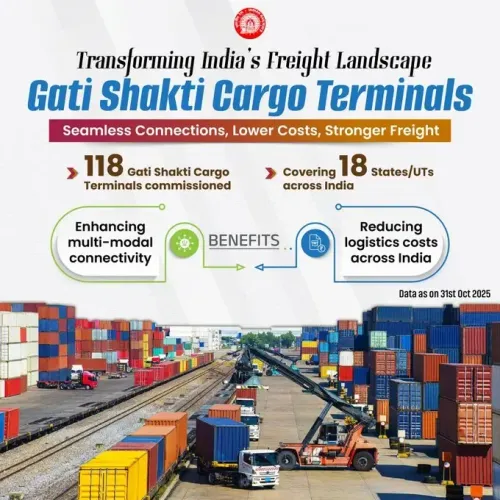
The project is part of the PM Gati Shakti National Master Plan , aimed at building an integrated logistics network.
Western Railway's Ahmedabad Division has awarded a 35-year contract to Emirates Logistics India Private Limited to develop a private cargo terminal at Khakharechi, utilising 80,413 square metres of railway land. The contract, executed under the Railway Board's Gati Shakti Cargo Terminal (GCT) Policy 2026, marks the first cargo terminal in the Ahmedabad Division to be sanctioned under Schedule-II of the policy.
Key Details of the Contract
The terminal will be developed entirely through private investment, with Indian Railways bearing no capital expenditure. Under the agreement, the Railways will receive annual land licence fees of more than ₹15 lakh, in addition to earnings through a revenue-sharing arrangement. The facility will be equipped with modern infrastructure for loading and unloading of goods, designed to handle a broad range of commodities.
Existing Cargo Terminal Performance
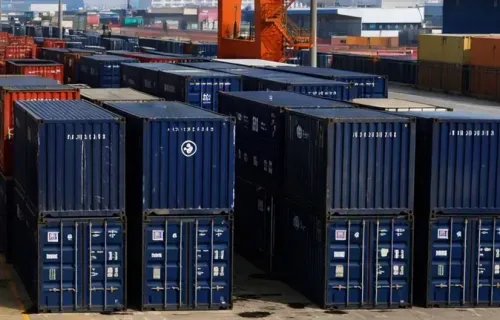
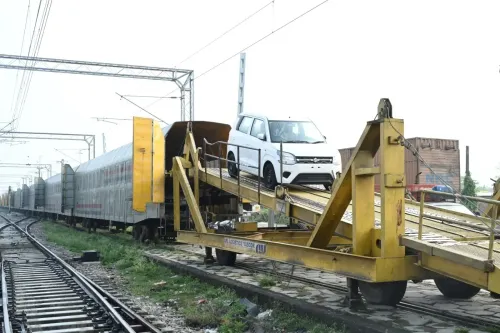
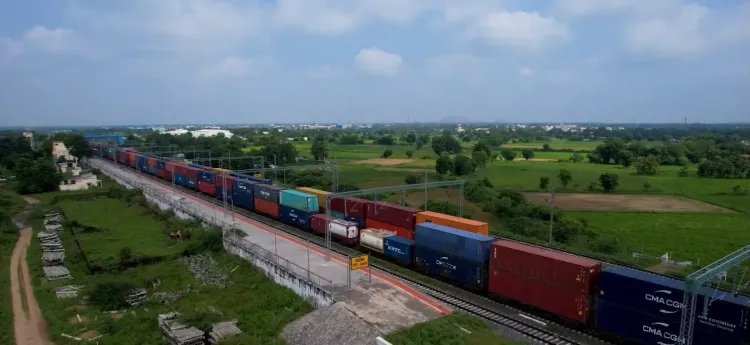
The Ahmedabad Division already operates eight Gati Shakti Cargo Terminals, which collectively handled more than 23 lakh tonnes of freight between April and October 2026, generating revenue exceeding ₹330 crore. During this seven-month period, more than 1,700 rakes comprising over 65,000 wagons were loaded at these terminals. Key commodities transported included containers, salt, bentonite, cement, fertilisers, sugar, and pulses.
What Officials Said
Divisional Railway Manager Ved Prakash said the new terminal would expand freight transportation facilities in the region and give industries and commercial establishments improved options for moving goods. 'Modern cargo handling facilities would make loading and unloading operations easier and encourage greater use of rail-based freight transportation,' he added.
Broader Policy Context
The Khakharechi project is part of the PM Gati Shakti National Master Plan, a central government initiative aimed at improving multimodal transport connectivity, developing logistics infrastructure, and creating an integrated freight network across India. Notably, greater rail freight usage is also expected to reduce dependence on road transport — a push aligned with India's broader decarbonisation goals. This is the latest in a series of private-investment cargo terminal awards under the GCT policy, which has gained momentum as Indian Railways seeks to monetise surplus land while expanding capacity without direct budgetary outlay.
Point of View
The Railways earns without spending. But the real metric to watch is whether Schedule-II terminals generate meaningfully higher throughput than their predecessors; the existing eight terminals' ₹330 crore haul in seven months sets a credible baseline. The GCT Policy's strength lies in bundling land licence revenue with revenue sharing, reducing the Railways' exposure to underutilisation risk. What remains untested is whether Emirates Logistics India can ramp up volumes in a region where road freight still dominates short-haul moves — the modal shift argument only holds if rail proves cost-competitive at the terminal level.
NationPress
7 Nov 2026
Frequently Asked Questions
What is the Gati Shakti Cargo Terminal contract awarded in Ahmedabad?
The Ahmedabad Division of Western Railway has awarded a 35-year contract to Emirates Logistics India Private Limited to develop a cargo terminal at Khakharechi on 80,413 square metres of railway land. It is the first terminal in the division sanctioned under Schedule-II of the Railway Board's GCT Policy 2026.
How much revenue will Indian Railways earn from the Khakharechi terminal?
Indian Railways will receive annual land licence fees of more than ₹15 lakh from the project, along with additional income through a revenue-sharing arrangement with the private operator. The Railways will not invest any capital in the project.
What is Schedule-II of the GCT Policy 2026?
Schedule-II of the Gati Shakti Cargo Terminal Policy 2026 is a framework under which private operators can develop cargo terminals on railway land through their own investment. The Khakharechi terminal is the first in the Ahmedabad Division to be developed under this specific schedule.
How have existing Gati Shakti terminals in Ahmedabad Division performed?
The division's eight operational Gati Shakti Cargo Terminals handled more than 23 lakh tonnes of freight between April and October 2026, generating revenue exceeding ₹330 crore. Over 1,700 rakes and 65,000 wagons were loaded across these terminals during the period.
How does this project fit into the PM Gati Shakti National Master Plan?
The Khakharechi terminal is part of the PM Gati Shakti National Master Plan, which aims to integrate multimodal transport infrastructure, reduce logistics costs, and shift freight from road to rail. Greater rail freight usage is expected to lower carbon emissions and reduce highway congestion.