AIIMS Bhopal Uncovers Unique Gland in Nasopharynx
Synopsis
AIIMS Bhopal has made a remarkable discovery of a previously unknown gland in the nasopharyngeal region, enhancing our understanding of human anatomy. This groundbreaking finding could revolutionize head and neck surgeries and cancer treatments.
Key Takeaways
AIIMS Bhopal has identified a new gland in the nasopharyngeal region .
The research clarifies the gland's location , size, and relationship with surrounding organs.
For the first time, the drainage duct of this gland has been confirmed.
The study is published in the Journal of Anatomy .
This finding will enhance head and neck surgeries and cancer treatment planning.
Bhopal, Feb 27 (NationPress) In a groundbreaking advancement in medical research, the All India Institute of Medical Sciences (AIIMS) Bhopal announced on Friday the discovery of a unique gland situated in the nasopharyngeal area, which is found behind the nose and at the upper part of the throat in humans.
During their investigation, the medical experts at AIIMS clearly identified this gland and its accompanying duct, which had previously been undocumented. According to a statement released by the institute, this finding represents a pivotal moment in our comprehension of human anatomy.
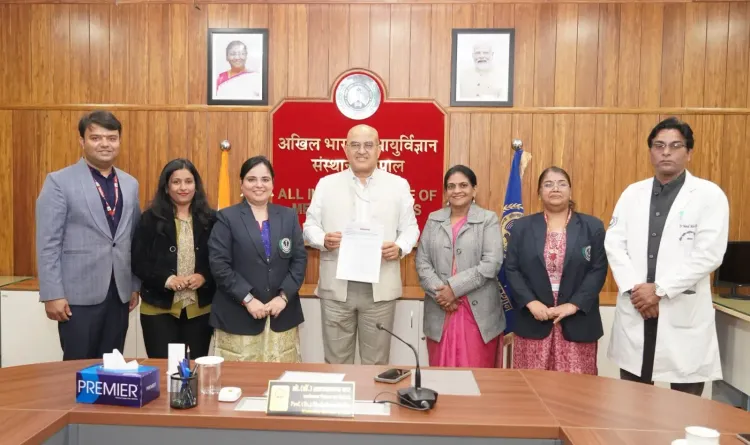
The research team comprised six senior physicians: Sunita Arvind Athavale, Sheetal Kotgirwar, Manal M. Khan, Anshul Rai, Deepti Joshi, and Rekha Lalwani, as noted in AIIMS Bhopal's press release.
The group performed meticulous studies and microscopic evaluations to detail the gland's positioning, dimensions, and its interaction with neighboring organs.
Significantly, the drainage duct of this gland was confirmed for the first time, establishing its status as an independent gland.
This research has been published in the esteemed Journal of Anatomy, a highly regarded publication in anatomical science.
Following an exhaustive expert review, the study was accepted, affirming its scientific validity. This discovery is anticipated to greatly benefit patients, as it will enhance the safety and precision of head and neck surgeries, aid in cancer treatment strategies, and improve radiotherapy planning.
On this impressive achievement, AIIMS Bhopal's Executive Director and CEO, Madhabananda Kar, praised the research team, emphasizing that such studies highlight the institute's pursuit of excellence and its capacity for multidisciplinary research.
He stated that this finding will enhance the precision and safety of head and neck surgical procedures, cancer treatment planning, radiotherapy, and disease detection through medical imaging, thereby directly benefiting patients.
"This accomplishment illustrates that even in well-explored areas of the human body, significant new insights can still be uncovered. This discovery is a remarkable and motivating advancement in medical science," Kar remarked.
Point of View
The discovery of a new gland by AIIMS Bhopal signifies a major leap in anatomical research, showcasing the institution's commitment to advancing medical knowledge. This finding holds immense potential for improving patient outcomes in head and neck treatments.
NationPress
27 Sept 2026
Frequently Asked Questions
What gland did AIIMS Bhopal discover?
AIIMS Bhopal discovered a unique gland located in the nasopharyngeal region, behind the nose and in the upper part of the throat.
Why is this discovery significant?
This discovery is significant as it could enhance the safety and precision of head and neck surgeries, as well as improve cancer treatment planning and radiotherapy.
Who was involved in the research?
The research team consisted of six senior doctors, including Sunita Arvind Athavale and Sheetal Kotgirwar.
Where was the research published?
The findings were published in the prestigious Journal of Anatomy.
How does this discovery benefit patients?
This discovery will lead to better surgical outcomes and more effective cancer treatment plans.