AIMIM president Owaisi cites Kasab burial to Modi, Yogi
Synopsis
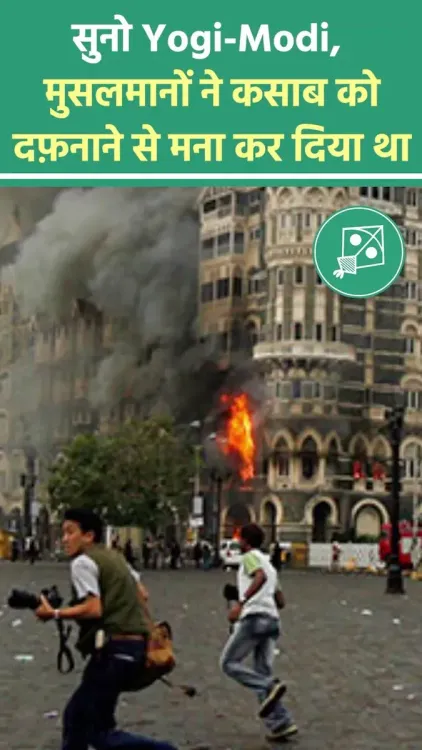
AIMIM president Asaduddin Owaisi invoked the 26/11 Mumbai attacks to tell PM Modi and CM Yogi Adityanath that Indian Muslims had refused to bury Ajmal Kasab, the Pakistani gunman hanged in 2012.
Key Takeaways
AIMIM president Asaduddin Owaisi on 27 November 2026 said India’s Muslims had refused to bury Ajmal Kasab .
He named Prime Minister Narendra Modi and Uttar Pradesh Chief Minister Yogi Adityanath and accused them of hating Muslims.
The 26/11 attacks in Mumbai from 26-29 November 2008 killed 166 people, including foreign nationals.
Kasab, a Pakistani Lashkar-e-Taiba operative, was the only gunman captured alive, convicted in 2010 and hanged in November 2012 .
The 2008 assault prompted a major overhaul of India’s coastal security and counter-terrorism coordination.
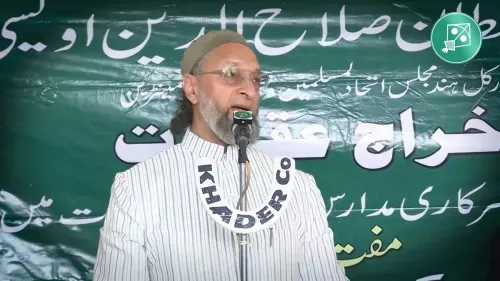
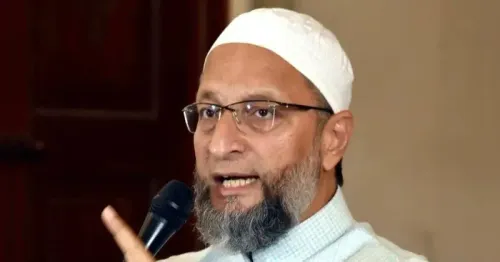
AIMIM president Asaduddin Owaisi on Friday turned the 26/11 anniversary into a direct political charge against Prime Minister Narendra Modi and Uttar Pradesh Chief Minister Yogi Adityanath. Posting on X on 27 November 2026, the Hyderabad Lok Sabha MP said India’s Muslims had refused to bury Pakistani gunman Ajmal Kasab — and that the two BJP leaders should know it.
The post, written largely in Hindi, opened with the 26/11 Mumbai terror attacks and then named both men. Owaisi wrote that musalmanon se nafrat karne wale (those who hate Muslims) Modi and Adityanath ought to know that India’s Muslims had refused to bury Kasab. The line is a loyalty argument, not a policy brief. It lands one day after the annual remembrance of Mumbai’s worst terror assault.
Owaisi’s charge the morning after 26/11
Ten Lashkar-e-Taiba militants struck Mumbai from 26 to 29 November 2008 in coordinated shootings and bombings. The attacks killed 166 people, including foreign nationals. That death toll still structures how India talks about Pakistan, coastal security and communal politics. Owaisi’s message does not dwell on the sites or the victims. It uses Kasab’s name to reverse a charge often aimed at Indian Muslims.
He is not asking for a new inquiry. He is telling the Prime Minister and the Uttar Pradesh Chief Minister that a community they, in his telling, malign had already drawn a line against the gunman.
Kasab’s capture, trial and hanging in 2012
Kasab was a Pakistani national and Lashkar-e-Taiba operative, and the only attacker taken alive. A special court convicted him in 2010. After legal appeals failed, he was executed by hanging in November 2012. Those facts are the established public record of the case. Owaisi’s further claim — that Indian Muslims refused to bury him — is reported here as the AIMIM president’s statement, not as an independent finding.
The post does not name a city, a graveyard, or a date for that refusal. It offers the assertion as something Modi and Adityanath ‘should know’.
How 26/11 still frames the loyalty fight
Indian political debate returns to 26/11 every year to argue over terrorism, Pakistan policy and Hindu-Muslim relations. Opposition leaders have long cited examples of Muslim cooperation with authorities in terror cases to counter BJP narratives on national loyalty. Owaisi’s post sits in that pattern. He names two of the BJP’s most visible faces on law and order and treats a community action as evidence of allegiance.
The 2008 attacks also triggered a major overhaul of coastal security and counter-terrorism coordination. That institutional story rarely dominates anniversary exchanges. The argument that does is simpler. Who stood with India when the gunmen came ashore — and who gets to say so now.
How BJP leaders answer, or whether they ignore the charge, will show if this stays on social media or moves into the next round of public commemoration. Mumbai’s dead are remembered every November. The fight over who may claim that memory now runs just as regularly.
Point of View
He offers minority cooperation as a political exhibit against two of the ruling party’s most prominent faces. The 26/11 calendar has long doubled as a stage for arguments over Pakistan policy, counter-terror politics and Hindu-Muslim belonging. How BJP leaders answer, or whether they ignore the charge, will show if this remains a social-media volley or becomes the next round of the loyalty debate.
NationPress
27 Nov 2026
Frequently Asked Questions
What did Asaduddin Owaisi say about Ajmal Kasab?
AIMIM president Asaduddin Owaisi said India’s Muslims had refused to bury Ajmal Kasab, the Pakistani gunman captured in the 26/11 Mumbai attacks. He directed the remark at Prime Minister Narendra Modi and Uttar Pradesh Chief Minister Yogi Adityanath on 27 November 2026.
Who was Ajmal Kasab?
Ajmal Kasab was a Pakistani national and Lashkar-e-Taiba operative captured during the 26/11 Mumbai terror attacks. He was the only gunman taken alive, convicted in 2010 and hanged in November 2012.
When did the 26/11 Mumbai terror attacks take place?
The attacks ran from 26 to 29 November 2008. Ten Lashkar-e-Taiba militants struck multiple sites across Mumbai, killing 166 people, including foreign nationals.
Why did Owaisi mention Narendra Modi and Yogi Adityanath?
Owaisi named both leaders in a post accusing them of hating Muslims and arguing they should acknowledge that Indian Muslims refused to bury Kasab. The message fits a wider pattern of using 26/11 anniversaries to debate communal relations and national loyalty.
What security changes followed the 26/11 attacks?
The 2008 assault prompted a major overhaul of India’s coastal security and counter-terrorism coordination mechanisms. Those institutional reforms remain a core part of the official response to the attacks.