AIMPLB nationwide movement against Muslim marginalisation to include Hindus, says Jamaat-e-Islami Hind
Synopsis
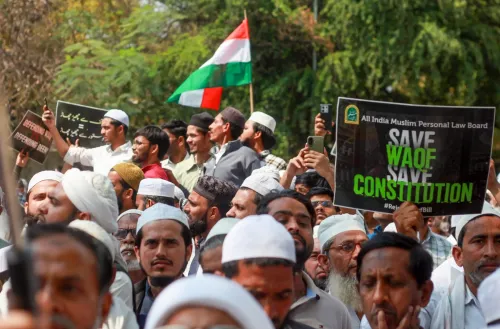
The AIMPLB has launched a nationwide movement against what it calls the marginalisation of Muslims and demolition of mosques — but in a significant strategic move, Jamaat-e-Islami Hind says the campaign will actively include Hindus who stand for justice, framing the fight as one for constitutional values rather than religious identity.
Key Takeaways
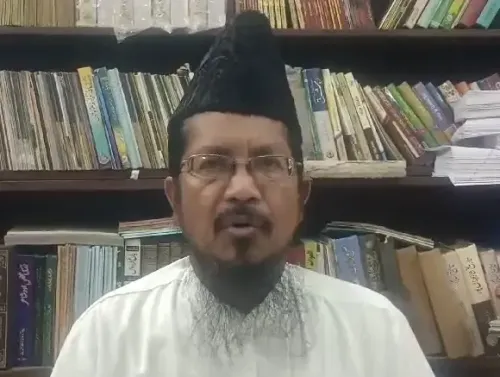
Jamaat-e-Islami Hind Vice President Malik Motasim Khan confirmed on 23 June that the AIMPLB nationwide movement will include Hindu participants alongside Muslims.
The campaign targets what the Board calls 'social and political marginalisation of Muslims,' mosque demolitions, and UCC implementation in BJP-ruled states.
States cited by Khan where UCC has been implemented: Gujarat , Uttarakhand , and Assam ; Madhya Pradesh is reportedly next.
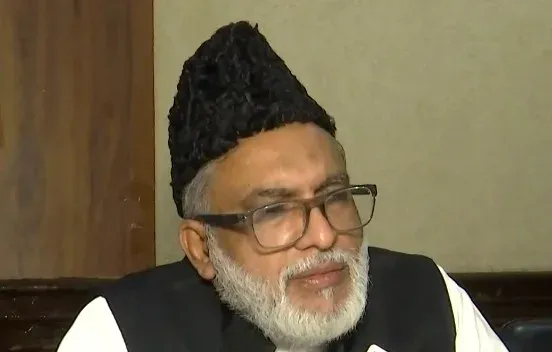
AIMPLB President Maulana Khalid Saifullah Rahmani said forced UCC implementation violates Article 25 of the Constitution.
An Action Committee has been constituted to coordinate outreach with 'democracy-loving and peace-loving sections of society.'
The All India Muslim Personal Law Board (AIMPLB) has announced a nationwide movement against what it describes as the 'social and political marginalisation of Muslims' and the demolition of mosques and madrasas — and the campaign will actively seek participation from Hindu citizens as well, according to Malik Motasim Khan, Vice President of Jamaat-e-Islami Hind. Khan made the remarks on Tuesday, 23 June, underscoring that the movement is framed around constitutional values rather than religious identity alone.
What the Campaign Aims to Achieve
Khan stated that the campaign is designed to restore public confidence in constitutional guarantees, including liberty, equality, fraternity, justice, and freedom of religion. 'The campaign is not just for Muslims; it will be run by both Muslims and non-Muslims and will be against the unconstitutional things in the country. The campaign will include those Hindu brothers who stand in favour of justice,' he said.
He added that even without the AIMPLB's formal announcement, such a campaign was necessary. 'The Muslim Personal Law Board is an important institution. Even if they had not made this announcement, this work still had to be done,' Khan said.
Key Concerns Cited by AIMPLB and Jamaat-e-Islami Hind
Khan listed several issues driving the movement, including the implementation of the Uniform Civil Code (UCC) in states such as Gujarat, Uttarakhand, and Assam, with preparations reportedly underway in Madhya Pradesh. He also cited the demolition of mosques across the country and the alleged denial of bail to arrested individuals, describing an 'atmosphere of fear.'
The AIMPLB Executive Committee has constituted an Action Committee to coordinate with what it termed 'democracy-loving and peace-loving sections of society.' A statement from the Board noted concerns over the 'promotion of hatred and hostility, damage to communal harmony, and attacks on the life, property, honour and dignity of Muslims.'
AIMPLB's Stand on the Uniform Civil Code
A meeting of the Board, presided over by Board President Maulana Khalid Saifullah Rahmani, resolved that the 'forced implementation of the UCC is contrary to the religious freedom guaranteed under Article 25 of the Constitution of India.' The Executive Committee also expressed concern over what it called 'ongoing legislative efforts in BJP-ruled states in the name of the Uniform Civil Code.'
Broader Context
This comes amid a sustained political debate in India over the UCC, with the Bharatiya Janata Party (BJP)-led governments in multiple states moving to enact versions of the legislation. Critics, including Muslim personal law bodies and some civil society groups, argue that the UCC infringes upon minority religious rights protected under the Constitution. Proponents counter that a uniform code promotes gender equality and national integration. The AIMPLB's decision to broaden the coalition beyond Muslim communities marks a notable strategic shift, seeking to frame the movement in civic rather than communal terms.
The Action Committee is expected to begin outreach across states in the coming weeks, with dialogue sessions planned to build cross-community consensus around constitutional protections.
Point of View
The Board is attempting to deflect the charge that it represents narrow communal interests. However, the credibility of that framing will depend entirely on whether non-Muslim civil society groups actually join. The UCC debate also cuts both ways: while minority bodies cite Article 25, proponents argue it advances gender equality within communities — a tension the AIMPLB has yet to directly address in its public communications. Mainstream coverage has largely missed the strategic intent behind the 'inclusive' framing.
NationPress
22 Sept 2026
Frequently Asked Questions
What is the AIMPLB nationwide movement about?
The All India Muslim Personal Law Board has launched a nationwide campaign against what it describes as the social and political marginalisation of Muslims, demolition of mosques and madrasas, and the implementation of the Uniform Civil Code in BJP-ruled states. The movement is also framed around protecting constitutional guarantees of equality, liberty, and freedom of religion.
Will the AIMPLB campaign include non-Muslims?
Yes. Jamaat-e-Islami Hind Vice President Malik Motasim Khan confirmed on 23 June that the campaign will include 'Hindu brothers who stand in favour of justice.' The movement is described as being against 'unconstitutional things in the country' rather than being exclusively Muslim in character.
What is the AIMPLB's position on the Uniform Civil Code?
The AIMPLB, in a meeting presided over by Board President Maulana Khalid Saifullah Rahmani, resolved that the forced implementation of the UCC is contrary to the religious freedom guaranteed under Article 25 of the Constitution. The Board has specifically criticised legislative efforts in BJP-ruled states.
Which states have implemented the Uniform Civil Code, according to the AIMPLB?
According to Malik Motasim Khan, the UCC has been implemented in Gujarat, Uttarakhand, and Assam, with preparations reportedly underway in Madhya Pradesh.
What is the AIMPLB Action Committee?
The AIMPLB Executive Committee has constituted an Action Committee to coordinate the nationwide movement with democracy-loving and peace-loving sections of society. It is expected to conduct outreach and dialogue sessions across states to build cross-community support for constitutional protections.