Jamaat-e-Islami Hind slams Bhojshala verdict, warns of threat to secular fabric
Synopsis
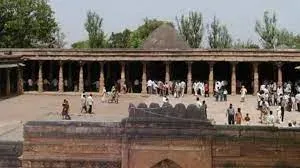
The Madhya Pradesh High Court's declaration of Bhojshala as a temple has drawn a formal, pointed rebuke from Jamaat-e-Islami Hind, which warns the ruling is not an isolated dispute but part of a pattern of reopening historical religious site cases — a trend it says is eroding the Places of Worship Act, 1991, and the judiciary's perceived impartiality.
Key Takeaways
Jamaat-e-Islami Hind (JIH) condemned the Madhya Pradesh High Court ruling on 16 May 2025 that declared Bhojshala (Kamal Maula Mosque) in Dhar a temple.
The division bench of Justice Vijay Kumar Shukla and Justice Alok Awasthi set aside decades of administrative arrangements allowing dual religious use of the site.
JIH president Syed Sadatullah Husaini warned the verdict has 'grave implications' for minority rights, religious freedom, communal harmony, and the secular fabric of India.
JIH invoked the Places of Worship (Special Provisions) Act, 1991 , calling for it to be upheld 'in letter and spirit' to prevent reopening of historical disputes.
The Muslim community intends to pursue legal remedies, including a possible appeal before a higher court.
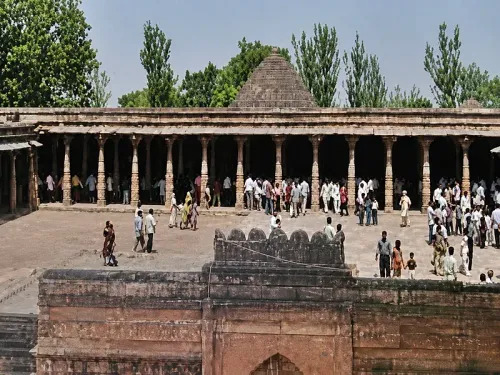
Jamaat-e-Islami Hind (JIH) on Saturday, 16 May issued a sharp rebuke of the Madhya Pradesh High Court ruling that declared the Kamal Maula Mosque (Bhojshala) in Dhar a temple, warning that the judgment poses serious risks to the credibility of the judiciary, minority rights, religious freedom, and the secular character of India. The organisation said the Muslim community would pursue all available legal remedies, including filing an appeal.
The Verdict That Triggered the Response
The Indore Bench of the Madhya Pradesh High Court, comprising Justice Vijay Kumar Shukla and Justice Alok Awasthi, delivered its ruling on Friday, 15 May, declaring the Bhojshala complex a temple and affirming that the Hindu community holds an inherent right to worship at the site — one the court held was never extinguished historically. The division bench simultaneously set aside decades of administrative arrangements that had allowed both communities to use the site for their respective religious practices on designated days.
What JIH President Syed Sadatullah Husaini Said
JIH president Syed Sadatullah Husaini issued a formal statement calling for 'fairness and objectivity' in judicial proceedings involving sensitive religious matters. He warned that the ruling 'will have grave implications for the credibility of the judicial system, minority rights, religious freedom, communal harmony and the secular fabric of the country.'
Husaini argued that the verdict raises constitutional questions tied to Articles 25 and 26 of the Constitution, which guarantee the freedom of religion and the right of religious denominations to manage their own affairs. He stressed that the removal of established worship rights of one community in favour of another 'not only disrupts a long-standing arrangement but also risks undermining the principle of equal respect for all faiths.'
On Archaeological Evidence and Alternative Land
The JIH chief also pushed back against suggestions of allotting alternative land to the Muslim community as a resolution. 'Religious rights cannot be reduced to questions of mere physical space or relocation, as places of worship are deeply connected with historical continuity, identity, and collective memory,' Husaini said. He further raised concern about the court's reliance on 'contested historical and archaeological interpretations,' arguing that such approaches must be 'carefully scrutinised to ensure that they do not disproportionately privilege one set of claims over another.'
The Places of Worship Act, 1991 Invoked
Husaini framed the Bhojshala case as 'part of a broader pattern' in which historical religious site disputes are being reopened, which he argued undermines the spirit of the Places of Worship (Special Provisions) Act, 1991. The 1991 Act bars the conversion of the religious character of any place of worship as it stood on 15 August 1947, with the exception of the Ram Janmabhoomi dispute in Ayodhya. 'The 1991 Act must be upheld in letter and spirit to prevent the reopening of historical disputes. Any dilution of this principle could have far-reaching consequences for communal harmony and social stability,' he said.
Legal Road Ahead
The JIH president confirmed that the Muslim community intends to pursue legal remedies within the constitutional framework, with an appeal before a higher court among the options being considered. He also remarked that the judiciary 'must not only be impartial in its actions, but must also appear to be impartial,' cautioning that recent developments are 'creating a perception to the contrary, which risks undermining the credibility, dignity, and public trust' of the institution. The Bhojshala dispute is now expected to move to the Supreme Court, where its outcome could carry broader implications for similar contested religious site cases across the country.
Point of View
1991, which gives it stronger legal traction than political rhetoric. But the broader concern it raises is legitimate: the Act was designed precisely to freeze the religious character of disputed sites and prevent an indefinite cycle of historical grievance litigation. If Bhojshala signals that courts are willing to look past the 1991 framework, the downstream caseload of similar disputes could be substantial. The JIH's pointed remark about the judiciary's 'perceived impartiality' is the sharpest edge of the statement — and the one most likely to draw a response.
NationPress
5 Oct 2026
Frequently Asked Questions
What is the Bhojshala verdict that Jamaat-e-Islami Hind has criticised?
The Indore Bench of the Madhya Pradesh High Court ruled on 15 May 2025 that the Bhojshala complex in Dhar — also known as the Kamal Maula Mosque — is legally a temple, and that the Hindu community holds an inherent right to worship there. The court set aside long-standing administrative arrangements that had allowed both Hindus and Muslims to use the site on designated days.
Why does Jamaat-e-Islami Hind say the ruling threatens India's secular fabric?
JIH president Syed Sadatullah Husaini argued that removing the established worship rights of one community in favour of another disrupts a long-standing arrangement and risks undermining the principle of equal respect for all faiths. He also said the ruling raises constitutional concerns under Articles 25 and 26, which protect religious freedom and the rights of religious denominations.
What is the Places of Worship Act, 1991, and why is it relevant here?
The Places of Worship (Special Provisions) Act, 1991 prohibits the conversion of the religious character of any place of worship as it existed on 15 August 1947. JIH has invoked the Act to argue that reopening the Bhojshala dispute violates its spirit, and has called for it to be upheld 'in letter and spirit' to prevent similar cases from being relitigated.
What legal action will the Muslim community take after the Bhojshala ruling?
Jamaat-e-Islami Hind has confirmed that the Muslim community will pursue all available legal remedies within the constitutional framework, including the option of filing an appeal before a higher court, widely expected to be the Supreme Court.
Who delivered the Bhojshala judgment?
The ruling was delivered by a division bench of the Indore Bench of the Madhya Pradesh High Court, comprising Justice Vijay Kumar Shukla and Justice Alok Awasthi, on Friday, 15 May 2025.