Madhya Pradesh HC declares Bhojshala a temple, grants Hindus exclusive worship rights
Synopsis
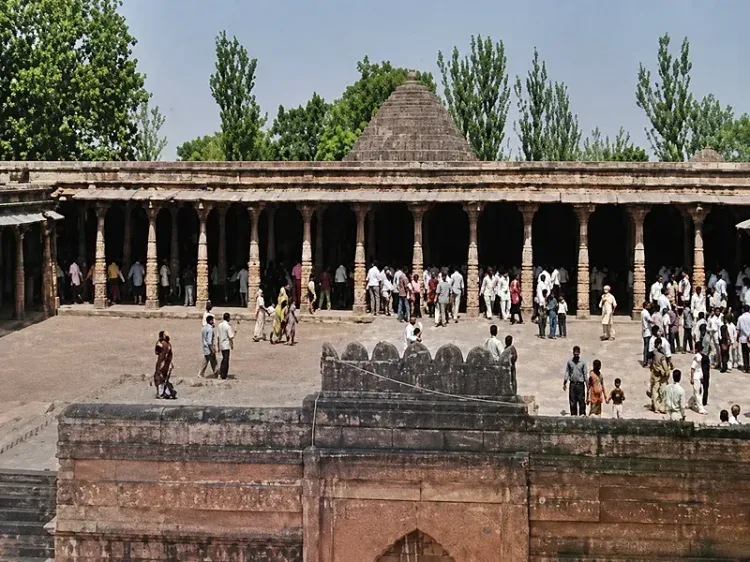
The Madhya Pradesh High Court has done what decades of administrative compromise could not — drawn a definitive legal line at Bhojshala. By declaring the Dhar complex a temple, striking down the 2003 ASI order permitting Friday prayers, and directing the Centre to pursue the Goddess Vagdevi idol from the British Museum, the court has fundamentally reordered the dispute. The ruling is certain to reverberate far beyond Dhar.
Key Takeaways
The Indore Bench of the Madhya Pradesh High Court ruled on 15 May that Bhojshala in Dhar is legally a temple and the property of King Bhoj .
The ASI order of 7 April 2003 permitting Friday prayers at the site was struck down as 'inconsistent with the established character of the monument.' Exclusive right to perform puja at the site has been granted to the Hindu community ; the court held that this right 'has never been extinguished.' The court directed the Union Government to make every effort to repatriate the Goddess Vagdevi idol from the British Museum , citing Article 25 of the Constitution.
The judgment relied on a 2024 archaeological survey that identified Sanskrit inscriptions, a Havan Kund , and a Jal Kund as evidence of the site's original religious character.
The ASI will continue to administer the complex; the state may consider allocating alternative land for a mosque if requested by the Muslim community.
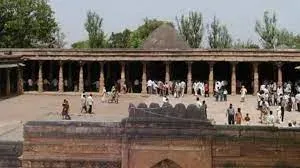
The Indore Bench of the Madhya Pradesh High Court on Friday, 15 May ruled that the Bhojshala complex in Dhar is legally a temple and that the Hindu community holds an inherent, historically unextinguished right to worship at the site. The judgment, delivered by a division bench of Justice Vijay Kumar Shukla and Justice Alok Awasthi, sets aside decades of administrative arrangements that had governed shared access to the disputed monument.
What the Court Ruled
The bench concluded that the Bhojshala complex is the legal property of King Bhoj and that 'the right to worship shall remain with the Hindu side.' The court held that the continuity of Hindu worship at the site 'has never been extinguished,' even during periods of restricted access, affirming that the religious identity of the structure as a temple remained intact through history.
Critically, the court struck down the Archaeological Survey of India (ASI) order dated 7 April 2003, which had permitted Friday prayers at the premises. The bench found the 2003 arrangement 'inconsistent with the established character of the monument' as revealed by modern scientific and archaeological findings.
Role of the 2024 Archaeological Survey
The judgment relied extensively on a 2024 archaeological survey of the complex. The court noted that the presence of Sanskrit inscriptions and sacred structural elements — including a Havan Kund and an ancient Jal Kund — constituted significant evidence of the site's original religious character. The bench observed that 'scientific archaeological studies provide the most reliable basis for resolving historical disputes of this nature.'
Petitioners, led by the Hindu Front for Justice, had argued that the site was originally established in 1034 AD by King Bhoj as a grand temple dedicated to Goddess Saraswati and also functioned as a Gurukul for Vedic learning. They pointed to inscriptions of Sanskrit grammar — Chitra Kavi and Vyakaran Chakra — as architectural features unique to Hindu temples and traditional centres of learning.
Directive on Goddess Vagdevi Idol
In a notable constitutional directive, the bench instructed the Union Government to make 'every effort' to repatriate the original idol of Goddess Vagdevi from the British Museum. The court linked this to the state's constitutional duty to 'preserve and protect the ancient culture and scriptures' of the nation and to ensure that the right to religion under Article 25 of the Constitution is not infringed.
Muslim Side's Arguments and Court's Response
Senior Advocate Shobha Menon and other counsel appearing for the Muslim side primarily challenged the maintainability of the writ petitions. They argued that the character of the monument 'cannot be altered,' that its 'legal status was settled' through earlier administrative orders, and that judicial intervention could 'disturb communal harmony.' They also alleged that the 2024 archaeological survey report was 'procedurally flawed.'
The court rejected these objections, holding that 'historical truth must prevail over administrative convenience' and giving primacy to scientific findings indicating that the site's 'original religious character was that of a temple.'
Administrative Arrangements Going Forward
The ASI will continue to administer the complex for the protection and preservation of its structural integrity. On the question of the Muslim community's access, the bench suggested — without mandating — that the state government 'may consider allocating suitable alternative land' for a mosque if such a request is made, framing this as a measure to 'ensure complete justice and maintain social harmony.'
The ruling is expected to face legal scrutiny at higher courts, and its implementation will be closely watched by religious and civil society groups across the country.
Point of View
And historical continuity privileged over post-independence arrangements. What distinguishes this ruling is its explicit constitutional framing — invoking Article 25 to justify both exclusive Hindu worship rights and the demand for idol repatriation from London. The suggestion of alternative land for a mosque, offered without mandate, does little to resolve the underlying access question and may simply defer it. Whether this judgment withstands appellate scrutiny will determine whether it becomes a landmark or a waypoint in a longer legal contest.
NationPress
28 Sept 2026
Frequently Asked Questions
What did the Madhya Pradesh High Court rule on Bhojshala?
The Indore Bench of the Madhya Pradesh High Court ruled on 15 May that the Bhojshala complex in Dhar is legally a temple and the property of King Bhoj, granting the Hindu community exclusive rights to perform puja at the site. The court also struck down the 2003 ASI order that had permitted Friday prayers at the premises.
What was the 2003 ASI order and why was it struck down?
The Archaeological Survey of India issued an order on 7 April 2003 permitting the Muslim community to offer Friday prayers at the Bhojshala complex. The court struck it down, finding it 'inconsistent with the established character of the monument' as revealed by the 2024 archaeological survey.
What evidence did the court rely on to declare Bhojshala a temple?
The court relied primarily on the findings of a 2024 archaeological survey, which identified Sanskrit inscriptions, a Havan Kund, a Jal Kund, and structural elements described as unique to Hindu temple architecture. The bench held that 'scientific archaeological studies provide the most reliable basis for resolving historical disputes of this nature.'
What did the court say about the Goddess Vagdevi idol in the British Museum?
The bench directed the Union Government to make 'every effort' to repatriate the original idol of Goddess Vagdevi from the British Museum. The court linked this directive to the constitutional obligation to preserve ancient culture and to protect the right to religion under Article 25.
What happens to the Muslim community's access to Bhojshala after this verdict?
Friday prayers at Bhojshala are no longer permitted following the court's ruling. The bench suggested — without making it mandatory — that the state government may consider allocating suitable alternative land for a mosque if the Muslim community makes such a request, as a measure to maintain social harmony.