Bhojshala verdict: BJP, Shiv Sena-UBT demand restoration of disputed sites' original identity
Synopsis
The Madhya Pradesh High Court's recognition of the Bhojshala complex as a temple has set off a political chain reaction — with BJP and Shiv Sena-UBT leaders explicitly linking the verdict to unresolved disputes at Gyanvapi and Mathura, signalling that the Bhojshala ruling may be the opening move in a much larger judicial and political contest over India's contested religious landscape.
Key Takeaways
The Madhya Pradesh High Court ruled on 16 May that the Bhojshala complex in Dhar is a temple.
BJP and Shiv Sena (UBT) leaders hailed the verdict and called for restoring the 'original religious identity' of disputed sites nationwide.
BJP MP Kamaljeet Sehrawat said historical evidence — including artefacts linked to Raja Bhoj and Goddess Saraswati — supported the ruling.
The court suggested the state government consider allocating alternative land for a mosque for the Muslim community.
Shiv Sena (UBT) spokesperson Anand Dubey expressed optimism that the Shri Krishna Janmasthan dispute in Mathura would be resolved similarly.
The verdict is expected to intensify legal proceedings around the Gyanvapi Mosque in Varanasi and the Shahi Idgah Mosque in Mathura .
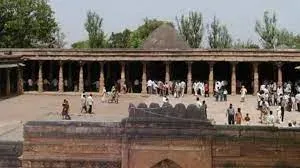
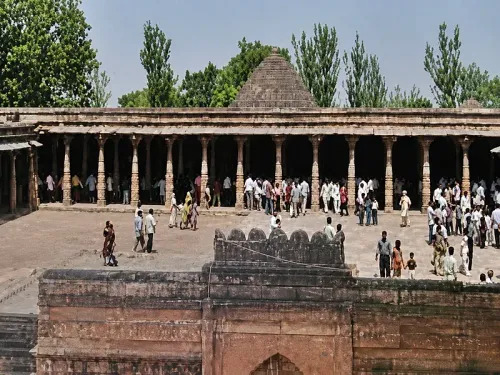
The Bharatiya Janata Party (BJP) and Shiv Sena (UBT) on Saturday, 16 May welcomed the Madhya Pradesh High Court's ruling recognising the Bhojshala complex in Dhar as a temple, with leaders from both parties calling for the restoration of the 'original religious identity' of disputed places of worship across India. The verdict has reignited a broader political conversation around contested religious sites, including the Gyanvapi Mosque in Varanasi and the Shahi Idgah Mosque in Mathura.
Key Reactions from BJP Leaders
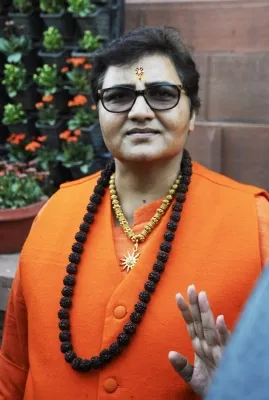
BJP MP Kamaljeet Sehrawat said the court had acted on solid historical evidence. 'Raja Bhoj's property was found here (Bhojshala) and Goddess Saraswati used to be worshipped at the site. So, it is good that the court has taken this decision on the basis of such evidences,' she said. Sehrawat added that while the original cultural identity of the site should be restored, she acknowledged that separate space could be provided for construction of a mosque.
BJP MP Atul Garg expressed frustration that such disputes require judicial resolution at all. 'This is a very strange and sad thing that in India such cases have to go to court,' he said, urging communities that had 'seized temples and converted them into their religious sites' to return them voluntarily.
Bihar Minister Dilip Kumar Jaiswal argued that facts are increasingly coming to light. 'Gradually, as facts are coming to light, both the Judiciary and the general public are beginning to understand and are recognising such sites according to their original religious identity,' he said.
BJP spokesperson Ajay Alok called the ruling 'historic' and urged the Muslim side to 'accept the Ganga-Jamuni tehzeeb and abide by this decision and file an appeal for allocation of some other land for their mosque.'
Shiv Sena-UBT Weighs In
Shiv Sena (UBT) spokesperson Anand Dubey also welcomed the Madhya Pradesh High Court's decision. 'We are grateful for the decision which has been granted keeping in mind the sentiments of crores of Hindu brothers and sisters,' he said. Dubey drew a parallel with the Ram Janmabhoomi-Babri Masjid verdict, saying the current atmosphere mirrors the celebrations that followed that judgment. He also expressed optimism that the Shri Krishna Janmasthan temple in Mathura, disputed with the Shahi Idgah Mosque, would similarly be 'liberated.'
What the Court Said
The Madhya Pradesh High Court, in its ruling, recognised the Bhojshala complex as a temple. Notably, the court also suggested that the state government consider allocating alternative land for a mosque, in consideration of the Muslim community — a recommendation that mirrors the approach taken in the Supreme Court's Ram Janmabhoomi judgment.
Broader Context and What Comes Next
Hindu petitioners have long claimed that the Gyanvapi Mosque in Varanasi was constructed over the ancient Kashi Vishwanath temple, and that the Shahi Idgah Mosque in Mathura stands on the site of the Shri Krishna Janmasthan. Both cases are currently before courts. The Bhojshala verdict is likely to energise petitioners in those proceedings. This comes amid a wider legal and political debate over the Places of Worship (Special Provisions) Act, 1991, which bars changes to the religious character of any place of worship as it stood on 15 August 1947 — with the Ram Janmabhoomi site being the sole statutory exception. Whether the Bhojshala ruling will influence those ongoing cases remains to be seen as legal challenges are expected.
Point of View
BJP and Shiv Sena-UBT leaders are signalling that the verdict is a template, not an endpoint. What is missing from the political chorus is any engagement with the Places of Worship Act — the legal firewall that courts will have to contend with in the Varanasi and Mathura cases. The Bhojshala site had a distinct legal status that may not transfer cleanly to those disputes. The gap between political rhetoric and legal reality here is significant, and mainstream coverage has largely glossed over it.
NationPress
16 Sept 2026
Frequently Asked Questions
What is the Bhojshala complex and why is it disputed?
The Bhojshala complex in Dhar, Madhya Pradesh, is a medieval structure that Hindu groups claim was originally a temple dedicated to Goddess Saraswati, built during the reign of Raja Bhoj. Muslim groups have used part of the site as a mosque. The Madhya Pradesh High Court on 16 May ruled in favour of recognising it as a temple.
What did the Madhya Pradesh High Court rule in the Bhojshala case?
The court recognised the Bhojshala complex as a temple. It also suggested that the state government consider allocating alternative land for a mosque, in consideration of the Muslim community — mirroring the approach taken in the Supreme Court's Ram Janmabhoomi judgment.
Why are BJP leaders linking the Bhojshala verdict to Gyanvapi and Mathura?
BJP leaders argue that the Bhojshala ruling validates their broader position that sites claimed to have been built over ancient temples should have their original religious identity restored. Hindu petitioners have made similar claims about the Gyanvapi Mosque in Varanasi and the Shahi Idgah Mosque in Mathura, both of which are before courts.
What is the Places of Worship Act and does it apply here?
The Places of Worship (Special Provisions) Act, 1991 bars any change to the religious character of a place of worship as it stood on 15 August 1947, with the Ram Janmabhoomi site as the only statutory exception. Whether and how this Act applies to the Bhojshala site and to ongoing cases at Gyanvapi and Mathura remains a live legal question.
What happens next after the Bhojshala verdict?
Legal challenges to the ruling are expected. The verdict is also likely to energise petitioners in the Gyanvapi and Mathura cases. Politically, the judgment has already prompted calls from BJP and Shiv Sena-UBT leaders for a broader restoration of what they describe as the 'original religious identity' of disputed sites across India.