CM Fadnavis: Air Ambulance Used in Ashadhi Wari for First Time
Synopsis
For the first time in Ashadhi Wari history, Maharashtra deployed an air ambulance to evacuate a pilgrim with chest pain from Pandharpur to Solapur. CM Devendra Fadnavis personally visited the patient and directed medical officers to ensure treatment, marking a significant upgrade in the state's emergency health cover for the annual pilgrimage.
Key Takeaways
An air ambulance was used for the first time in the history of the Ashadhi Wari pilgrimage to evacuate an ill devotee.
The patient, who travelled from Chhatrapati Sambhajinagar , developed chest pain at Pandharpur and was airlifted to Solapur .
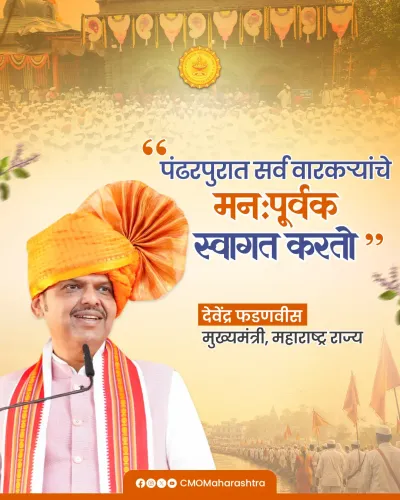
CM Devendra Fadnavis personally visited the patient aboard the air ambulance and directed medical staff to provide necessary treatment.
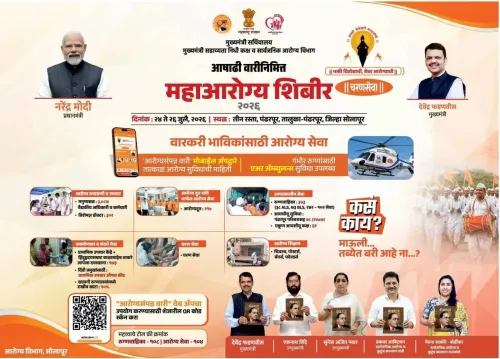
The Maharashtra state government introduced the air ambulance service specifically for the Ashadhi Wari 2026 , a first for any such pilgrimage in the state.
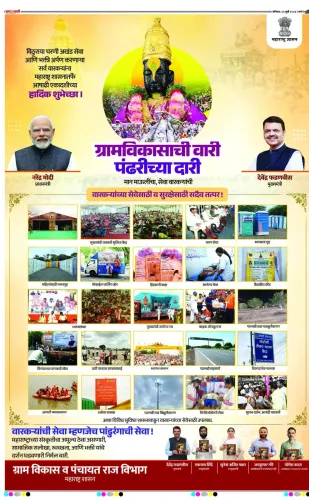
The Ashadhi Wari draws lakhs of devotees annually to the Vitthal-Rukmini temple in Pandharpur , posing large-scale emergency medical challenges.
The Chief Minister's Office of Maharashtra announced on Saturday, 25 July 2026 that an air ambulance was deployed for the first time in the history of the Ashadhi Wari pilgrimage to evacuate a critically ill devotee from Pandharpur to Solapur. The pilgrim, who had travelled from Chhatrapati Sambhajinagar to seek the blessings of Shri Vitthal-Rukmini, developed chest pain and required emergency medical intervention.
What Happened
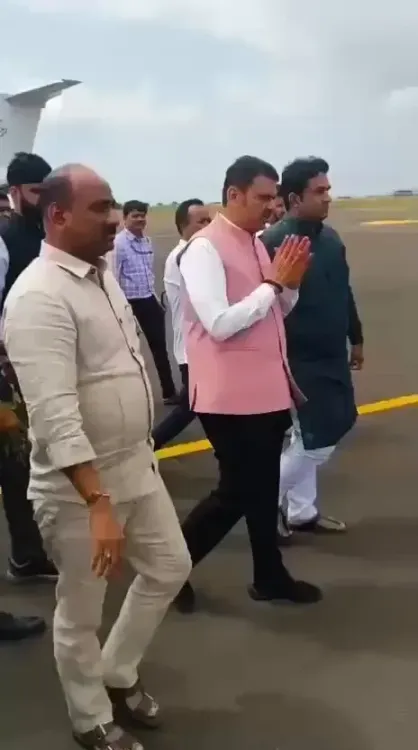
The devotee began experiencing chest discomfort at Pandharpur during the ongoing Ashadhi Wari. Medical teams administered immediate on-site treatment before airlifting the patient to Solapur via air ambulance — a first in the pilgrimage's recorded history. Chief Minister Devendra Fadnavis personally visited the patient aboard the air ambulance at the airstrip and directed medical officers to ensure all necessary treatment was provided.
Context
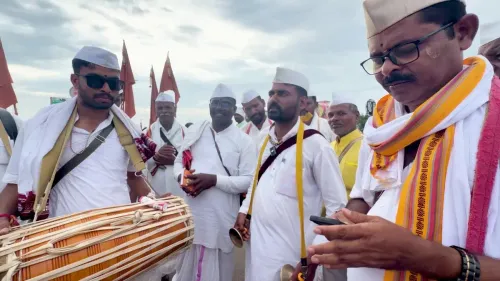
The Ashadhi Wari is one of Maharashtra's largest annual religious events, drawing lakhs of Warkaris (devotees) who walk hundreds of kilometres to the Vitthal-Rukmini temple in Pandharpur, located in Solapur district. The sheer scale of the gathering — with pilgrims arriving from across the state — creates significant logistical and medical challenges, particularly for elderly and ailing devotees in crowded or remote stretches of the route.
Policy Backdrop
State governments routinely scale up emergency medical cover during large religious processions, typically deploying ground ambulances, mobile medical units, and temporary health camps. This year, the Maharashtra state government introduced an air ambulance service specifically for the Ashadhi Wari — an upgrade that extends aerial evacuation capability to time-critical cardiac and other emergency cases that ground transport cannot address quickly enough. The CMO described this as a first-of-its-kind arrangement in the pilgrimage's history.
Stakeholders and Impact
The primary beneficiaries are the lakhs of Warkaris who undertake the annual pilgrimage, many of whom are elderly or travel long distances on foot under physically demanding conditions. Access to rapid aerial evacuation substantially reduces the time-to-hospital for cardiac and other acute emergencies — a critical factor in patient outcomes. The deployment also signals a shift in how the state government frames large-scale religious gatherings: not just as cultural or administrative events, but as public health responsibilities.
What's Next
The introduction of air ambulance cover at the Ashadhi Wari raises the question of whether similar services will be extended to other major Maharashtra festivals and pilgrimages in coming years. Health preparedness reviews ahead of the next Ashadhi Wari are likely to assess the utilisation and impact of this year's deployment. CM Fadnavis's personal presence at the airstrip underscores the political and administrative priority the state has placed on visible, responsive emergency healthcare during mass gatherings.
Point of View
Not merely a symbolic gesture — aerial evacuation can be decisive in cardiac emergencies where every minute of delayed hospital access increases mortality risk. CM Fadnavis's personal appearance at the airstrip is a calibrated signal that the ruling dispensation is investing in visible, responsive governance around Maharashtra's most politically and culturally significant mass gathering. More broadly, this fits a pattern of state governments reframing large religious events as public health infrastructure challenges, not just law-and-order or logistics exercises. Whether the service is institutionalised and expanded, or remains a one-off headline, will be the real test of policy intent.
NationPress
23 Oct 2026
Frequently Asked Questions
Was an air ambulance used at Ashadhi Wari 2026?
Yes. For the first time in the history of the Ashadhi Wari, an air ambulance was deployed in 2026 to evacuate a pilgrim who developed chest pain at Pandharpur, airlifting him to Solapur for treatment.
What happened to the pilgrim evacuated by air ambulance at Pandharpur?
A devotee from Chhatrapati Sambhajinagar who had come to Pandharpur for the Ashadhi Wari developed chest pain and was given immediate on-site treatment before being airlifted to Solapur. CM Devendra Fadnavis personally visited the patient and directed medical officers to ensure necessary care.
What is the Ashadhi Wari pilgrimage?
The Ashadhi Wari is an annual Hindu pilgrimage in Maharashtra in which lakhs of Warkari devotees walk to the Vitthal-Rukmini temple in Pandharpur, Solapur district, to seek the blessings of Lord Vitthal.
Did CM Devendra Fadnavis visit the sick pilgrim at Ashadhi Wari?
Yes. CM Devendra Fadnavis personally visited the ailing pilgrim aboard the air ambulance at the airstrip and instructed medical officers to provide all necessary treatment.
Why did Maharashtra introduce an air ambulance at Ashadhi Wari?
The Maharashtra state government introduced the air ambulance service this year to ensure that pilgrims requiring urgent medical care during the Ashadhi Wari can be rapidly evacuated to better-equipped hospitals, given the lakhs of devotees who gather at Pandharpur and the time-critical nature of emergencies such as cardiac events.