Akhilesh Yadav mocks BJP MP's Gorakhpur flood protest

Synopsis
Samajwadi Party president Akhilesh Yadav skewered a BJP MP's waterlogging protest in Gorakhpur, saying the ruling party's own ranks now fight each other over the city's chronic flood failures — calling it 'Gorakhpur vs Gorakhpur.'
Key Takeaways
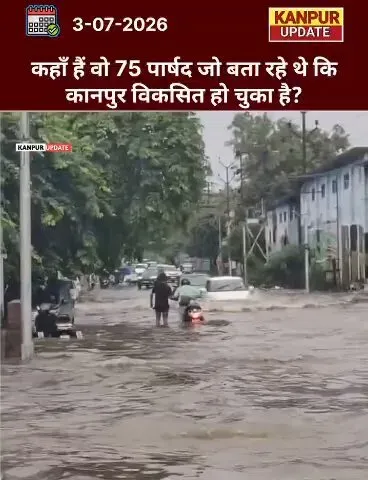
Akhilesh Yadav posted on 27 September 2026 mocking a BJP MP who filmed himself wading through waterlogged streets and broadcast the video.
Yadav argues the protest was avoidable and reads the MP's self-broadcast as proof the ruling party has finally understood the political value of visible civic failure.
He coined the phrase 'Gorakhpur vs Gorakhpur' to describe what he calls an internal BJP split over waterlogging in the eastern UP city.
Gorakhpur is politically significant as the home base of Chief Minister Yogi Adityanath, making a BJP MP's public protest there especially pointed.
Yadav's wordplay on haata — that leaders only notice flooding when their own compound submerges — sharpened the attack into a shareable one-liner.
The hashtag #जलमग्न_गोरखपुर_उप्र frames the issue as a systemic drainage failure, not a one-off weather event.
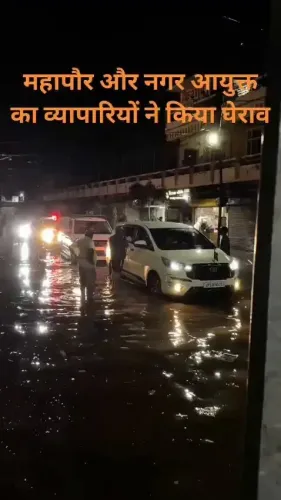
When a BJP MP waded through waterlogged streets in Gorakhpur — camera rolling, video broadcast wide — Samajwadi Party president Akhilesh Yadav saw not civic outrage but political theatre catching up with itself. On Sunday, 27 September 2026, Yadav turned the ruling party's own optics against it in a pointed post on X.
The flood video that gave Akhilesh his punchline
Yadav's post is a study in irony. He argues the BJP MP's waterlogging protest in the state capital of Lucknow — described as the mukhyanagari (the principal city) — was entirely avoidable. The protest, he suggests, could have been quietly shelved and the images of a 'corrupt system' kept from public view. Instead, the MP chose to wade through floodwater, film it, and broadcast it, which Yadav reads as the MP finally grasping what he calls the 'Lakhnawi chaal' — the Lucknow way of political manoeuvring.
The sharper blow lands in the second paragraph. 'The biggest truth,' Yadav writes, 'is that only when their own haata (compound or locality) submerged in water did they remember that 'nobody likes a haata.' The wordplay on haata — a term for an enclosed residential or official compound — is a dig at leaders who ignore flooding in ordinary neighbourhoods until it reaches their own doorstep. It is a line built to travel.
'Gorakhpur vs Gorakhpur' — the fracture Akhilesh is pointing at
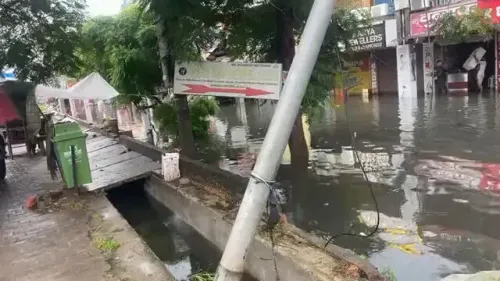
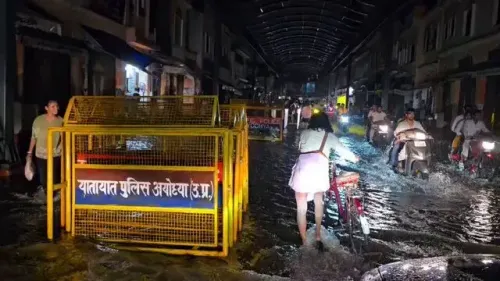
Gorakhpur, in eastern Uttar Pradesh, has long wrestled with waterlogging during the monsoon. The city sits in a flood-prone belt and has faced drainage complaints for years. What makes Yadav's framing pointed this time is the hashtag #जलमग्न_गोरखपुर_उप्र (Jalmagn Gorakhpur UP — 'Submerged Gorakhpur, UP') and his phrase 'Gorakhpur vs Gorakhpur' — a suggestion that the BJP's own camp in the city is now split over the administration's failure to fix a problem that has embarrassed its own representatives.
Gorakhpur carries particular symbolic weight for the Bharatiya Janata Party: it is the political home turf most associated with Chief Minister Yogi Adityanath. An internal BJP protest there, amplified by the protesting MP's own video, feeds the opposition narrative that the government cannot manage basic civic infrastructure even in its own stronghold.
A monsoon ritual — and why this cycle may sting harder
Opposition parties in Uttar Pradesh have made waterlogging a campaign-season fixture since 2017, when the BJP swept to power. But the recurring nature of the floods in eastern UP districts — and the growing visibility of self-inflicted wounds within BJP ranks — gives Yadav's commentary extra edge this year. When an opposition leader photographs a sinking road, it is expected. When a ruling-party MP does it and puts it on the internet himself, the opposition needs only to clip and quote.
Yadav has consistently used such moments to frame governance in UP as performative — leaders who act for the camera rather than the drain. The September 2026 monsoon season, with its fresh images from Gorakhpur, gives him fresh material and a ready-made audience in a state that votes in less than two years.
Point of View
He shifts the narrative from 'opposition complaint' to 'ruling-party admission,' a harder frame for the government to dismiss. Gorakhpur's recurrent waterlogging has been an opposition talking point since 2017, but its resonance deepens as UP approaches its next assembly cycle and civic delivery remains a live vulnerability. The 'Gorakhpur vs Gorakhpur' framing is also a signal that the SP intends to exploit visible fault lines within BJP's eastern UP base, where multiple power centres compete under the shadow of Chief Minister Yogi Adityanath's home turf politics.
NationPress
27 Sept 2026
Frequently Asked Questions
Why is Akhilesh Yadav criticising a BJP MP's flood protest in Gorakhpur?
Akhilesh Yadav argues that the BJP MP chose to wade through waterlogged streets, film it, and broadcast the video himself — effectively publicising the ruling party's own governance failure. Yadav sees this as the MP acknowledging a problem the administration has long ignored.
What does 'Gorakhpur vs Gorakhpur' mean in Akhilesh Yadav's post?
'Gorakhpur vs Gorakhpur' is Akhilesh Yadav's phrase for what he calls an internal BJP conflict in Gorakhpur, where a ruling-party MP is now protesting against conditions in his own party's-governed city — suggesting the BJP is at odds with itself over the waterlogging issue.
What is the waterlogging problem in Gorakhpur?
Gorakhpur, in eastern Uttar Pradesh, faces recurrent waterlogging during the monsoon season due to inadequate drainage infrastructure. The problem has drawn repeated criticism of successive state governments and resurfaces annually during heavy rains.
Why is Gorakhpur politically significant for the BJP?
Gorakhpur is closely associated with Chief Minister Yogi Adityanath, who represented the city in Parliament for many years. A public protest by a BJP MP there over a civic failure carries particular symbolic weight for the ruling party.
What is the meaning of the wordplay on 'haata' in Akhilesh Yadav's post?
Yadav uses 'haata' — meaning an enclosed compound or locality — to make the point that BJP leaders only noticed Gorakhpur's flooding crisis when their own residential or official compound was submerged, implying they were indifferent to the same problem in ordinary neighbourhoods.