Akhilesh Yadav slams UP law-and-order after Ghazipur murder
Synopsis
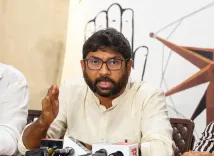
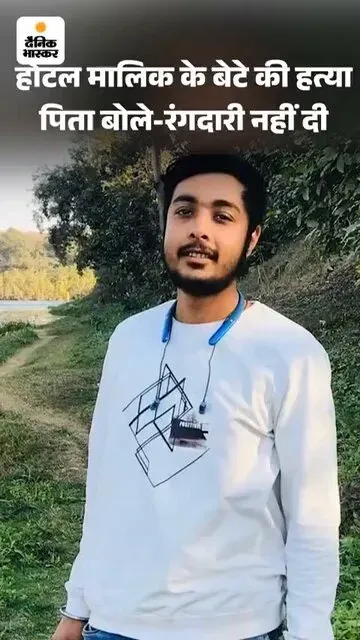
Samajwadi Party president Akhilesh Yadav on 30 May 2026 condemned the broad-daylight murder of a hotel businessman's son in Ghazipur, alleging that criminals in Uttar Pradesh are fearless and that the ruling establishment may be complicit in crimes.
Key Takeaways
Akhilesh Yadav called the Ghazipur killing 'extremely tragic and condemnable' in a post on 30 May 2026 .
He alleged that the murder demonstrates criminals in Uttar Pradesh are operating without fear under the current government.
Akhilesh Yadav presented a direct binary: either law and order has 'completely collapsed' or the ruling party is complicit in crimes.
The Yogi Adityanath government has made crime-fighting a central governance claim since coming to power in 2017 .
Ghazipur is a district in eastern Uttar Pradesh bordering Bihar , with a history of crime-related reports.
The attack sets the tone for SP 's law-and-order campaign ahead of the 2027 Uttar Pradesh assembly elections .
Samajwadi Party president Akhilesh Yadav on Saturday, 30 May 2026, condemned the broad-daylight murder of a hotel businessman's son in Ghazipur, calling it a sign that criminals in Uttar Pradesh are operating without fear and demanding accountability from the ruling government.
Context
Posting on X, Akhilesh Yadav described the incident as 'बेहद दुखद और निंदनीय' ('extremely tragic and condemnable'). He said the killing of a hotel businessman's son in broad daylight — 'दिनदहाड़े हत्या' — has thrown the entire state into fear, and that the audacity of the perpetrators reflects a complete breakdown of governance.
In his post, Akhilesh Yadav drew a sharp binary: either law and order in Uttar Pradesh has 'completely collapsed,' or those in power are themselves complicit in crimes — 'अपराधों में सत्ताधारियों की ही हिस्सेदारी है' ('the ruling establishment has a share in crimes'). The allegation stops short of naming any individual but is a direct indictment of the Yogi Adityanath-led BJP government.
Policy Backdrop
Ghazipur, a district in eastern Uttar Pradesh bordering Bihar, has periodically featured in crime reports linked to organised networks. The BJP's 2017 election campaign in the state was built substantially on a promise of zero tolerance for crime and the dismantling of mafia structures, a plank Chief Minister Yogi Adityanath has repeatedly cited as a governance achievement.
Since 2017, the Yogi Adityanath administration has conducted high-profile anti-mafia drives and a police encounter policy targeting organised crime. Critics, including the Samajwadi Party, have consistently argued that headline-grabbing operations have not translated into ground-level security for ordinary residents and business communities.
It is worth noting that the Akhilesh Yadav-led government (2012–2017) itself faced sustained criticism over law-and-order deterioration in several districts, a charge the BJP deployed effectively in the 2017 assembly elections. The current opposition attack thus mirrors the political contest of that era, now with reversed roles.
Stakeholders and Impact
The immediate victims of rising crime anxiety are Uttar Pradesh's business community and residents of districts like Ghazipur, where traders operate in conditions of perceived vulnerability. High-profile murders of businessmen's family members carry outsized symbolic weight, signalling to the commercial class that wealth does not confer protection.
The Samajwadi Party's core voter base — spanning OBC communities, small traders, and minority groups — is particularly attentive to such incidents. By amplifying the Ghazipur case, Akhilesh Yadav is reinforcing a governance-failure narrative ahead of the 2027 Uttar Pradesh assembly elections, where law and order is expected to be a central campaign axis.
What's Next
Opposition parties are likely to press for a discussion on crime statistics in the next session of the Uttar Pradesh Legislative Assembly. The Samajwadi Party has a pattern of raising such incidents through walkouts and adjournment motions to force the government onto the defensive on its flagship law-and-order record.
With the 2027 state elections drawing closer, incidents like the Ghazipur murder are likely to be woven into a broader SP campaign argument that the BJP's security narrative is cosmetic. The ruling party's response — whether through swift police action, arrests, or ministerial statements — will determine how much political traction this particular case yields for the opposition.
Point of View
A tactic the BJP itself used effectively against the SP government before 2017. Akhilesh Yadav's framing — 'either collapse or complicity' — is deliberately binary, designed to leave the ruling party no comfortable middle ground in its response. The timing, roughly 18 months before the 2027 assembly elections, suggests the SP is building an early evidence dossier on law and order rather than making a one-off comment. Whether this line of attack gains traction will depend on how the Yogi administration handles the specific case and whether the broader crime data narrative shifts in coming months.
NationPress
13 Oct 2026
Frequently Asked Questions
What happened in Ghazipur that Akhilesh Yadav condemned?
A hotel businessman's son was murdered in broad daylight in Ghazipur, Uttar Pradesh. Samajwadi Party president Akhilesh Yadav condemned the killing on 30 May 2026, calling it a sign that criminals in the state are operating without fear.
What did Akhilesh Yadav say about UP law and order?
Akhilesh Yadav said the Ghazipur murder reflects either a complete collapse of law and order in Uttar Pradesh or direct complicity by the ruling establishment in crimes. He described the situation as 'extremely tragic and condemnable.'
Is law and order a major issue in the 2027 UP elections?
Yes. Law and order has been a central contest between the BJP and the Samajwadi Party in Uttar Pradesh since 2017. The BJP campaigned on zero-tolerance for crime, while the SP has consistently challenged that record by citing specific incidents of violence.
What is Ghazipur known for in Uttar Pradesh?
Ghazipur is a district in eastern Uttar Pradesh bordering Bihar. It is known for agriculture and trade, and has periodically featured in reports related to organised crime and law-and-order concerns.
What action can the Samajwadi Party take in the UP assembly over this issue?
The Samajwadi Party can raise the Ghazipur murder and broader crime statistics through adjournment motions, walkouts, or demand for a special discussion in the Uttar Pradesh Legislative Assembly during its next session.