Akhilesh Yadav flags Gomti River decline, blames BJP policies
Synopsis
Samajwadi Party president Akhilesh Yadav on 20 June 2026 accused the BJP of causing the decline of the Gomti River through corrupt policies, sharing a video on X to highlight the river's worsening condition in Uttar Pradesh.
Key Takeaways
Akhilesh Yadav posted on 20 June 2026 attributing the deterioration of the Gomti River to BJP's 'corrupt policies.' The Gomti is a major tributary of the Ganga flowing through Lucknow , the capital of Uttar Pradesh .
The BJP has governed Uttar Pradesh since 2017 ; opposition parties have consistently linked river degradation to state-level governance failures.
The Namami Gange programme , launched in 2014 , includes the Gomti among its target tributaries, but implementation has been disputed politically.
The Gomti riverfront development project was originally a flagship initiative of the Samajwadi Party government ( 2012–2017 ) under Yadav's tenure as Chief Minister.
State budget allocations and physical progress reports for Gomti cleaning works are expected to be scrutinised in the coming assembly session.
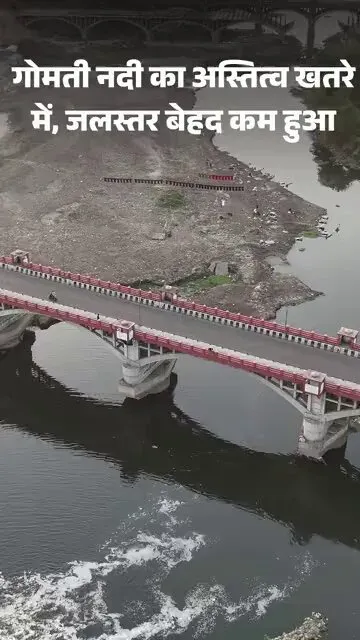
Samajwadi Party president Akhilesh Yadav on Saturday, 20 June 2026, took to X to highlight what he called the worsening condition of the Gomti River, attributing its decline to what he described as the corrupt policies of the ruling Bharatiya Janata Party.
In his post, Yadav wrote: 'भाजपा की भ्रष्ट नीतियों की वजह से गुम होती गोमती की व्यथा-कथा' — translated as 'The tale of woe of a disappearing Gomti, on account of BJP's corrupt policies.' The post was accompanied by a video, the contents of which are expected to document conditions along the river.
Context
The Gomti River, a major tributary of the Ganga that flows through Lucknow, the capital of Uttar Pradesh, has faced persistent challenges including pollution, encroachment, and diminishing water flow over several decades. The river holds cultural and civic significance for millions of residents of the state capital and surrounding districts.
Yadav's post frames the river's condition as a direct consequence of BJP governance in Uttar Pradesh, which has been in power since 2017. Opposition parties in the state have consistently used environmental degradation along the Gomti as a marker of policy failure at the state level.
Policy Backdrop
The Gomti riverfront development project was a flagship initiative undertaken during the Samajwadi Party government in Uttar Pradesh between 2012 and 2017, when Akhilesh Yadav served as Chief Minister. The project aimed at beautifying the riverbank in Lucknow and improving civic infrastructure along its stretch.
At the national level, the Namami Gange programme, launched in 2014, was designed to rejuvenate the Ganga and its tributaries — including the Gomti — through central funding channelled to state governments. The programme's implementation in Uttar Pradesh has remained a point of political contestation, with the opposition and the ruling dispensation each disputing credit for progress and assigning blame for shortfalls.
Environmental assessments of urban river stretches in Uttar Pradesh have repeatedly flagged untreated sewage discharge, industrial effluents, and encroachment on floodplains as structural concerns that have persisted across successive administrations.
Stakeholders and Impact
Residents of Lucknow and riverine communities along the Gomti's course are the most directly affected stakeholders. The river's health has implications for drinking water availability, urban flooding patterns, and the livelihoods of fishing communities dependent on it.
Civil society groups and environmental advocates in the state have long demanded time-bound action plans for Gomti restoration. Yadav's post, amplified to his large social media following, is likely to renew public attention on the issue ahead of any upcoming legislative or budgetary discussions on river conservation in Uttar Pradesh.
What's Next
Attention will now turn to whether the Uttar Pradesh government responds to the political pressure with updated data on Gomti restoration works or fresh budget allocations in the coming assembly session. The BJP state administration is expected to counter the opposition narrative by citing expenditure and project milestones under the Namami Gange framework. Yadav's sustained focus on the Gomti signals that river ecology is likely to remain a key campaign issue for the Samajwadi Party in the lead-up to future electoral contests in Uttar Pradesh.
Point of View
' Yadav links environmental failure to a broader anti-corruption narrative he has cultivated since losing power in 2017. The timing — well outside an immediate election cycle — suggests the Samajwadi Party is building a sustained issue-based campaign rather than reacting to a specific trigger. This also serves to deflect scrutiny of the SP's own riverfront development record, repositioning the party as a champion of environmental accountability.
NationPress
20 Jun 2026
Frequently Asked Questions
Why is the Gomti River declining in Uttar Pradesh?
Environmental experts and opposition leaders point to untreated sewage discharge, industrial effluents, encroachment on floodplains, and reduced water flow as key reasons for the Gomti's deteriorating condition. These problems have persisted across multiple governments in Uttar Pradesh.
What did Akhilesh Yadav say about the Gomti River?
On 20 June 2026, Akhilesh Yadav posted on X stating that the Gomti River is 'disappearing' due to the BJP's 'corrupt policies,' sharing a video to illustrate the river's condition.
What is the Namami Gange programme and does it cover the Gomti?
Namami Gange is a central government programme launched in 2014 to clean the Ganga and its tributaries. The Gomti River is included among the target tributaries, with funds allocated for sewage treatment and riverbank restoration in Uttar Pradesh.
What did the SP government do for the Gomti River?
During the Samajwadi Party government in Uttar Pradesh between 2012 and 2017, Akhilesh Yadav's administration undertook a Gomti riverfront development project in Lucknow aimed at beautifying the riverbank and improving civic infrastructure.
Who is responsible for cleaning the Gomti River?
Responsibility is shared between the Uttar Pradesh state government, which handles sewage infrastructure and urban planning, and the central government through the Namami Gange programme. Both the BJP and SP have traded blame over the river's condition.