Akhilesh Yadav slams BJP over Hamirpur road protest
Synopsis
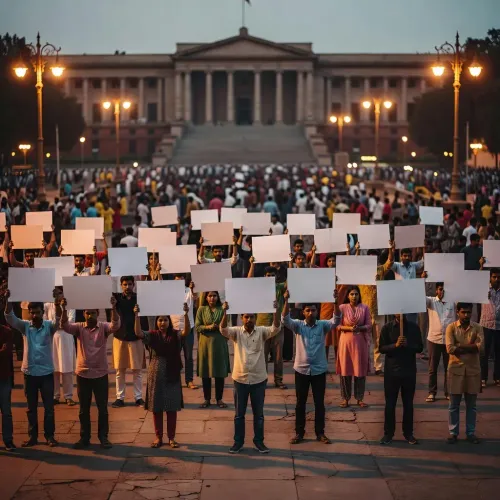
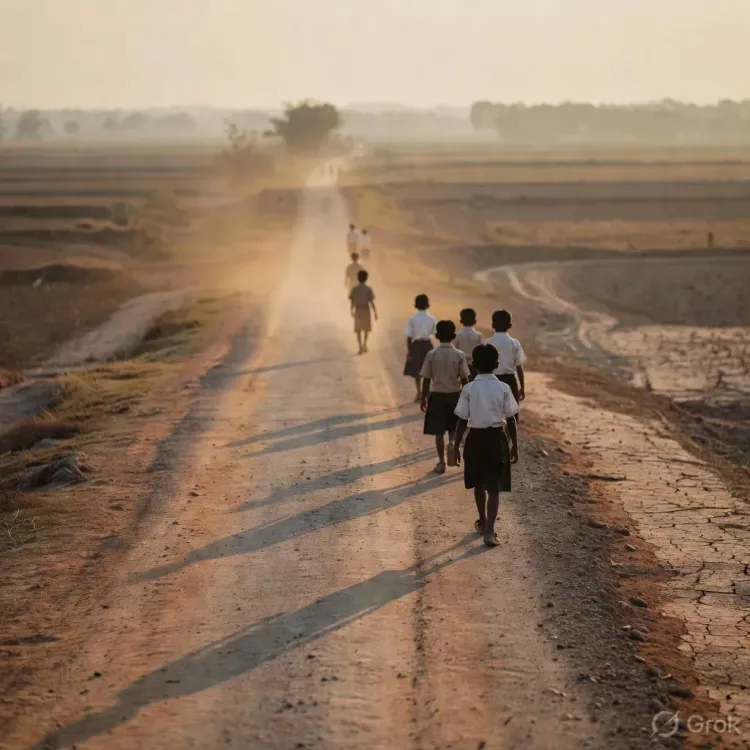
Samajwadi Party president Akhilesh Yadav attacked the BJP government over a reported Hamirpur protest where schoolchildren marched to the district magistrate's office demanding a long-pending road, calling it proof of BJP's 'arrogant administration' and invoking the socialist principle that power must serve society.
Key Takeaways
Akhilesh Yadav posted a sharp attack on the BJP government on 12 August 2026 , anchoring it in a reported protest by schoolchildren in Hamirpur, UP .
Children allegedly marched to the district magistrate's office demanding a road that had seen no official response for years — the specific details remain unverified.
Yadav accused the BJP of having no concept of accountability and of running a top-down 'ekatantra' (one-man rule) instead of a bottom-up democracy.
He invoked the Samajwadi Party 's foundational slogan — 'samaj ke liye satta hai' — to contrast socialist governance with what he called BJP's exploitation of society for political power.
Hamirpur is in the Bundelkhand region, a chronically underserved belt where infrastructure grievances have been a recurring flashpoint in UP politics.
The post fits a broader SP pattern of framing local protests as democratic pushback against centralised authority, a theme the party has deployed since the 2017 UP assembly elections.
When schoolchildren march to a district collector's office to demand a road that adults have been ignored over for years, something has gone wrong in the machinery of governance. Samajwadi Party president Akhilesh Yadav seized on a reported protest in Hamirpur, Uttar Pradesh, on Wednesday, 12 August 2026, to deliver a sharp ideological broadside against the BJP government — arguing that the children's demonstration proved citizens will reach their rulers when rulers refuse to reach them.
Posting in Hindi, Yadav wrote: 'भाजपा के शब्दकोश में जवाबदेही शब्द ही नहीं है' — 'The word accountability does not exist in the BJP's dictionary.' He accused the party of treating 'jan-tantra' (democracy) as 'dhan-tantra' (rule of money), and of believing only in exploitation and suppression. The Hamirpur incident — schoolchildren staging a demonstration at the district magistrate's office over a long-pending road project — became his exhibit A.
Hamirpur's road, and what it represents
Hamirpur is a district in the Bundelkhand region, one of Uttar Pradesh's most chronically underserved belts, where infrastructure grievances — roads, water, power — have been a recurring political flashpoint for decades. Yadav did not specify the road or its exact location, and the details of the protest remain unverified from official records. But the political image is precise: children doing what elected representatives and bureaucrats had failed to prompt.
Yadav framed the protest as a rebuke of what he called 'BJP ka ahankari shasan-prashasan' — 'BJP's arrogant rule and administration' — and warned that the party's ambition to build a top-down 'ekatantra' (one-man rule) would no longer be tolerated. 'Democracy flows from the bottom up,' he wrote. 'Every elected representative and every public servant must now understand this.'
The socialist counter-argument: 'Samaj ke liye satta hai'
The rhetorical centrepiece of the post is a classic Samajwadi Party formulation that has anchored the party's messaging since the 1990s: 'samaj ke liye satta hai' — power exists for society, not society for power. Yadav drew a direct contrast: the BJP, he argued, exploits society to retain power; the socialist principle demands power be used for society's uplift and welfare. 'If there is no welfare of the people, there is no government,' he concluded.
The SP has deployed this framing consistently across successive Uttar Pradesh assembly elections since 2017, when the BJP swept to power under Chief Minister Yogi Adityanath. With state polls on the political horizon, the Hamirpur episode gives Yadav a ground-level, human-scale story to hang a well-worn ideological argument on — and that is precisely the point. A protest by schoolchildren is harder to dismiss than a press conference.
Whether the UP government responds — in the assembly, through administrative action in Bundelkhand, or at all — will tell its own story about which version of accountability is operating in Lucknow.
Point of View
Sympathetic ground-level incident. By leading with schoolchildren rather than a party spokesperson, he sidesteps easy dismissal. The 'samaj ke liye satta' formulation has been SP's ideological spine since the Mulayam era — Yadav is refreshing it with a contemporary, visual grievance ahead of a crucial election cycle. The real test is whether the Hamirpur road issue generates sustained administrative pressure or fades as one more social-media moment in a crowded opposition calendar.
NationPress
12 Aug 2026
Frequently Asked Questions
Why did Akhilesh Yadav criticise BJP over Hamirpur?
Akhilesh Yadav cited a reported protest in Hamirpur, Uttar Pradesh, where schoolchildren marched to the district magistrate's office demanding a long-pending road, using it as evidence of the BJP government's failure to deliver basic infrastructure and its lack of accountability.
What is the Hamirpur road protest about?
According to Akhilesh Yadav's post, residents of Hamirpur district in Bundelkhand, UP, had been seeking construction of a road for years without any response, prompting schoolchildren to stage a demonstration at the district collector's office. The specific details of the protest are unverified from official records.
What does 'samaj ke liye satta hai' mean?
'Samaj ke liye satta hai' is a Hindi phrase meaning 'power exists for society.' It is the Samajwadi Party's core ideological slogan, contrasting socialist governance — where the state serves citizens — with what the party calls the BJP's use of society to serve its own political power.
What is Akhilesh Yadav's political position?
Akhilesh Yadav is the national president of the Samajwadi Party, a former Chief Minister of Uttar Pradesh (2012–2017), and a sitting Lok Sabha MP. He leads the principal opposition to the BJP in UP.
What is Bundelkhand's political significance in UP?
Bundelkhand is one of Uttar Pradesh's most economically lagging regions, historically marked by poor infrastructure, drought, and migration. It is a politically contested belt where both the BJP and opposition parties target voters with promises of development.