Akhilesh Yadav targets BJP with sharp verse on religion and corruption
Synopsis
Samajwadi Party president Akhilesh Yadav posted a sharp Hindi verse on August 11, 2026, accusing the BJP of looting religion's treasury and branding its allies as sinners against Ram — a pointed escalation ahead of the 2027 Uttar Pradesh assembly elections.
Key Takeaways
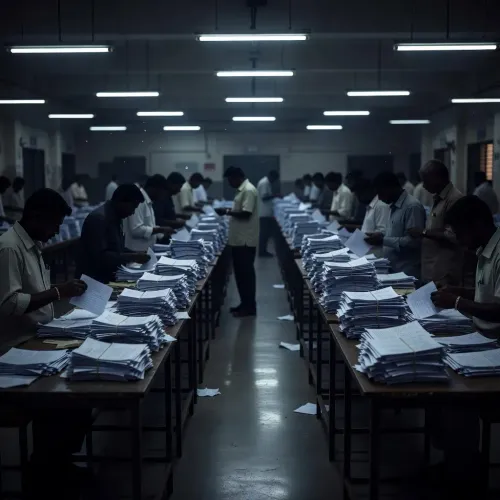
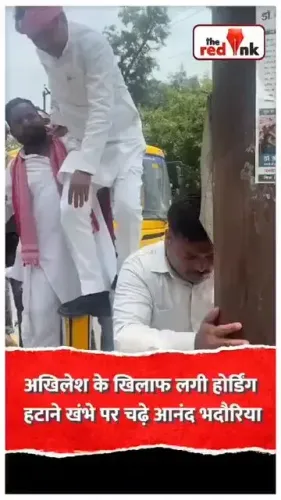
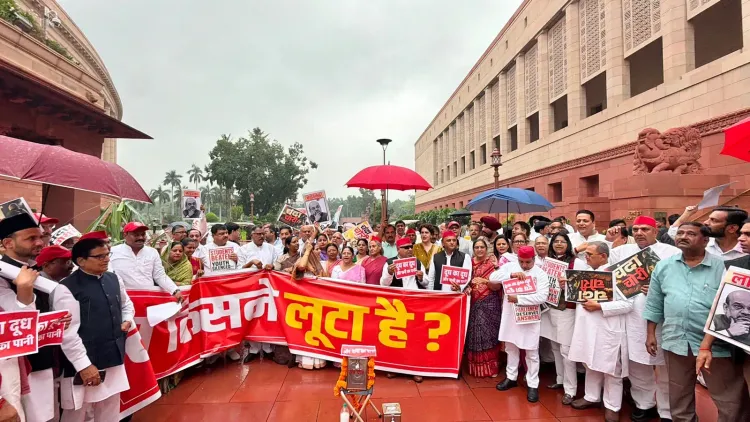
Akhilesh Yadav posted a Hindi attack-verse against BJP on August 11, 2026 , accompanied by four images.
The verse accuses BJP of forming a 'gang of looters' and breaking open 'religion's treasury' for personal gain.
The closing line brands BJP allies 'Ramghati-Mahapaapi' — 'slayer of Ram' and 'great sinner' — inverting BJP's own Hindutva vocabulary.
The SP has used religious-corruption framing consistently since the 2022 UP assembly elections .
The attack is widely seen as early campaign positioning ahead of the 2027 Uttar Pradesh assembly elections .
A couplet sharp enough to cut — Samajwadi Party president Akhilesh Yadav on Tuesday, August 11, 2026, unleashed a stinging poetic broadside against the Bharatiya Janata Party, accusing it of looting in the name of religion and calling its allies complicit in what he framed as a sin against Ram himself.
The post, in Hindi verse, reads: 'Ratti bhar bhi laaj na chhodi, banaake luteeron ki toli, dharm ki tijori todi, Bhajpaiyon ne bhar li jholi — Jo BJP ka saathi, wo Ramghati-Mahapaapi!' — translated: 'Not a shred of shame left, they formed a gang of looters, broke open religion's treasury, BJP men filled their pockets — whoever stands with BJP is a slayer of Ram, a great sinner!'
The verse and its sting
The language is deliberate and layered. The phrase 'dharm ki tijori todi' — 'broke open religion's treasury' — directly inverts the BJP's core Hindutva identity, charging that the party has monetised and plundered the very faith it claims to protect. The closing line, branding BJP allies as 'Ramghati' (one who harms Ram) and 'Mahapaapi' (great sinner), is a rhetorical grenade: it uses the BJP's own sacred vocabulary to condemn it. Akhilesh posted the verse alongside four images, though the specific content of those images could not be independently verified at the time of publication.SP's long-running counter-Hindutva playbook
This is not a new move — it is a sharpened one. The Samajwadi Party has, since at least the 2022 Uttar Pradesh assembly elections, consistently framed BJP's religious and cultural initiatives as covers for corruption and elite capture. The argument: if BJP truly serves Ram, why do its leaders prosper while the faithful pay? It is a charge designed to peel away voters who are both devout and economically aggrieved — a large constituency in Uttar Pradesh, India's most populous state. With the 2027 UP assembly elections drawing closer, the SP's campaign register is clearly moving into high gear. Poetic political attack — a tradition with deep roots in north Indian public culture — allows a message to travel fast, stick in memory, and sidestep the dryness of policy debate. Akhilesh has used this format before; the escalation in religious framing signals that the SP sees the BJP's temple-and-faith platform as a vulnerability, not a fortress.What the 'Mahapaapi' label means politically
Calling a political ally of the BJP a 'slayer of Ram' is a calculated provocation. It attempts to fracture the moral authority the BJP derives from its association with the Ram Mandir and Hindutva consolidation — turning the language of devotion into an instrument of accusation. Whether it lands with voters or invites a fierce counter-narrative from the BJP will shape the early contours of the 2027 campaign. The battle for Uttar Pradesh just got a sharper edge.Point of View
The SP attempts to out-sacred the party by charging it with betraying its own faith. The 'Ramghati' label is particularly pointed in a post-Ram Mandir political landscape where BJP's religious credentials are its strongest electoral armour. If the charge gains traction among devout but economically marginalised voters in UP, it could complicate BJP's consolidation strategy ahead of 2027. The poetic format ensures the message spreads organically — a low-cost, high-impact weapon in the opposition's pre-election arsenal.
NationPress
11 Aug 2026
Frequently Asked Questions
What did Akhilesh Yadav say about BJP in his August 2026 post?
Akhilesh Yadav posted a Hindi verse accusing BJP of forming a 'gang of looters' that broke open religion's treasury for personal gain, and called BJP allies 'Ramghati' (slayer of Ram) and 'Mahapaapi' (great sinner).
What does 'Ramghati' mean and why did Akhilesh use it?
'Ramghati' means one who harms or slays Ram — a deeply offensive label in Hindu devotional culture. Akhilesh used it to turn BJP's own religious identity against it, arguing that those who exploit religion for corruption are enemies of Ram, not his devotees.
Is this related to the 2027 Uttar Pradesh elections?
While no specific election event was cited in the post, the SP's escalating religious-corruption rhetoric is broadly seen as early campaign positioning ahead of the 2027 Uttar Pradesh assembly elections.
Has the Samajwadi Party made similar attacks on BJP before?
Yes. Since at least the 2022 UP assembly elections, the SP has consistently framed BJP's religious and cultural initiatives as covers for corruption and elite capture, though the language has grown sharper over time.
What is the significance of Akhilesh using poetic verse for political attacks?
Poetic political attack has deep roots in north Indian public culture — verse travels fast, sticks in memory, and bypasses dry policy debate. It is a format Akhilesh has used before to maximise organic reach and emotional impact.