Pradhan Highlights Albanese's Praise for Modi's Energy Push
Synopsis
Union Education Minister Dharmendra Pradhan cited Australian PM Anthony Albanese's public praise of PM Modi's energy access drive, spotlighting PMUY, Saubhagya Yojana, and PM Surya Ghar as the programmes behind India's transformation.
Key Takeaways
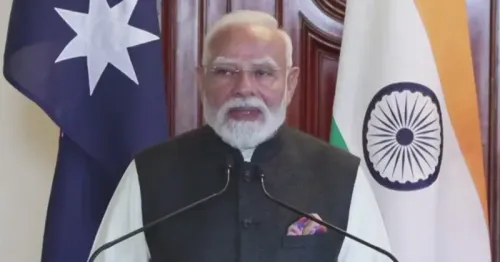
Union Education Minister Dharmendra Pradhan posted on 27 September 2026 that Australian PM Anthony Albanese credited PM Narendra Modi with unprecedented energy access expansion in India.
The Pradhan Mantri Ujjwala Yojana (PMUY) , launched in May 2016 , distributed LPG connections to BPL households, prioritising women as primary beneficiaries.
The Saubhagya Yojana , launched in September 2017 , targeted last-mile electricity connectivity for every unelectrified Indian household.
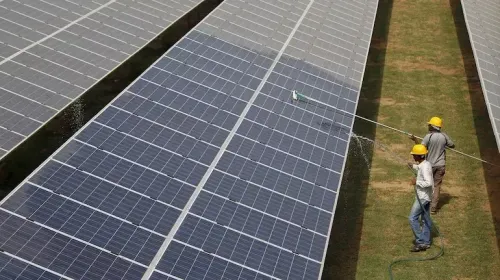
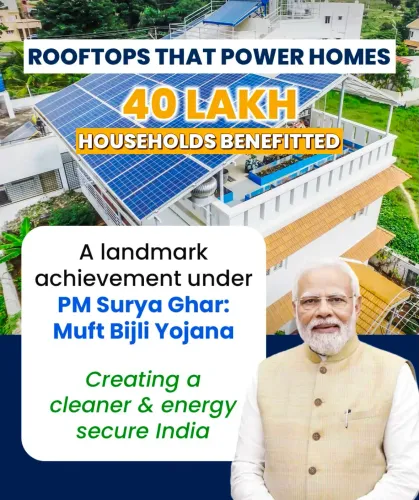
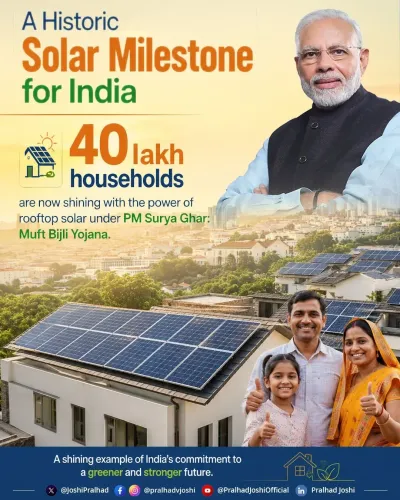
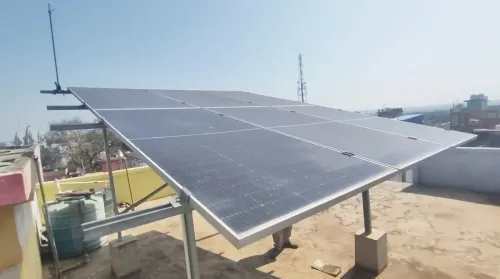
PM Surya Ghar is the latest scheme in the energy access arc, focusing on rooftop solar for decentralised power generation.
Pradhan, as former Union Petroleum Minister , was a key figure in rolling out PMUY and now frames international recognition as validation of that policy legacy.
The post signals that India-Australia engagement on energy could deepen, with clean energy and bilateral cooperation as the next frontier.
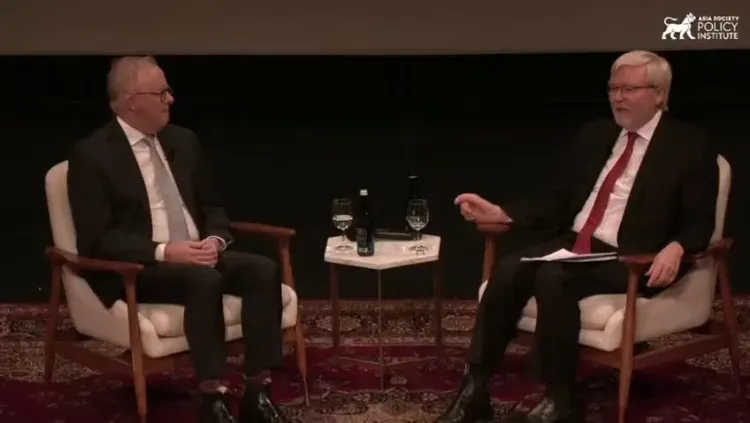
When a foreign head of government singles out India's energy transformation by name, it lands differently — and Union Education Minister Dharmendra Pradhan made sure the moment did not go unnoticed. On Sunday, 27 September 2026, Pradhan posted that Australian Prime Minister Anthony Albanese had publicly credited Prime Minister Narendra Modi with expanding energy access in India 'on an unprecedented scale,' calling it a reflection of the sheer scale of transformation underway in the country.
What Albanese Said — and Why It Matters
Pradhan's post did not quote Albanese verbatim but characterised the Australian PM as having acknowledged India's record on energy access as exceptional. The significance lies in the source: a leader of a developed, resource-rich economy recognising India's social infrastructure leap carries weight in diplomatic circles. Pradhan framed the international recognition as validation of a 'vision that puts the aspirations of every Indian at the heart of development.'
The hashtags anchoring the post — #PMUY, #UjjwalaYojana, #PMSuryaGhar, and #SaubhagyaYojana — signal exactly which programmes Pradhan wants the spotlight on. These are not abstract policy labels; they are schemes that reshaped daily life for tens of millions of households.
Ujjwala, Saubhagya, and the Architecture of Access
The Pradhan Mantri Ujjwala Yojana (PMUY), launched in May 2016, was designed to end the era of smoky, hazardous cookstoves by distributing LPG connections to Below Poverty Line households — with women listed as primary beneficiaries. It was the single largest targeted LPG rollout in the world by coverage ambition.
The Saubhagya Yojana, launched in September 2017, picked up where the grid stopped — targeting last-mile electricity connections for every unelectrified household in India. Together, the two schemes addressed the twin deficits of cooking fuel and lighting that had defined rural poverty for generations. PM Surya Ghar, the rooftop solar programme flagged in the post, represents the next chapter: moving from mere access to decentralised generation.
Pradhan's Personal Stake in the Energy Story
The post carries a particular resonance coming from Dharmendra Pradhan, who served as Union Minister for Petroleum and Natural Gas during a critical phase of the Ujjwala rollout. He was the face of the scheme's early expansion and repeatedly championed it as a women's empowerment intervention as much as an energy one. Now as Education Minister, his amplification of an international endorsement of that legacy is deliberate — connecting the dots between past stewardship and present global recognition.
The broader pattern is consistent: the government has used international acknowledgement — from multilateral forums to bilateral meetings — to reinforce the domestic narrative that its energy programmes have delivered structural change, not just headline numbers.
If foreign leaders are now citing India's energy access record in bilateral conversations, the next question is whether that recognition translates into concrete cooperation — on green hydrogen, solar supply chains, or critical minerals — at the next India-Australia bilateral summit. That is the real story waiting to be written.
Point of View
Amplifying Albanese's remarks is also a statement of personal legacy. The move fits a broader BJP pattern of internationalising scheme successes to insulate them from domestic critique. The sharper watch is whether the Australia-India energy dialogue now moves from appreciation to actionable cooperation on solar supply chains or critical minerals, which would give this diplomatic goodwill a concrete policy payload.
NationPress
28 Sept 2026
Frequently Asked Questions
What did Australian PM Albanese say about India's energy access?
Australian Prime Minister Anthony Albanese publicly credited PM Narendra Modi with expanding energy access in India on an unprecedented scale, according to a post by Union Education Minister Dharmendra Pradhan on 27 September 2026.
What is the Pradhan Mantri Ujjwala Yojana?
The Pradhan Mantri Ujjwala Yojana (PMUY), launched in May 2016, is a central government scheme that provides free LPG cooking gas connections to women from Below Poverty Line households, aimed at replacing hazardous solid-fuel cookstoves.
What is the Saubhagya Yojana?
The Saubhagya Yojana, launched in September 2017, is a government scheme focused on providing last-mile electricity connections to every unelectrified household in India, targeting rural and semi-urban areas left behind by the main grid.
What is PM Surya Ghar?
PM Surya Ghar is a government scheme for rooftop solar installation, representing the next phase of India's energy access push — moving from basic grid connectivity to decentralised clean power generation at the household level.
Why is Dharmendra Pradhan associated with India's energy schemes?
Before becoming Union Education Minister, Dharmendra Pradhan served as Union Minister for Petroleum and Natural Gas, during which he was the key face of the Ujjwala Yojana rollout and a consistent advocate for expanding LPG access to low-income households.