Kerala UDF govt removed 15,627 social media posts amid Rahul's democracy attacks on Centre
Synopsis
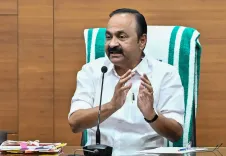
The Congress-led UDF government in Kerala quietly removed 15,627 social media posts — including content featuring Chief Minister V.D. Satheesan — through police-issued notices, as confirmed in an Assembly reply. This directly contradicts Satheesan's August denial, and lands as an acute embarrassment for Rahul Gandhi, who has been loudly accusing the BJP-led Centre of crushing democratic freedoms.
Key Takeaways
The Kerala UDF government removed 15,627 social media posts and links through police-initiated notices to online platforms.
Home Minister Ramesh Chennithala confirmed the action in a written Assembly reply to CPI(M) MLA Xavier Chittilappilly .
Police received 4,201 complaints on social media content since the UDF took office; legal action was initiated in 3,472 cases.
Satheesan had denied government involvement in post removals at a press conference on 13 August .
Removals were made through the Centre's Sahyog portal and other channels, covering Facebook and Instagram content featuring the CM and ministers.
The disclosures come as Rahul Gandhi campaigns nationally against alleged democratic suppression by the BJP -led Centre.
The Kerala government, led by the United Democratic Front (UDF), has removed 15,627 social media posts and links — including content featuring Chief Minister V.D. Satheesan and other ministers — through police-initiated notices to online platforms. The disclosure, surfacing from an Assembly reply on Tuesday, 18 November 2026, has reignited a controversy that first erupted in August over whether the state administration was quietly suppressing critical online content.
What the Assembly Reply Revealed
Kerala Home Minister Ramesh Chennithala, in a written reply to a question by CPI(M) MLA Xavier Chittilappilly, confirmed that the state police had received 4,201 complaints relating to social media content since the UDF government assumed office. Legal action was initiated in 3,472 of those cases, while 15,627 posts or links were removed through notices to platforms.
The question had specifically sought details of police action through the Centre's Sahyog portal — a government mechanism for flagging online content — to remove news cards, photographs and videos featuring the Chief Minister and ministers from platforms such as Facebook and Instagram. The reply confirmed that police were continuously monitoring social media and acting through the Sahyog portal as well as other channels.
The August Controversy and Satheesan's Denial
The disclosure revisits a controversy from August, when allegations surfaced that tech giant Meta had removed social media posts and news cards critical of CM Satheesan and his government. At a press conference on 13 August, Satheesan dismissed the allegations, stating that his only request to Meta had been to restore the official Instagram account of the Chief Minister's Office. He even offered to write to Meta asking it not to remove posts critical of him.
The Assembly reply now confirms that the police had indeed approached social media platforms seeking removal of content, including material featuring the Chief Minister and ministers — placing Satheesan's earlier denial under sharper scrutiny.
Government's Stated Justification
Chennithala clarified that notices were issued following complaints from individuals and whenever artificially edited videos and morphed photographs came to the notice of the police. The government has cited manipulated images and objectionable content as the basis for action, invoking provisions of the Information Technology Act and Rules. Critically, the Assembly reply does not establish that the notices were aimed at suppressing legitimate criticism or verified news reports — a distinction that remains contested.
The Contradiction with Rahul Gandhi's Central Critique
The revelations arrive at an awkward moment for the Congress party. Congress leader and Lok Sabha Leader of Opposition Rahul Gandhi has sustained a sharp campaign accusing the Bharatiya Janata Party (BJP)-led Central government of attempting to 'stifle democracy'. Recently, at an event in Hyderabad, Gandhi claimed that 'India is actually no longer a democracy' and alleged that the democratic system was destroyed after 2014.
Notably, the Congress-led UDF government in Kerala — a state Congress governs — stands accused by opposition legislators of using similar mechanisms to manage its own online image, lending the BJP ammunition to call out what critics argue is a double standard. This is not the first time a state government's social media monitoring practices have been juxtaposed against the same party's national-level rhetoric on press and digital freedom.
What Happens Next
The opposition CPI(M), which is in power at the panchayat and local body level in several parts of Kerala, is expected to press the matter further in the Assembly. Civil liberties advocates have called for greater transparency on the nature of posts removed — specifically, whether any constituted lawful commentary or journalism rather than manipulated content. The Centre's Sahyog portal, through which many of the removals were routed, may itself face renewed scrutiny over the breadth of its usage by state governments.
Point of View
627 figure is not just a number — it is a credibility problem for a party whose national leader has made democratic freedoms the centrepiece of his political identity. Rahul Gandhi's argument that the BJP is 'stifling democracy' loses rhetorical force when the Congress-run government in Kerala is confirmed to have used the same state machinery — including the Centre's own Sahyog portal — to scrub online content featuring its own chief minister. The government's IT Act justification may hold for genuinely morphed images, but the absence of any public breakdown between manipulated content and legitimate criticism leaves the door open to exactly the charge it is trying to avoid. Kerala's opposition will not let that door close easily.
NationPress
18 Nov 2026
Frequently Asked Questions
How many social media posts did the Kerala government remove?
The Kerala government removed 15,627 social media posts and links through police-issued notices to online platforms. This was confirmed by Home Minister Ramesh Chennithala in a written Assembly reply on 18 November 2026.
Why did Kerala police remove social media posts featuring CM Satheesan?
The government stated that notices were issued following individual complaints and whenever artificially edited videos or morphed photographs came to police attention, citing the Information Technology Act and Rules . However, the Assembly reply does not specify how many of the removed posts constituted manipulated content versus legitimate commentary.
What did CM V.D. Satheesan say about social media post removals earlier?
At a press conference on 13 August , Satheesan denied that his office had approached Meta to remove critical content, saying his only request was to restore the official Instagram account of the Chief Minister's Office. The latest Assembly reply, however, confirms police did approach platforms to remove content featuring the CM and ministers.
What is the Sahyog portal and how was it used in this case?
The Sahyog portal is a Central government mechanism that allows authorities to flag and seek removal of online content. Kerala police used it, alongside other channels, to issue notices to platforms such as Facebook and Instagram for the removal of posts including those featuring Chief Minister Satheesan and his ministers.
Why is this politically significant for Rahul Gandhi and Congress?
Congress leader and Lok Sabha Leader of Opposition Rahul Gandhi has been publicly accusing the BJP-led Centre of suppressing democracy and stifling free speech. The confirmation that the Congress-led UDF government in Kerala removed thousands of social media posts — including content critical of its own chief minister — creates a direct contradiction that the BJP is likely to exploit politically.