Tejashwi Yadav pays tribute to Rezang La heroes on 62nd anniversary

Synopsis
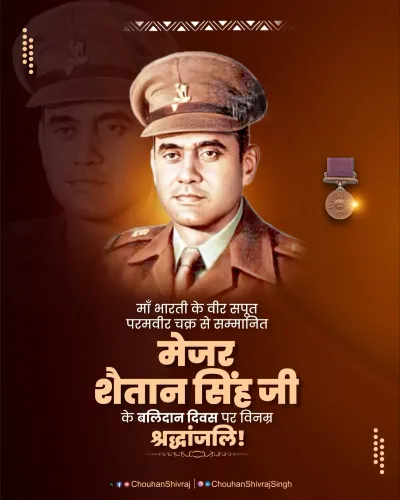
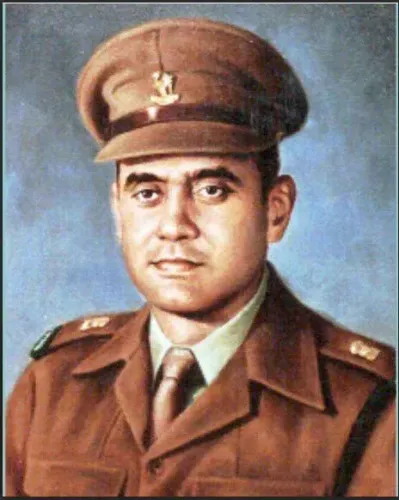
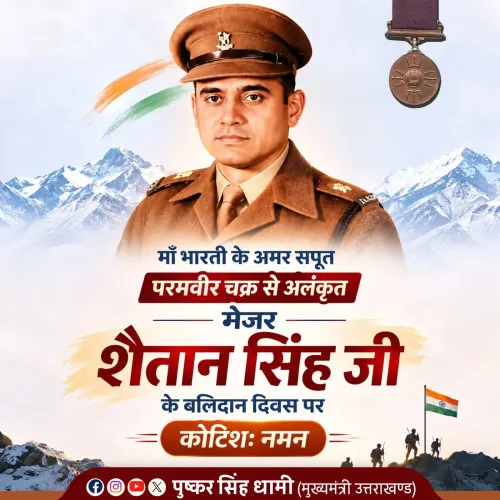
On Rezang La Diwas, RJD leader Tejashwi Yadav honoured the 120 Ahir soldiers of 13 Kumaon Regiment who fought to the last at Chushul on 18 November 1962, paying homage at the 62nd anniversary of one of India's most celebrated last stands.
Key Takeaways
Rezang La Diwas falls on 18 November , marking the 1962 battle in which Charlie Company, 13 Kumaon Regiment , defended the Chushul sector in Ladakh.
RJD leader Tejashwi Yadav posted a tribute invoking the soldiers' vow of 'the last bullet, the last man, the last breath.' The 120 Ahir soldiers of Charlie Company were vastly outnumbered and the entire company was effectively lost holding the position.
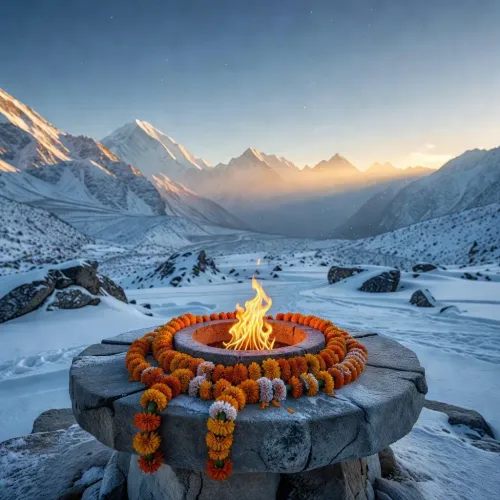
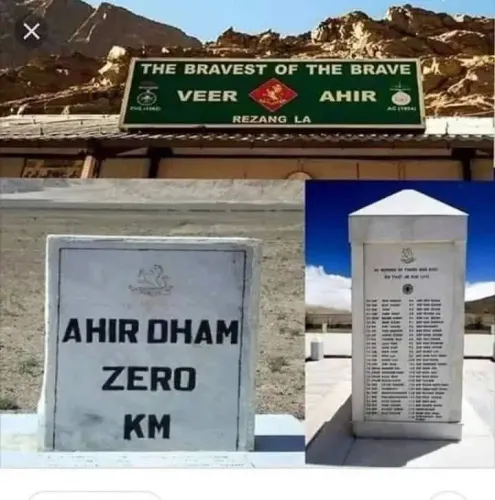
The Rezang La War Memorial at Chushul, known as 'The Bravest of the Brave, Veer Ahir — Ahir Dham,' stands as a permanent tribute to the fallen.
The battle holds special significance for the Ahir community and remains a defining chapter in the Indian Army's institutional history.
Annual observances carry fresh significance given Ladakh's continued strategic importance in India-China border dynamics.
Sixty-two years after 120 Ahir soldiers of the 13 Kumaon Regiment's Charlie Company made their last stand at Rezang La, Chushul, RJD leader Tejashwi Yadav paused on 18 November 2026 to honour a battle that military historians still regard as one of independent India's most extraordinary acts of collective courage.
Posting on Rezang La Diwas, Yadav recalled how the soldiers of Charlie Company — outnumbered many times over by Chinese forces — fought to the last under the vow of 'antim goli-antim aadmi-antim saans' ('the last bullet, the last man, the last breath'). His post cited that the 120 defenders inflicted heavy casualties on the attacking force before the position was overrun.
The pass that wrote its own chapter in military history
The Battle of Rezang La was fought on 18 November 1962 in the high-altitude terrain of Ladakh at approximately 16,000 feet. Charlie Company, drawn largely from the Ahir community of Haryana and Uttar Pradesh, held a critical feature in the Chushul sector against an overwhelming Chinese assault during the Sino-Indian War of 1962. The engagement is remembered not for a victory on the conventional scoreboard, but for the absolute refusal to yield — a standard that has entered the Indian Army's institutional memory.
The post makes a point of noting that virtually the entire company was lost. It is precisely that completeness of sacrifice — not a retreat, not a surrender — that has kept the name Rezang La alive in public memory long after the broader 1962 conflict faded from daily conversation.
Rezang La War Memorial — 'The Bravest of the Brave'
Yadav also drew attention to the Rezang La War Memorial at Chushul, formally known as 'The Bravest of the Brave, Veer Ahir — Ahir Dham'. The memorial stands as the permanent marker of the company's stand, a stone record of the pact those soldiers made with the ground they were ordered to hold. For the Ahir community, it carries a pride that runs alongside the grief — their sons, in one morning of fighting, earned a phrase that became a regimental identity.
Annual remembrance in a changed Ladakh
Rezang La Diwas is observed every 18 November, and in recent years the ceremony has taken on fresh resonance. Ladakh's strategic importance has only grown in the decades since 1962, with border infrastructure, forward deployments, and India-China boundary talks keeping the region in the national consciousness. The annual tribute thus does double duty: it honours the dead and quietly underlines that the terrain those soldiers died on remains contested and watched.
Yadav's tribute, cutting across party lines, reflects how the memory of Rezang La belongs less to any political formation and more to a national idea of what soldiering means when every institutional advantage has run out.
The names carved at Ahir Dham belong to a morning in 1962 — but every November they demand to be read again.
Point of View
Rooted in Bihar-UP politics where the Ahir community has a substantial presence, the remembrance also carries an implicit community pride that connects electoral geography to military legacy. More broadly, the annual Rezang La observance has quietly grown in public salience as India-China boundary tensions have kept Ladakh in the headlines, turning a 1962 date into a living policy reference. The battle's moral architecture — no retreat, no surrender — continues to shape how the Indian Army frames high-altitude warfare doctrine and institutional identity.
NationPress
18 Nov 2026
Frequently Asked Questions
What happened at the Battle of Rezang La in 1962?
On 18 November 1962 , Charlie Company of the 13 Kumaon Regiment — comprising approximately 120 soldiers , mostly from the Ahir community — fought to defend the Rezang La pass in the Chushul sector of Ladakh against an overwhelming Chinese assault during the Sino-Indian War. The company fought until virtually no soldier remained, embodying the motto 'last bullet, last man, last breath.'
What is Rezang La Diwas?
Rezang La Diwas is observed every year on 18 November to commemorate the anniversary of the 1962 Battle of Rezang La, honoring the sacrifice of the Charlie Company soldiers of the 13 Kumaon Regiment who died defending the pass in Ladakh.
Where is the Rezang La War Memorial?
The Rezang La War Memorial , formally called 'The Bravest of the Brave, Veer Ahir — Ahir Dham,' is located at Chushul in Ladakh . It was built in memory of the Ahir soldiers of Charlie Company who fell during the 1962 Sino-Indian War .
Why did Tejashwi Yadav post about Rezang La?
Tejashwi Yadav posted his tribute on 18 November 2026 , the 62nd anniversary of the Battle of Rezang La, using #RezangLaDiwas to honour the soldiers of 13 Kumaon Regiment who made their last stand at Chushul, Ladakh in 1962.
Who were the Ahir soldiers at Rezang La?
The soldiers of Charlie Company, 13 Kumaon Regiment at Rezang La were drawn predominantly from the Ahir community of Haryana and Uttar Pradesh. Their collective sacrifice at Chushul on 18 November 1962 is commemorated at the Ahir Dham memorial and observed annually as Rezang La Diwas.