Amit Shah at Jalandhar: BJP vows to jail every drug trader in Punjab
Synopsis
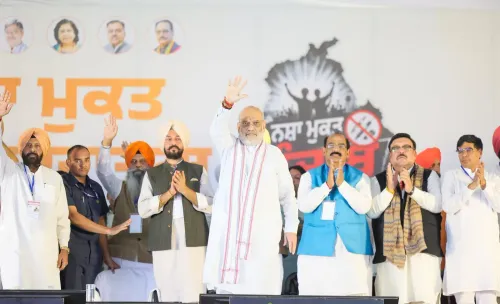
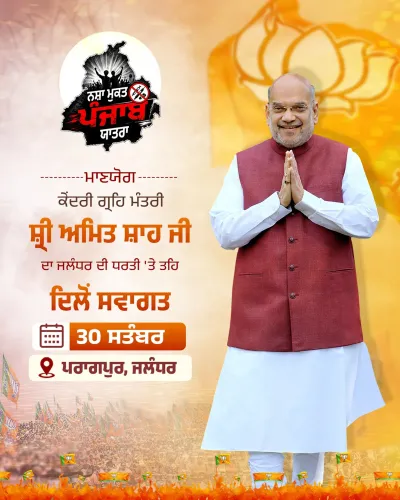
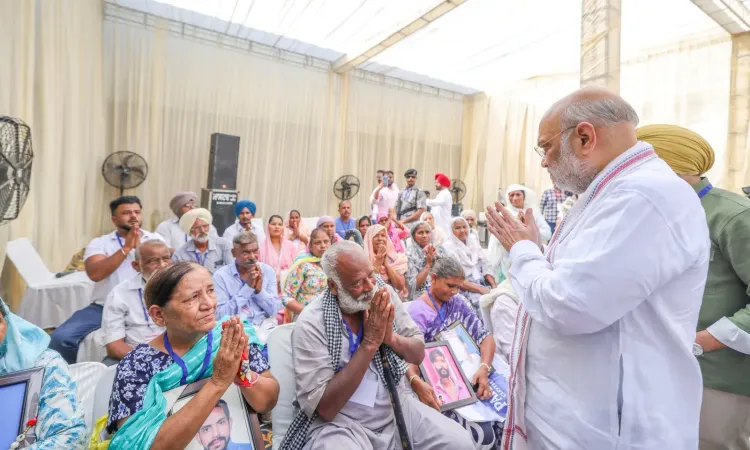
Union Home Minister Amit Shah concluded the Nasha Mukt Punjab Yatra in Jalandhar on September 30, meeting families devastated by drug addiction and pledging that a BJP government in Punjab would put every drug trader behind bars ahead of the 2027 state elections.
Key Takeaways
Amit Shah attended the closing event of the Nasha Mukt Punjab Yatra in Jalandhar on September 30, 2026 .
He met victim families who lost members to drug addiction and described the experience as deeply distressing.
Shah pledged that a BJP government in Punjab would 'hunt down every single drug trader' and jail them one by one.
AAP had promised to eliminate Punjab's drug trade within one month of taking office in 2022 — a promise critics say went unfulfilled.
The drug problem in Punjab has been documented since the early 2010s across multiple government tenures, including previous SAD-BJP and Congress regimes.
The yatra and Shah's visit are widely seen as early political mobilisation ahead of the 2027 Punjab assembly elections .
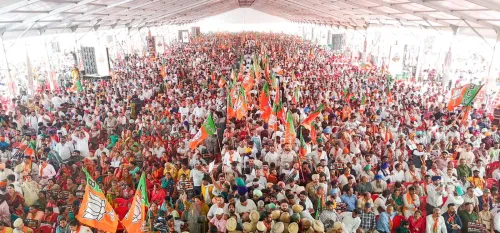
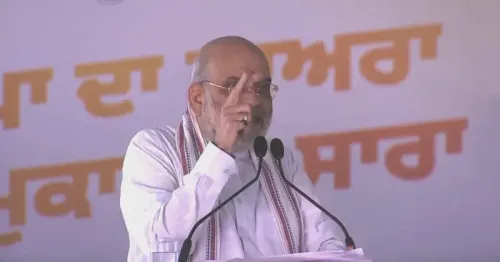
Mothers who lost sons. Sisters who lost brothers. Daughters who lost fathers. Union Home Minister Amit Shah sat with them in Jalandhar on Wednesday, September 30, 2026, at the conclusion of the Nasha Mukt Punjab Yatra (Drug-Free Punjab Journey) — and the grief he heard, he said, shook him to his core.
In a post on X, Shah wrote: 'The drug trade flourishing under the misrule of the Aap-da government has destroyed the homes of countless mothers, sisters and daughters. Hearing the pain of victim families who have lost their loved ones to drugs, my heart is deeply distressed.' The wordplay in the phrase Aap-da — a fusion of 'AAP' (Aam Aadmi Party) and the Hindi word for 'calamity' — is deliberate, framing Punjab's ruling party as a disaster in itself.
The pledge Shah made in Jalandhar
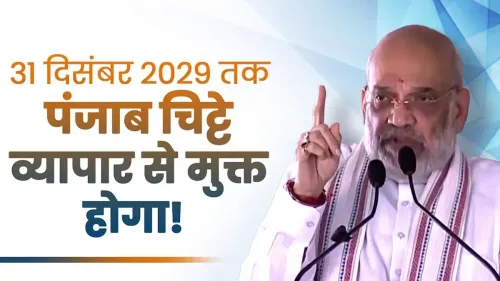
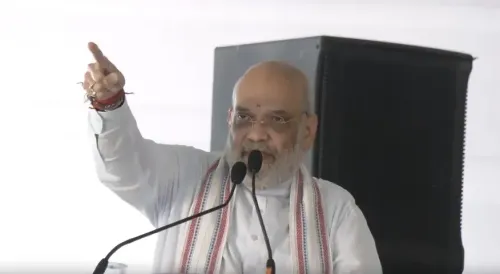
Shah did not stop at grief. He drew a sharp line of intent: 'A BJP government in Punjab will hunt down every single drug trader and put them behind bars, and will secure the future of the state's youth by making Punjab drug-free.' The language — chun-chun kar, meaning 'one by one, picking each out' — signals a targeted enforcement posture, not a sweeping policy statement. It is a message aimed squarely at the families in that room and the millions watching.
Why Punjab's drug crisis keeps returning to centre stage
Punjab has carried the weight of a documented narcotics crisis since the early 2010s, when successive governments — Congress and SAD-BJP alike — were repeatedly criticised in central and state reports for failing to stem trafficking routes from the northwest border. When the Aam Aadmi Party swept to power in the 2022 assembly elections, a core promise on its manifesto was to eliminate the drug trade within one month of taking office. That deadline passed without a decisive outcome, and the issue has remained a live political wound.
The Nasha Mukt Punjab Yatra is the BJP's vehicle to keep that wound visible. By closing the yatra with a public meeting of bereaved families — and by doing so in Jalandhar, Punjab's second-largest city — the party puts a human face on what can otherwise be reduced to statistics.
Electoral arithmetic behind the empathy
The BJP was, until 2022, the junior partner in Punjab's Shiromani Akali Dal-led governments, and the drug problem accumulated ground during those years too. Shah's post implicitly sidesteps that history, framing the crisis as a product of AAP's governance alone. That is a political argument, not a complete historical account — and it will be contested. What is not contested is that Punjab's youth population continues to bear a disproportionate burden of addiction and trafficking-related crime.
With the 2027 Punjab assembly elections drawing closer, every yatra, every public interaction with affected families, and every sharp tweet is a brick in the BJP's campaign architecture. The question is whether a party that has not held state power in Punjab since 2017 can convert sympathy — and a genuine crisis — into a governing mandate.
Point of View
Attach a human face to a structural failure, and extract a crisp electoral promise. The Aap-da wordplay is crafted for virality, but the underlying grievance — AAP's unkept one-month drug-elimination pledge from 2022 — is real and resonant. Notably, Punjab's drug crisis predates AAP by over a decade, including years of SAD-BJP rule, a fact the BJP's framing quietly elides. How AAP responds to this sustained pressure, and whether the BJP can credibly separate its own historical co-governance from the crisis, will define a key fault line of the 2027 campaign.
NationPress
1 Oct 2026
Frequently Asked Questions
What is the Nasha Mukt Punjab Yatra?
The Nasha Mukt Punjab Yatra is a BJP-organised campaign across Punjab aimed at highlighting the state's drug crisis and building political momentum around the party's anti-narcotics promise ahead of the 2027 assembly elections. It concluded in Jalandhar on September 30, 2026.
What did Amit Shah promise about Punjab's drug problem?
Shah pledged that a BJP government in Punjab would identify and jail every single drug trader and work to make the state drug-free, securing the future of Punjab's youth.
What did AAP promise about drugs when it came to power in Punjab in 2022?
AAP's 2022 election manifesto promised to eliminate Punjab's drug trade within one month of assuming office. The deadline passed without a decisive resolution, and the issue has remained a point of political criticism.
Why is Punjab's drug problem so serious?
Punjab's proximity to the northwest border has made it a transit and consumption zone for narcotics trafficking. The crisis has been documented in central and state reports since the early 2010s, affecting a significant portion of the state's youth population across multiple government tenures.
When are the next Punjab assembly elections?
The next Punjab state assembly elections are expected in 2027 . BJP's current campaign activities, including the Nasha Mukt Punjab Yatra, are widely interpreted as early electoral mobilisation ahead of that contest.