Amit Shah Chairs 93rd NCDC General Council, Sets 25-Year Roadmap
Synopsis
Union Home Minister Amit Shah chaired the 93rd NCDC General Council meeting in New Delhi on 29 October 2026, directing the National Cooperative Development Corporation to prepare a 25-year expansion roadmap, achieve cooperative self-reliance in Northeast India by 2030, and improve cooperative sugar mills through circular economy models.
Key Takeaways
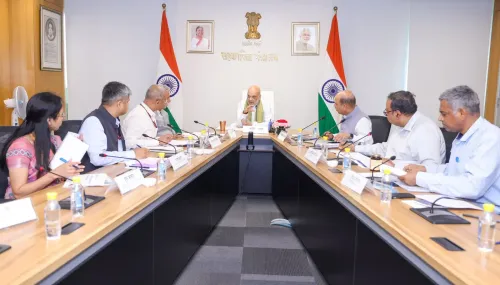
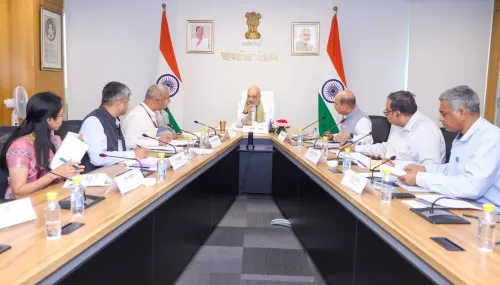
Amit Shah chaired the 93rd General Council meeting of NCDC in New Delhi on 29 October 2026 .
Shah directed NCDC to prepare a comprehensive 25-year roadmap covering its expansion and operational framework.
NCDC has expanded its presence to all states and Union Territories — described by Shah as a major achievement benefiting small farmers, livestock owners, fisherfolk, and rural women.
A specific target was set: make Northeast India self-reliant through cooperatives by 2030 .
NCDC is also tasked with making cooperative sugar mills more viable through circular economy practices .
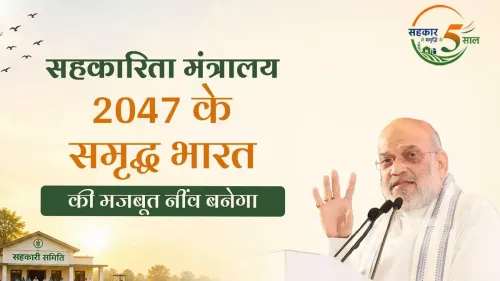
The Ministry of Cooperation , created in July 2021 , has positioned NCDC as its primary on-ground institutional arm.
From small farmers in the hinterland to fisherwomen in the Northeast, a statutory body that has quietly shaped India's cooperative economy for over six decades is now being handed a generational mandate. Union Home Minister and Minister of Cooperation Amit Shah on Thursday, 29 October 2026, chaired the 93rd General Council meeting of the National Cooperative Development Corporation (NCDC) in New Delhi — and left the room with a direct charge: draw up a comprehensive roadmap for the next 25 years.
What Shah told NCDC — in his own words
Posting on X in Hindi, Shah described NCDC's expansion to every state and Union Territory as 'bahut badi uplabdhi' — 'a very significant achievement' — whose benefits are now reaching small farmers, livestock owners, fisherfolk, and rural women. He directed the corporation to prepare a wide-ranging roadmap covering its expansion and operational framework for the coming quarter-century. He also set two specific targets: making Northeast India self-reliant through cooperatives by 2030, and improving the viability of cooperative sugar mills through circular economy practices.
The circularity angle is telling. Sugar mills that integrate by-products — bagasse for power, molasses for ethanol, press-mud for organic manure — earn across multiple value chains. Directing NCDC to anchor that transition signals a shift from welfare-oriented cooperative policy to sustainability-driven enterprise.
Why NCDC, and why now
NCDC was established in 1963 as the primary financing and development agency for India's cooperative sector. For decades it operated largely below the national policy waterline. That changed in July 2021, when the central government created the dedicated Ministry of Cooperation — the first of its kind — to give institutional heft to the cooperative movement. Shah has headed the ministry since its inception, and the NCDC has increasingly become its operational arm on the ground.
The ministry's creation was itself a statement of intent: that cooperatives, long associated with Maharashtra's sugar belt and Gujarat's dairy dominance, needed to be retrofitted for a pan-India, rural-inclusive economy. Since then, the government has pushed cooperative banking, storage, and agro-processing into geographies that barely registered on the old cooperative map.
The Northeast imperative by 2030
The most geopolitically pointed directive in Thursday's meeting was the 2030 deadline for Northeast self-reliance through cooperatives. The eight northeastern states — long dependent on central transfers and constrained by difficult terrain — represent both the biggest gap in India's cooperative network and arguably its highest-upside frontier. Agriculture, horticulture, fisheries, and handicrafts in the region remain largely outside formal cooperative structures.
Anchoring NCDC as the vehicle for Northeast development by 2030 ties cooperative policy directly to the broader government push for regional equity in India's periphery. It also gives the ministry a measurable, time-bound accountability marker — which is a shift from the vaguer developmental language that has historically surrounded the region's central schemes.
A 25-year clock starts ticking
The instruction to build a 25-year roadmap is ambitious by any bureaucratic standard. India's cooperative sector — with roughly 8 lakh cooperatives and over 290 million members by recent estimates — is vast but uneven: deep in some states, almost invisible in others. A long-range institutional plan from NCDC would be the first structured attempt to close that gap systematically across geographies and commodity chains.
Whether that roadmap becomes a live policy instrument or a shelf document will depend on how quickly NCDC translates the minister's directives into funded programmes — and how the Northeast targets are monitored as the 2030 window narrows.
One thing is clear: after decades as a background institution, NCDC is being asked to step into the foreground. The 25-year clock started ticking Thursday afternoon in New Delhi.
Point of View
Not just disbursements. The 2030 Northeast deadline is particularly significant: it converts a vague developmental aspiration into an accountable policy commitment tied to a ministry that Shah personally leads. Embedding circular economy thinking into cooperative sugar mills also signals a maturing of cooperative policy — from subsistence support toward integrated agro-industrial sustainability. Collectively, these moves extend the Ministry of Cooperation's five-year institutional build into a multi-decade architecture that would outlast any single government's term.
NationPress
29 Oct 2026
Frequently Asked Questions
What is NCDC and what does it do?
The National Cooperative Development Corporation (NCDC) is a statutory body established in 1963 under India's Ministry of Cooperation. It is the primary agency for financing and promoting cooperative development across the country, covering sectors such as agriculture, dairy, fisheries, and rural processing.
What did Amit Shah announce at the 93rd NCDC General Council meeting?
At the 93rd NCDC General Council meeting in New Delhi on 29 October 2026, Amit Shah directed NCDC to prepare a 25-year comprehensive roadmap for its expansion, set a 2030 target for making Northeast India self-reliant through cooperatives, and tasked the body with improving cooperative sugar mills using circular economy practices.
Why is the Ministry of Cooperation important for NCDC?
The Ministry of Cooperation was created in July 2021 as India's first dedicated ministry for the cooperative sector. It gave NCDC direct policy backing and greater institutional prominence, helping accelerate the expansion of cooperatives into states and regions where the cooperative network was previously thin.
What does making Northeast India self-reliant through cooperatives by 2030 mean?
It means using cooperative structures — in agriculture, horticulture, fisheries, and handicrafts — to formalise and financially empower communities in India's eight northeastern states, reducing their dependence on central transfers and integrating them into India's broader cooperative economy by the year 2030.
How can cooperative sugar mills benefit from a circular economy?
Cooperative sugar mills can adopt circular economy practices by monetising by-products such as bagasse (for power generation), molasses (for ethanol production), and press-mud (for organic fertiliser), creating multiple revenue streams and improving overall financial viability beyond just sugar sales.