Amit Shah: Crime 'industry' replaced by defence corridor in UP
Synopsis
Home Minister Amit Shah on 25 September 2026 contrasted crime he attributes to SP-BSP rule in Uttar Pradesh with BJP-era projects including the Defence Industrial Corridor, vehicle manufacturing hubs, and medical device parks, framing industrial growth as proof of restored law and order.
Key Takeaways
Union Home Minister Amit Shah on 25 September 2026 accused SP and BSP governments of running a 'crime industry' in Uttar Pradesh , including vehicle theft and chain-snatching.
Shah contrasted that record with three flagship projects under BJP rule: the UP Defence Industrial Corridor , vehicle manufacturing hubs, and medical device parks.
The Uttar Pradesh Defence Industrial Corridor was announced in 2019 as part of the Atmanirbhar Bharat defence manufacturing policy.
Medical device parks in UP are linked to the central government's Production Linked Incentive scheme launched in 2020 .
The BJP has used the SP-BSP versus post-2017 governance contrast as a consistent electoral and policy narrative since Chief Minister Yogi Adityanath took office.
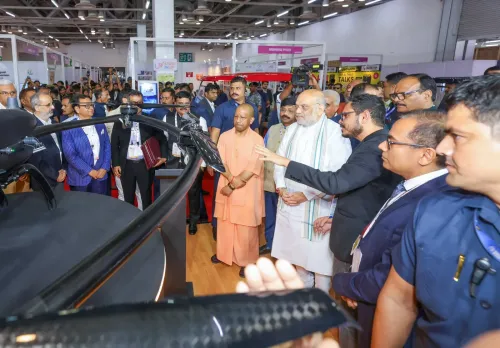
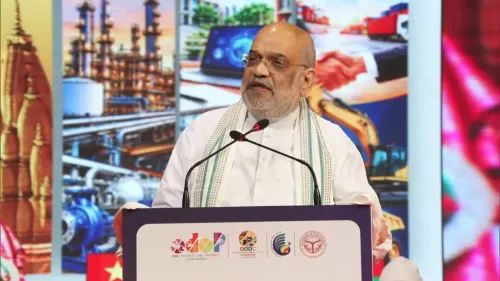
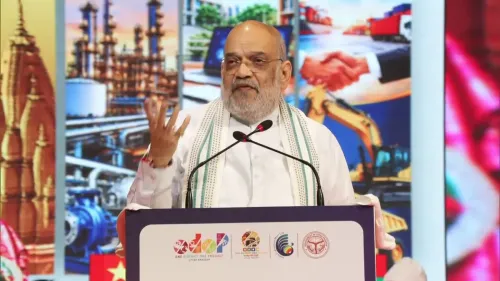
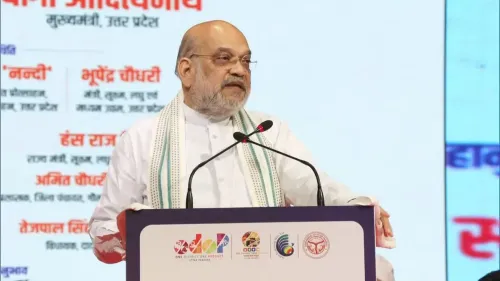
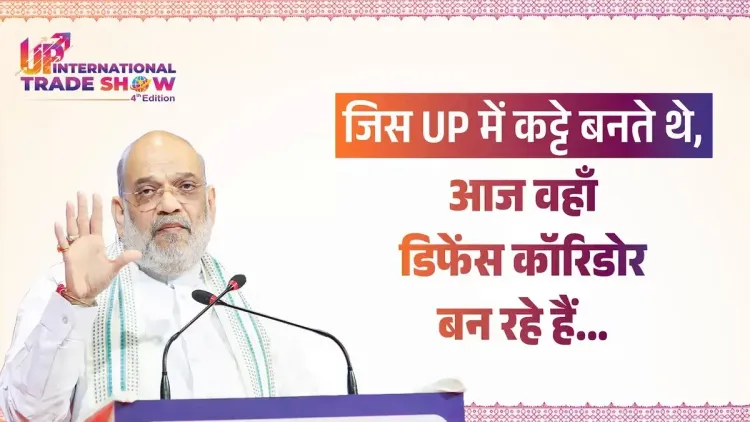
Where chain-snatchers once learned their trade and vehicle theft ran like a cottage industry, Union Home Minister Amit Shah says a fundamentally different Uttar Pradesh is now taking shape — one anchored in defence manufacturing, vehicle production, and medical device parks. Speaking on Friday, 25 September 2026, Shah drew a sharp contrast between the SP-BSP era and the post-2017 BJP government, framing the state's industrial rise as a direct consequence of restored law and order.
The 'crime industry' charge against SP and BSP rule
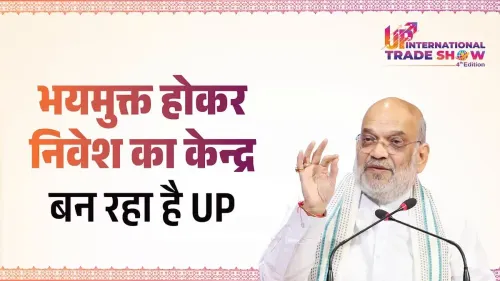
Shah's post in Hindi was blunt: 'सपा-बसपा के शासन में उत्तर प्रदेश में अपराध की इंडस्ट्री चलती थी' — 'During SP-BSP rule, a crime industry ran in Uttar Pradesh.' He described vehicle theft as a 'cottage industry' and alleged that young people were being schooled in chain-snatching as a skill. The language is deliberately industrial, turning the opposition's governance record into an economic metaphor to sharpen the contrast with today's manufacturing announcements.
The Bahujan Samaj Party governed Uttar Pradesh from 2007 to 2012 under Mayawati, followed by the Samajwadi Party under Akhilesh Yadav from 2012 to 2017. Both parties have consistently disputed the BJP's characterisation of law and order during their respective tenures. The specific crime-rate claims in Shah's post are rhetorical in framing and cannot be independently benchmarked here.
Defence corridor, vehicle hubs, and medical device parks
The centrepiece of Shah's contrast is the Uttar Pradesh Defence Industrial Corridor, announced in 2019 as part of the central government's Atmanirbhar Bharat defence manufacturing push. The corridor spans multiple nodes across the state and is designed to attract both public and private sector defence manufacturers, reducing India's dependence on imports. It represents one of the largest industrial policy bets ever placed on Uttar Pradesh.
Alongside the defence corridor, vehicle manufacturing clusters and medical device parks — the latter backed by the central government's Production Linked Incentive scheme launched in 2020 — are positioned as pillars of the state's new industrial identity. Exact commissioning timelines and locations for individual units within these clusters are still developing and have not been officially finalised in full.
The political arithmetic behind Shah's framing
This is not a standalone statement — it is a recurring BJP campaign line in its most compressed form. Since Chief Minister Yogi Adityanath took office in 2017, the party has systematically anchored every investment milestone against the SP-BSP baseline, arguing that law-and-order stability was the prerequisite for industrial confidence. Uttar Pradesh is India's most populous state, and its economic trajectory carries enormous national weight — a point Shah's framing implicitly leverages.
The message lands ahead of what observers expect to be a competitive electoral environment in the state. By converting governance into an industry narrative, Shah frames the BJP's record not merely as better policing but as an economic dividend that voters can measure in jobs and factories — not just crime statistics.
From chain-snatching to defence manufacturing is a long road; the question Uttar Pradesh's voters will eventually answer is whether that road has been fully travelled — or whether the milestone signs are still ahead.
Point of View
'cottage industry', 'skill' — to describe crime under rival governments, he inverts the opposition's development language and turns it into an indictment. This framing has proven durable since 2017, and its repetition in 2026 signals that the BJP intends to contest any upcoming election in UP on the same growth-versus-crime axis. The open question is whether the Defence Corridor and allied projects have matured enough on the ground to sustain that narrative with tangible output data.
NationPress
25 Sept 2026
Frequently Asked Questions
What is the Uttar Pradesh Defence Industrial Corridor?
The UP Defence Industrial Corridor is a central government initiative announced in 2019 to create defence manufacturing nodes across Uttar Pradesh, aimed at boosting domestic defence production under the Atmanirbhar Bharat policy.
What did Amit Shah say about SP and BSP rule in Uttar Pradesh?
Amit Shah alleged that during SP and BSP governments, Uttar Pradesh ran what he called a 'crime industry', with vehicle theft described as a cottage industry and youth allegedly trained in chain-snatching.
Which governments ruled Uttar Pradesh before BJP came to power in 2017?
The Bahujan Samaj Party under Mayawati ruled UP from 2007 to 2012, followed by the Samajwadi Party under Akhilesh Yadav from 2012 to 2017.
What industrial projects is the BJP government developing in Uttar Pradesh?
Key projects include the UP Defence Industrial Corridor, vehicle manufacturing clusters, and medical device parks — the last of these supported by the central government's Production Linked Incentive scheme launched in 2020.
Why is Amit Shah comparing UP crime with manufacturing projects?
Shah is reinforcing the BJP's consistent post-2017 narrative that improved law and order under Chief Minister Yogi Adityanath created the conditions for large-scale industrial investment in Uttar Pradesh.