Amit Shah Dedicates India's First LNG Train at Sabarmati
Synopsis
Union Home Minister Amit Shah dedicated India's first LNG-powered train at Ahmedabad's Sabarmati Station on September 27, 2026, marking a key step in Indian Railways' drive to cut diesel dependence, reduce emissions, and save foreign exchange as part of its 2030 net-zero target.
Key Takeaways
Union Home Minister Amit Shah dedicated India's first LNG train at Sabarmati Station, Ahmedabad on September 27, 2026 .
The LNG-powered train is designed to reduce diesel dependence, cut pollution, and save foreign exchange on petroleum imports.
Indian Railways set a net-zero carbon emissions by 2030 target, announced around 2021, which this launch advances.
LNG serves as a bridging fuel for routes where full electrification is not yet feasible, covering a critical gap in the decarbonisation plan.
The next milestone to watch is the rollout of additional LNG locomotives on other routes and the publication of fuel-saving and emissions data from this first train.
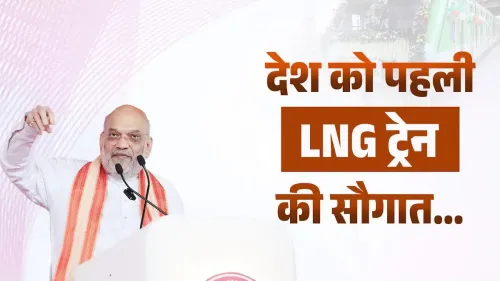
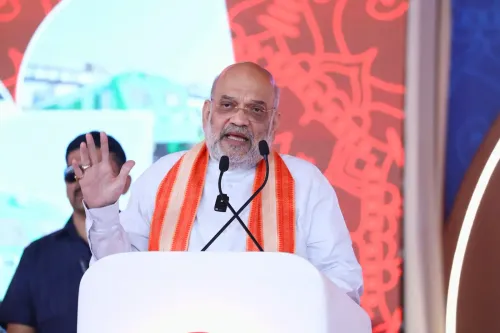
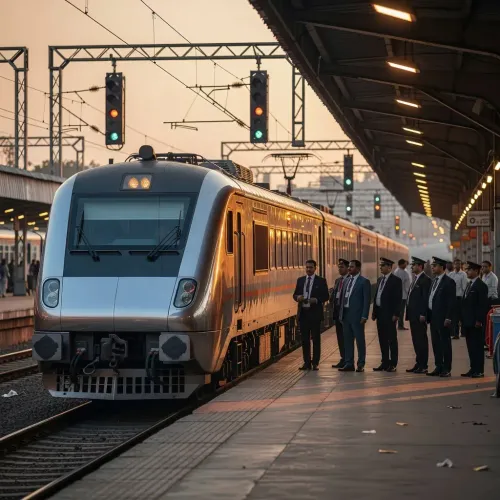
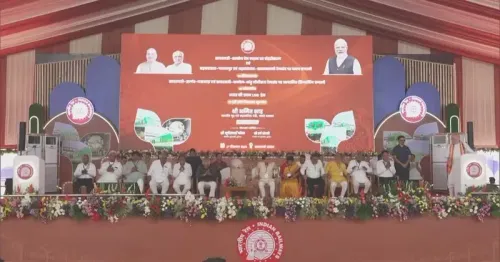
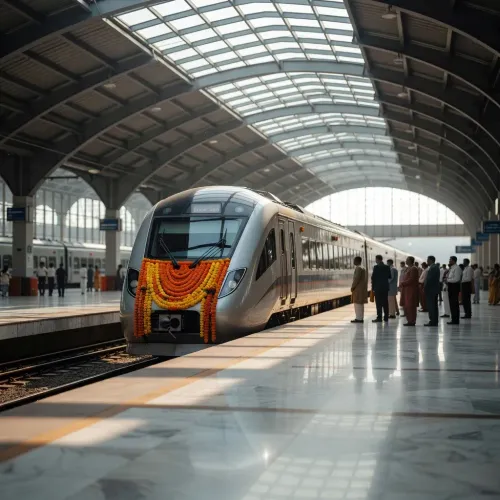
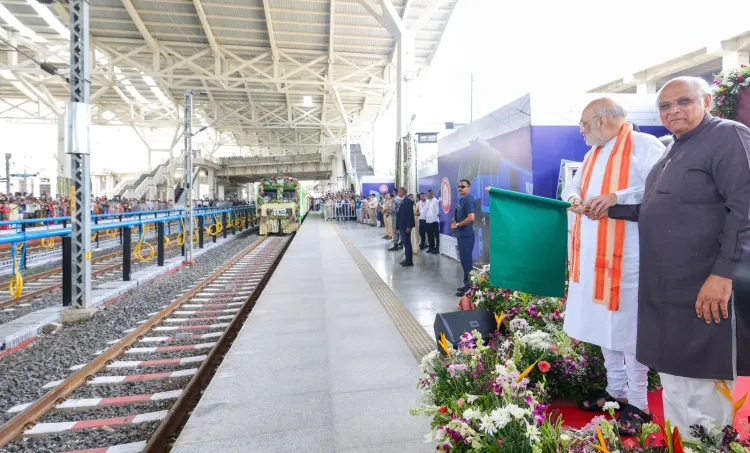
A train that runs on liquefied natural gas instead of diesel pulled out of Ahmedabad's Sabarmati Station on Sunday, September 27, 2026 — and with it, Indian Railways crossed a threshold it has been building toward for years. Union Home Minister Amit Shah dedicated the country's first LNG-powered train to the nation at the station, calling the day 'extremely significant' in the journey toward a greener railway network.
Posting on X in Hindi, Shah described the milestone as a step that would 'reduce dependence on diesel, cut pollution, save foreign exchange, and realise our resolve for a green railway' — three goals wrapped into a single locomotive. The Modi government, he added, is not merely expanding the rail network but equipping it with modern technology and environment-friendly engines to bring it to world-class standards.Why LNG, and Why Now
Diesel has powered the vast majority of India's non-electrified freight and passenger lines for decades, making Indian Railways one of the country's largest single consumers of the fuel. Switching even a fraction of that fleet to liquefied natural gas bites directly into two pressure points: the import bill for petroleum products and the carbon ledger. LNG burns significantly cleaner than diesel — lower particulate matter, lower sulphur emissions — making it a bridging fuel between the diesel era and a fully electrified or hydrogen-powered future.
Indian Railways set an ambitious target around 2021 of achieving net-zero carbon emissions by 2030, a commitment that placed it among the world's most aggressive railway decarbonisation pledges. Electrification of the network has moved at pace under successive budgets, but remote and difficult terrain still leaves significant track where overhead electric lines are either absent or years away. LNG locomotives are designed precisely for that gap.
Sabarmati as the Launch Pad
Sabarmati Station in Ahmedabad, Gujarat, is a principal hub on the Western Railway network and a logistically fitting location for a national first. The choice also carries symbolic weight — Prime Minister Narendra Modi's home state has frequently served as the proving ground for infrastructure firsts before their national rollout, and the Western Railway corridor sees heavy freight and passenger traffic where fuel savings would register quickly.
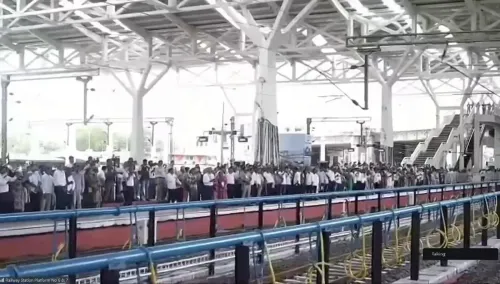
Shah's post was accompanied by four images from the dedication event, offering a visual record of the occasion without requiring words to underscore its scale.
What the Fuel Switch Means for the Exchequer
The foreign-exchange dimension Shah highlighted is not incidental. India imports a substantial share of its petroleum, and every litre of diesel displaced by domestically sourced or imported-but-cheaper natural gas represents a direct reduction in the current-account pressure. As the LNG fleet scales, the cumulative savings across fuel costs, maintenance cycles, and emission penalties could be material for a system that moves millions of passengers and tonnes of freight daily.
The immediate watch-point is whether the initial train's operational data — fuel consumption ratios, emissions cuts, maintenance costs — will be published to build the case for a broader rollout. Scaling from one train to a fleet-level intervention is the real test of the technology's promise on Indian track conditions.
India's railways have committed to net-zero by 2030; the clock is running, and today's departure from Sabarmati is one scheduled stop on that journey — not the destination.
Point of View
Particularly in Gujarat. The harder test will be scale: one locomotive is a proof of concept; a fleet transformation is a supply-chain and financing challenge that will define whether the 2030 net-zero pledge is met on time or becomes aspirational. Amit Shah's direct involvement in the dedication elevates the political visibility of railway green transitions, signalling that this is now a flagship agenda item rather than a departmental footnote.
NationPress
28 Sept 2026
Frequently Asked Questions
What is India's first LNG train and where was it launched?
India's first LNG (liquefied natural gas) powered train was dedicated to the nation at Sabarmati Station in Ahmedabad, Gujarat on September 27, 2026 by Union Home Minister Amit Shah. It runs on cleaner-burning LNG instead of conventional diesel.
Why is Indian Railways switching to LNG trains?
LNG burns significantly cleaner than diesel, reducing particulate and sulphur emissions. It also lowers India's dependence on imported petroleum, saving foreign exchange, and helps Indian Railways advance its target of net-zero carbon emissions by 2030.
What is Indian Railways' net-zero target?
Indian Railways announced a goal of achieving net-zero carbon emissions by 2030 , one of the most ambitious railway decarbonisation commitments globally. Electrification and alternative-fuel projects like LNG trains are central to reaching that goal.
What routes will LNG trains run on in India?
The initial LNG train was flagged off from Sabarmati Station. Broader route rollout details have not been officially announced yet; operational data from this first train is expected to guide decisions on expanding LNG locomotives to other corridors.
How does an LNG locomotive differ from a diesel or electric train?
An LNG locomotive uses liquefied natural gas as fuel instead of diesel, producing fewer pollutants. Unlike electric trains, it does not require overhead electric infrastructure, making it suitable for routes where electrification has not yet been completed.