Amit Shah Honours Urban Co-op Banks at Sahakar Nav-Kranti in Mumbai

Synopsis
Six urban cooperative banks from Gujarat, Delhi, Odisha, and West Bengal were honoured at Mumbai's Sahakar Nav-Kranti programme on 8 August 2026 by Union Minister Amit Shah and CM Devendra Fadnavis for integrating with the Centre's Sahakar CBS digital banking platform.
Key Takeaways
Six urban cooperative banks from five states — Gujarat, Delhi, Odisha, West Bengal — were recognised at the Sahakar Nav-Kranti event in Mumbai on 8 August 2026 .
Union Minister Amit Shah presented the honours; Maharashtra CM Devendra Fadnavis was the principal host.
The banks were recognised for successfully integrating with Sahakar CBS , the Centre's Core Banking Solution platform for cooperative institutions.
The Ministry of Cooperation was established in July 2021 with a mandate to modernise and digitise India's cooperative sector.
The event signals cross-state momentum for the CBS rollout, with Maharashtra — home to a large share of India's urban cooperative banks — as the venue.
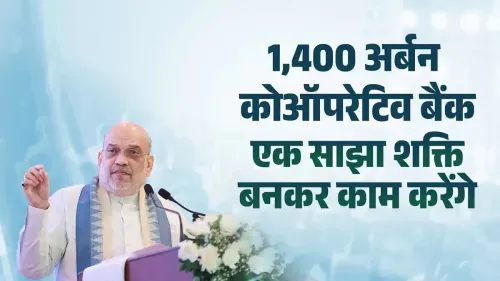
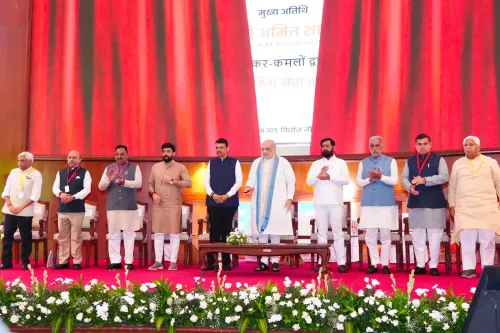
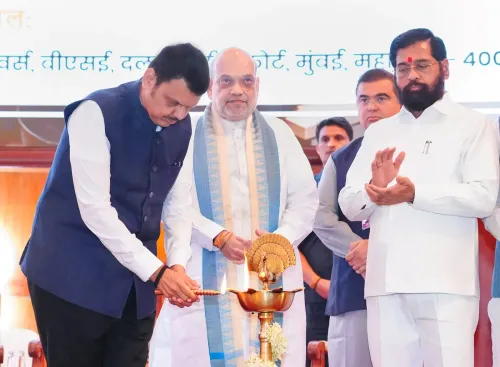
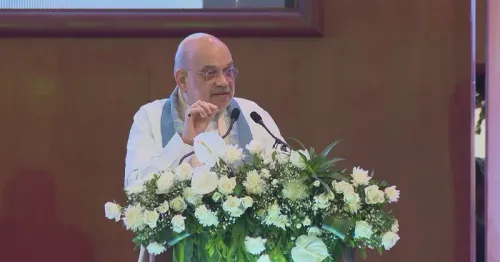
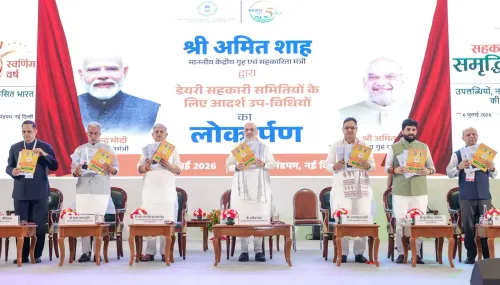
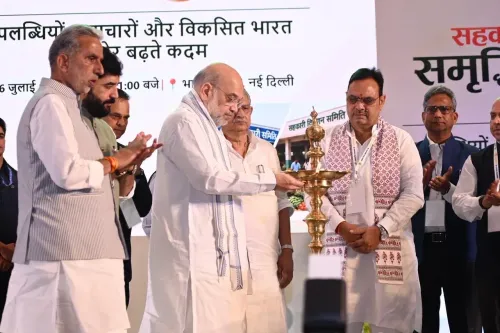
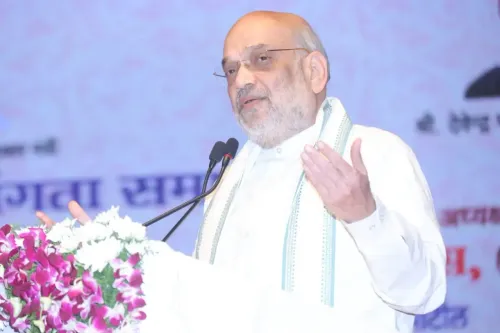
Six urban cooperative banks from across India were formally recognised at the Sahakar Nav-Kranti programme in Mumbai on Saturday, 8 August 2026 — a national event convened to celebrate institutions that have plugged into the government's centralised cooperative banking grid. Union Home and Cooperation Minister Amit Shah presided over the honours, with Maharashtra Chief Minister Devendra Fadnavis as the principal host.
The Six Banks Called to the Stage
The honourees span five states, underlining that this is a pan-India push rather than a regional exercise. The recognised banks are: Apna Sahakari Bank Limited (Gujarat), Malpur Nagarik Sahakari Bank Limited (Gujarat), Kangra Co-operative Bank Limited (Delhi), Balasore Co-operative Urban Bank Limited (Odisha), Dhakuria Co-operative Bank Limited (West Bengal), and Union Co-operative Bank Limited (Gujarat). Each institution has successfully integrated with Sahakar CBS — the Core Banking Solution platform that links cooperative banks to a centralised digital network overseen by the Union Ministry of Cooperation.
Why Sahakar CBS Is the Real Story
When the Ministry of Cooperation was carved out as a standalone ministry in July 2021, its founding brief was straightforward but ambitious: drag India's sprawling, fragmented cooperative sector into the digital age. Sahakar CBS is the centrepiece of that effort — a common technology backbone that gives regulators real-time visibility into cooperative bank transactions, tightening oversight and reducing the opacity that has historically made urban co-op banks a weak link in the financial system. Onboarding a bank to CBS is not a ceremonial act; it requires back-end system overhauls, staff retraining, and compliance audits.
The Sahakar Nav-Kranti programme frames that technical migration as a movement — 'nav-kranti' meaning 'new revolution' — lending cultural weight to what is fundamentally a governance reform. Holding the event in Mumbai, the country's financial capital, amplifies the signal.
Maharashtra as the Stage, Fadnavis as the Anchor
Chief Minister Fadnavis's prominent role at a Union-ministry event is notable. Maharashtra has one of the largest concentrations of urban cooperative banks in the country, many of them with complicated histories of mismanagement and political interference. His presence signals state-level buy-in for the Centre's digitisation push and positions the Mahayuti government as an active partner in cooperative reform — a sector with deep roots in Maharashtra's agrarian and small-business economy.
The broader rollout of Sahakar CBS connectivity across remaining urban cooperative banks will be the metric to watch: how quickly the Centre can scale this beyond the early adopters who earned recognition today.
Point of View
Created in 2021, has struggled to demonstrate tangible outcomes at scale; ceremonies like this serve as proof-of-concept moments. Fadnavis's prominent role also suggests the Mahayuti government is keen to reclaim the cooperative sector as political terrain, given its historical dominance by rival factions in Maharashtra.
NationPress
8 Aug 2026
Frequently Asked Questions
What is the Sahakar Nav-Kranti programme?
Sahakar Nav-Kranti is a government initiative under the Union Ministry of Cooperation aimed at modernising India's cooperative sector through technology adoption, digital integration, and institutional reform.
What is Sahakar CBS?
Sahakar CBS is a Core Banking Solution platform that connects urban cooperative banks to a centralised digital system, enabling real-time transaction monitoring, greater transparency, and stronger regulatory oversight.
Which banks were honoured at the Mumbai event on 8 August 2026?
The six banks recognised were Apna Sahakari Bank (Gujarat), Malpur Nagarik Sahakari Bank (Gujarat), Kangra Co-operative Bank (Delhi), Balasore Co-operative Urban Bank (Odisha), Dhakuria Co-operative Bank (West Bengal), and Union Co-operative Bank (Gujarat).
Why was the Ministry of Cooperation created?
The Union Ministry of Cooperation was established in July 2021 to provide a dedicated policy focus on strengthening, streamlining, and digitising India's large but fragmented cooperative sector.
What is Devendra Fadnavis's role in cooperative banking reform?
As Chief Minister of Maharashtra, Devendra Fadnavis served as the principal host of the Sahakar Nav-Kranti event, signalling state-level support for the Centre's cooperative digitisation push in a state that has one of India's largest concentrations of urban cooperative banks.