Amit Shah Launches Bharat Taxi Service in Gandhinagar
Synopsis
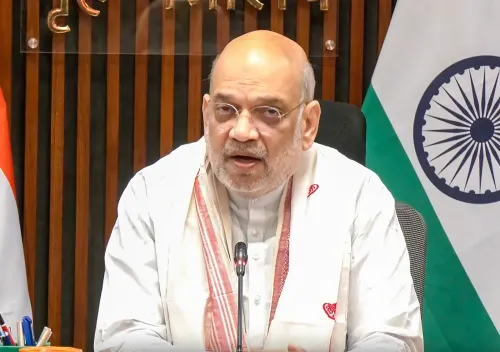
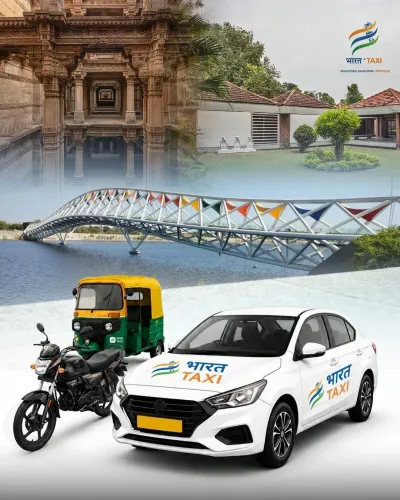
Union Home and Cooperation Minister Amit Shah inaugurated the Bharat Taxi Service at Mahatma Mandir, Gandhinagar on 27 June 2026, marking a Central government push to bring cooperative frameworks into India's taxi and urban mobility sector.
Key Takeaways
Union Minister Amit Shah launched the Bharat Taxi Service on 27 June 2026 at Mahatma Mandir, Gandhinagar .
The event was announced live by the Chief Minister's Office of Gujarat via an official post in Gujarati.
The launch is linked to the Ministry of Cooperation , established in July 2021 to expand cooperative structures into new sectors.
The service aims to bring taxi operators and transport workers under a formal cooperative framework .
Gujarat was selected as the inaugural venue, consistent with its role as a frequent launch site for national cooperative programmes.
State-wise rollout timelines and integration with existing ride-hailing regulations remain to be announced.
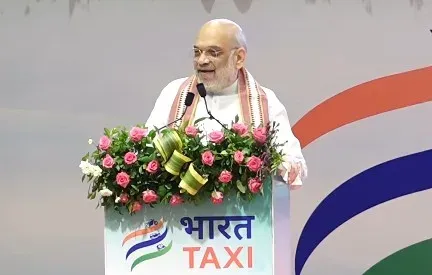
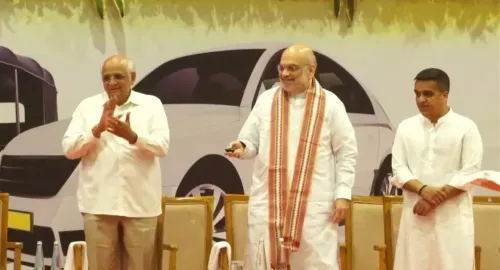
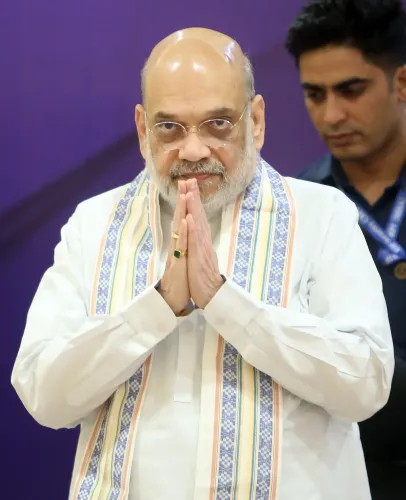
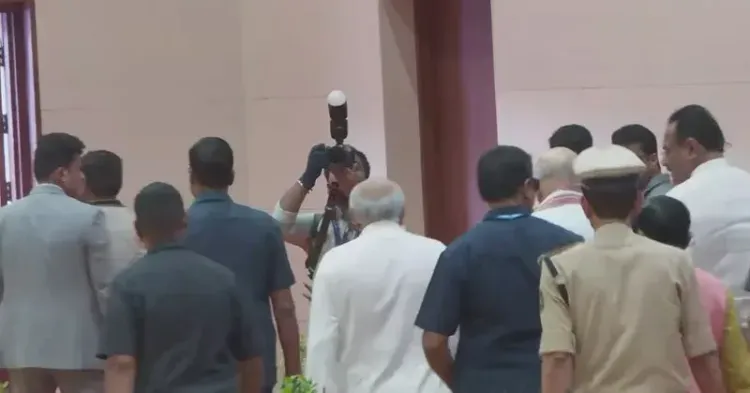
The Chief Minister's Office of Gujarat announced on Saturday, 27 June 2026 that Union Minister of Home Affairs and Cooperation Amit Shah inaugurated the Bharat Taxi Service at a live event held at Mahatma Mandir, Gandhinagar.
The CMO Gujarat post, in Gujarati, read: 'LIVE: માનનીય કેન્દ્રીય ગૃહ અને સહકારિતા મંત્રી શ્રી અમિતભાઈ શાહના વરદ હસ્તે ભારત ટેક્સી સેવાનો શુભારંભ કાર્યક્રમ' — meaning 'LIVE: Launch programme of Bharat Taxi Service at the auspicious hands of the honourable Union Minister of Home Affairs and Cooperation, Shri Amitbhai Shah.'
Context
The launch ceremony was held at Mahatma Mandir, the prominent convention centre in Gandhinagar that regularly serves as the venue for major state and national government events. The event was streamed live, signalling the significance the government attached to this rollout. Amit Shah, who holds the Home Affairs and Cooperation portfolios, presided over the inauguration.
Policy Backdrop
The Ministry of Cooperation was established in July 2021 with a mandate to deepen and expand India's cooperative sector into new domains beyond agriculture and credit. Since then, Central government initiatives have increasingly sought to bring cooperative frameworks to service sectors, including urban and inter-city mobility. The Bharat Taxi Service appears to be an extension of this effort — applying the cooperative model to organise India's large and largely informal taxi and transport segment.
Gujarat has frequently been chosen as the launch venue for national cooperative-sector programmes, given its administrative profile and the state's historically strong cooperative movement. The presence of Amit Shah, who carries both the Cooperation portfolio and deep political roots in Gujarat, underscores the symbolic and political weight of the occasion.
Stakeholders and Impact
The primary stakeholders in the Bharat Taxi Service are taxi operators and cooperative societies across India. A cooperative structure for taxi services could offer drivers collective bargaining power, shared ownership of platforms, and access to institutional financing — advantages typically unavailable to individual operators working under commercial aggregators. For passengers, a cooperative-backed service could introduce an alternative to privately owned ride-hailing platforms.
The broader transport sector will be watching how the new service interacts with existing state transport regulations and ride-hailing frameworks already in place across major cities. Cooperative societies in states with active taxi unions are among the most directly affected stakeholders.
What's Next
The key questions following the launch concern the state-wise rollout timeline and how the Bharat Taxi Service will be integrated with existing ride-hailing regulations and state transport bodies. Whether the cooperative model will be mandated, incentivised, or left voluntary for existing taxi operators remains to be clarified by the Ministry of Cooperation. Gujarat's experience as the inaugural host state may shape the template for expansion to other states.
Point of View
A sector that has seen significant labour unrest. How the service scales beyond Gujarat, and whether it gains traction with taxi unions in non-BJP-ruled states, will be the real test of its national ambition.
NationPress
27 Jun 2026
Frequently Asked Questions
What is the Bharat Taxi Service?
The Bharat Taxi Service is a cooperative-model taxi initiative launched by the Central government under the Ministry of Cooperation, inaugurated by Union Minister Amit Shah in Gandhinagar on 27 June 2026. It aims to bring taxi operators under a formal cooperative framework.
Who launched the Bharat Taxi Service?
Union Minister of Home Affairs and Cooperation Amit Shah launched the Bharat Taxi Service at Mahatma Mandir, Gandhinagar, on 27 June 2026.
Where was the Bharat Taxi Service launched?
The Bharat Taxi Service was launched at Mahatma Mandir, Gandhinagar, Gujarat, a major convention centre regularly used for national and state government events.
What is the Ministry of Cooperation and why is it involved?
The Ministry of Cooperation was created in July 2021 to expand India's cooperative sector into new domains. It holds the mandate to organise sectors like taxi services under cooperative structures, which is why it is spearheading the Bharat Taxi Service.
Will Bharat Taxi Service be available across India?
The service was inaugurated in Gujarat, but state-wise rollout timelines and integration with existing transport regulations have not yet been officially announced.