Jal Shakti Minister Paatil Holds Sujal Gram Samvad with Panchayats
Synopsis
Union Jal Shakti Minister C. R. Paatil chaired a #SujalGramSamvad session on 27 June 2026, engaging Gram Panchayats in their own languages on drinking water supply, source sustainability and local challenges, with senior officials and Mission Directors from multiple states in attendance.
Key Takeaways
Union Jal Shakti Minister C.
Paatil held a #SujalGramSamvad session on 27 June 2026 , engaging Gram Panchayats in local languages.
The initiative is framed as a jan bhagidari (people's participation) model operating under Prime Minister Narendra Modi's guidance.
Discussions covered drinking water supply progress , water source sustainability , and locally identified challenges and solutions.
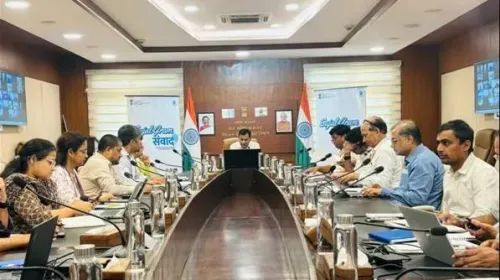
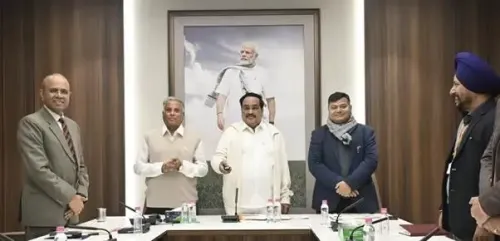
Senior officials of the Department of Drinking Water and Sanitation , state Mission Directors , and District Collectors attended alongside village sarpanch s.
Sarpanch s were noted for adopting innovations in water conservation while maintaining commitment to water quality and regular monitoring.
The session reinforces the decentralised governance model built under the Jal Jeevan Mission (launched 2019 ) and the Jal Shakti Abhiyan .
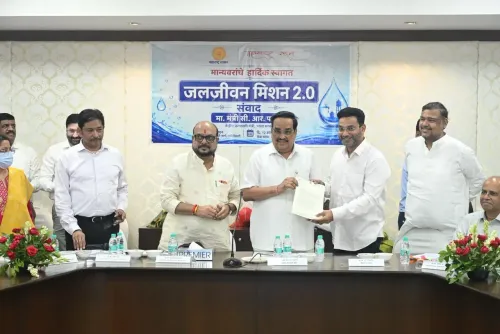
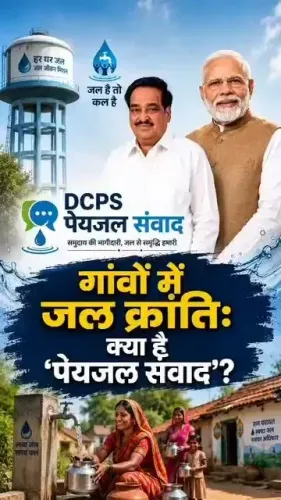
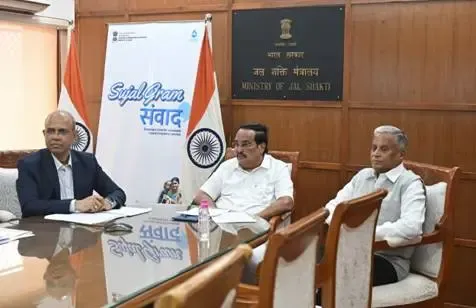
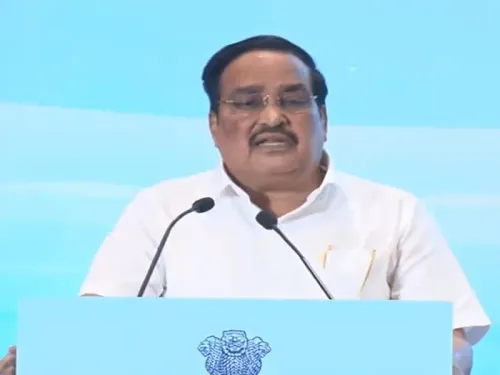
Union Jal Shakti Minister C. R. Paatil on Saturday, 27 June 2026, chaired a #SujalGramSamvad session — a community-participation initiative conducted in local languages — engaging Gram Panchayats directly on drinking water supply progress, source sustainability, and ground-level challenges in rural water management.
Context
The Sujal Gram Samvad (roughly, 'clean-water village dialogue') is designed to bridge the communication gap between the central government and village-level bodies by conducting discussions in the unki hi bhasha — 'their own language'. Minister Paatil described the initiative as being steered under the guidance of Prime Minister Narendra Modi, framing it as a jan bhagidari (people's participation) model for water governance.
The session covered drinking water supply progress in Gram Panchayats, the sustainability of water sources, and locally emerging challenges along with their solutions. Paatil noted it was 'extremely encouraging' that sarpanchs across rural India are adopting innovations for water conservation and source strengthening while remaining committed to water quality, regular monitoring, and effective water management.
Policy Backdrop
The dialogue sits within the architecture of two flagship central schemes. The Jal Jeevan Mission, launched in 2019, aims to deliver functional household tap connections to every rural home, with community ownership and quality monitoring as core pillars. The Jal Shakti Abhiyan, also initiated in 2019, promotes water conservation and source strengthening through mass participation across districts.
Together, these programmes have progressively shifted India's rural water governance model toward decentralised delivery — positioning Gram Panchayats as the primary actors for both infrastructure and source sustainability rather than purely top-down state execution.
Stakeholders and Impact
The SujalGramSamvad session was attended by senior officials of the Department of Drinking Water and Sanitation, Mission Directors from multiple states, District Collectors, and other concerned officials. Their presence alongside elected sarpanchs signals an effort to align administrative machinery with village-level accountability in one forum.
For rural households — the ultimate beneficiaries — the initiative's emphasis on water quality and 'niyamit nigrani' (regular monitoring) addresses a persistent gap: tap connections delivered under coverage targets have at times faced functionality and potability concerns at the last mile.
What's Next
State-level progress reports on Jal Jeevan Mission functionality and quality parameters will be a key indicator of whether dialogues like Sujal Gram Samvad translate into measurable improvements on the ground. With Mission Directors and District Collectors now looped into village-level conversations, the government appears to be building a feedback loop that could inform both policy corrections and resource allocation in the months ahead. The sustained engagement of sarpanchs in water innovation and source strengthening will be critical to the long-term viability of India's rural water security agenda.
Point of View
The Ministry is attempting to compress the accountability chain that has historically allowed last-mile failures to go unreported. For Minister Paatil, who comes from a strong organisational background in Gujarat, this style of structured outreach mirrors the state-level mobilisation models he is familiar with. The broader arc here is the government's push to convert coverage statistics into sustained service delivery — a shift that will be tested by independent functionality audits in the coming budget cycle.
NationPress
26 Sept 2026
Frequently Asked Questions
What is Sujal Gram Samvad?
Sujal Gram Samvad is a community-participation initiative under the Ministry of Jal Shakti that conducts structured dialogues with Gram Panchayats in local languages to discuss drinking water supply progress, source sustainability, and local water management challenges.
What did C. R. Paatil announce in the Sujal Gram Samvad on 27 June 2026?
Minister C. R. Paatil did not announce a new scheme but highlighted that sarpanch s across rural India are adopting innovations in water conservation and source strengthening, and expressed that the engagement of village-level leaders in water quality monitoring is 'extremely encouraging'.
What is the Jal Jeevan Mission and how does it relate to this event?
The Jal Jeevan Mission , launched in 2019 , is a central government scheme to provide functional household tap connections to all rural homes. The Sujal Gram Samvad is part of the community-ownership and monitoring framework built around this mission.
Who attended the Sujal Gram Samvad session?
The session was attended by senior officials of the Department of Drinking Water and Sanitation , Mission Directors from various states, District Collectors , and other concerned officials, alongside elected village sarpanch s.
What is the role of Gram Panchayats in India's rural water policy?
Gram Panchayats are village-level elected bodies that serve as the primary actors for implementing and monitoring drinking water supply, water conservation, and source sustainability under central schemes like the Jal Jeevan Mission and Jal Shakti Abhiyan .