Jal Jeevan Mission 2.0: Panchayats, officials tackle rural piped water gaps at Sujal Gram Samvad
Synopsis
Over 3,000 participants joined the eighth Sujal Gram Samvad, where NJJM's Kamal Kishore Soan pushed panchayats to own water infrastructure built to last 25-30 years — flagging that unaddressed gaps today will become crises tomorrow. With six lakh villages now under JJM, the mission's next challenge is accountability, not coverage.
Key Takeaways
The eighth Sujal Gram Samvad was held on 26 June , organised by the Ministry of Jal Shakti under Jal Jeevan Mission 2.0 .
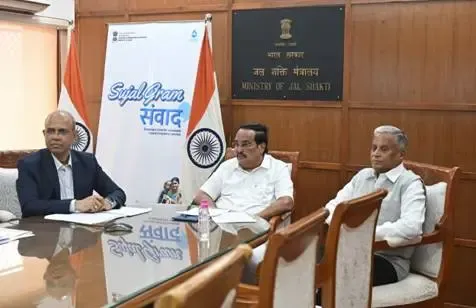
More than 3,000 participants joined the virtual interaction spanning five Gram Panchayat headquartered villages.
Over six lakh villages are now covered under JJM since its launch in 2019 .
NJJM Mission Director Kamal Kishore Soan urged panchayats to prioritise source sustainability, water-quality testing, and local repair capacity.
The Jal Seva Aankalan was highlighted as a key tool to identify and fix service gaps before they escalate.
District Collectors were urged to hold regular District Water and Sanitation Mission meetings focused on water and sanitation review.
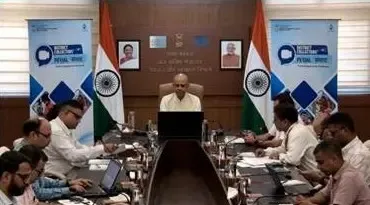
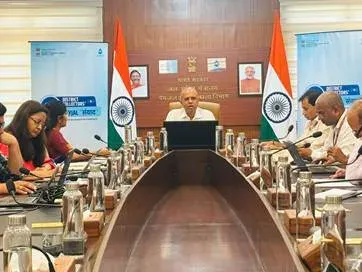
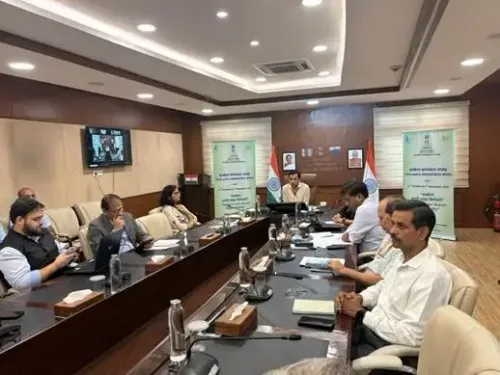
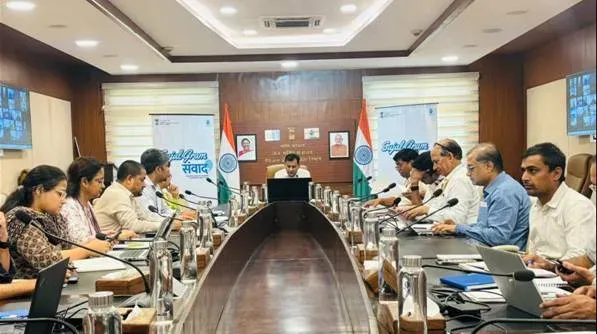
The Ministry of Jal Shakti convened the eighth edition of the Sujal Gram Samvad on Thursday, 26 June, bringing together panchayat representatives and senior officials to address persistent challenges in rural piped water supply under Jal Jeevan Mission (JJM) 2.0. The virtual interaction drew more than 3,000 participants across five Gram Panchayat headquartered villages, underscoring broad community engagement with the programme.
Key Developments at the Eighth Samvad
Kamal Kishore Soan, Additional Secretary and Mission Director of the National Jal Jeevan Mission (NJJM), anchored the session with a focus on timely delivery of potable piped water to rural households, prevention of water wastage, and the need for regular water-quality testing. He stressed that the drinking-water infrastructure being built today is designed to serve communities for the next 25 to 30 years.
'Panchayats must therefore focus on source sustainability and protection, timely operation and maintenance, prevention of water wastage, and strengthening local capacities for repairs and monitoring,' Soan said.
Scale of JJM Coverage Since 2019
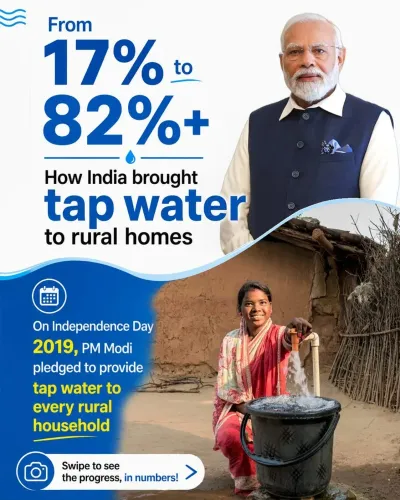
Soan noted that since 2019, India has made household piped water a national priority. Today, more than six lakh villages are covered under the Jal Jeevan Mission — an achievement he attributed to active participation by Panchayats, Gram Sabhas, Self-Help Groups (SHGs), and local operators known as Nal Jal Mitras. He called for replicating models of transparency, community engagement, and accountability at the gram panchayat level.
Jal Seva Aankalan and Accountability Measures
Soan highlighted the Jal Seva Aankalan as a fact-finding exercise designed to identify service gaps and trigger corrective action before problems deepen. He urged District Collectors to convene regular District Water and Sanitation Mission meetings, dedicating focused time each month to reviewing water and sanitation matters. Unaddressed gaps today, he cautioned, risk becoming far more serious in the years ahead.
What the Samvad Aims to Achieve
Y.K. Singh, Director at NJJM, set the context at the session's opening, explaining that the Sujal Gram Samvad is designed to listen to village communities, understand their on-ground experiences, and document local practices around operation, maintenance, and source sustenance. The forum serves as a feedback loop between grassroots implementers and national mission planners, helping course-correct delivery gaps in real time.
What Comes Next
Officials encouraged the acceleration of best practices emerging from such Samvads and called for more Panchayats to join the platform. With JJM 2.0 deepening its community-governance focus, the next editions of the Samvad are expected to expand village-level participation and sharpen accountability mechanisms at the district level.
Point of View
But the Sujal Gram Samvad signals that the mission is quietly shifting its own goalposts from connection to continuity. The emphasis on 25-to-30-year infrastructure lifespans, Jal Seva Aankalan gap-finding, and district-level accountability meetings suggests planners know that laying pipes was the easy part. What mainstream coverage misses is the governance deficit: Panchayats are being asked to sustain complex water systems with limited technical capacity and no guaranteed funding pipeline for operations and maintenance. Until that structural gap is closed, the risk is that India ends up with six lakh villages connected on paper and far fewer with water actually flowing reliably.
NationPress
24 Sept 2026
Frequently Asked Questions
What is the Sujal Gram Samvad?
The Sujal Gram Samvad is a virtual forum organised by the National Jal Jeevan Mission to facilitate direct dialogue between village communities and officials on rural piped water supply. It focuses on gathering ground-level feedback on operation, maintenance, and source sustainability under Jal Jeevan Mission 2.0.
What was discussed at the eighth Sujal Gram Samvad?
The eighth edition, held on 26 June, covered piped water delivery to rural households, water-quality testing, prevention of wastage, and panchayat accountability. NJJM Mission Director Kamal Kishore Soan stressed that infrastructure being built must serve communities for 25 to 30 years and urged stronger local governance.
How many villages are covered under Jal Jeevan Mission?
As of the eighth Sujal Gram Samvad, more than six lakh villages across India are covered under the Jal Jeevan Mission since its launch in 2019. The coverage has been enabled by active participation of Panchayats, Gram Sabhas, Self-Help Groups, and local operators called Nal Jal Mitras.
What is the Jal Seva Aankalan?
The Jal Seva Aankalan is a fact-finding exercise under the Jal Jeevan Mission designed to identify service delivery gaps in rural water supply for corrective action. Officials at the Samvad warned that gaps left unaddressed now risk becoming far more serious problems in the future.
Who attended the eighth Sujal Gram Samvad?
More than 3,000 participants attended the virtual session, including panchayat representatives, community members, and government officials. The interaction spanned five Gram Panchayat headquartered villages and was opened by NJJM Director Y.K. Singh.