How Can the Jal Mission Enhance Tap Water Availability?
Synopsis
Join nearly 800 district leaders as they strategize on improving tap water access and community engagement. Discover vital discussions under the National Jal Jeevan Mission aimed at ensuring sustainable water management.
Key Takeaways
Close to 800 district collectors convened to discuss tap water availability.
Focus on community participation and decentralized management.
Importance of data-driven decision-making emphasized.
Need for Protected Drinking Water Zones highlighted.
Challenges of reliance on groundwater addressed.
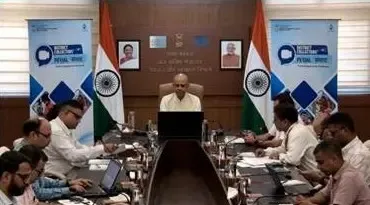
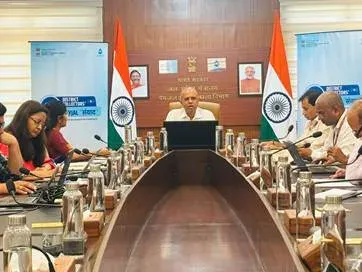
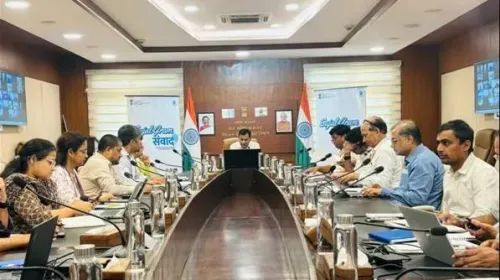
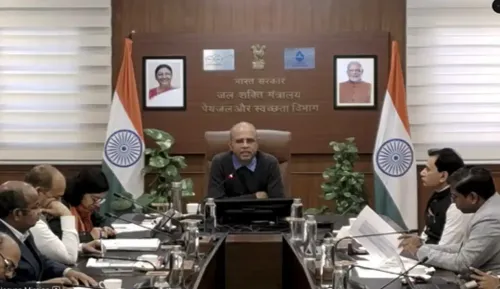
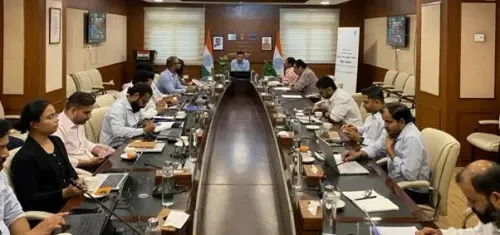
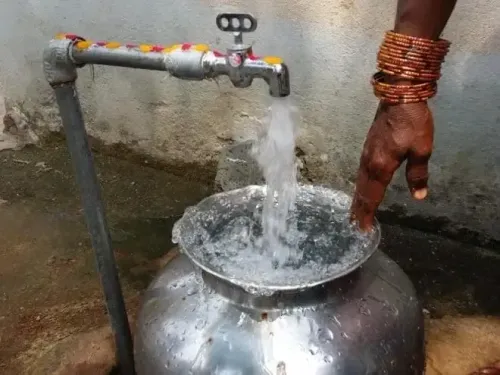
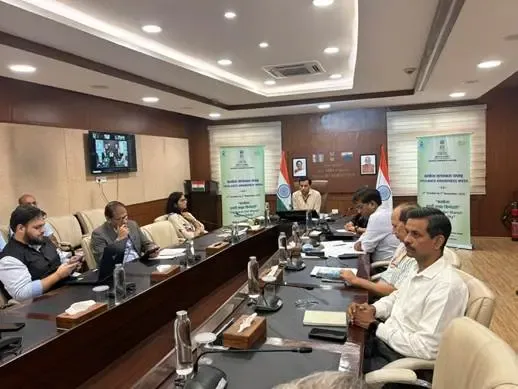
New Delhi, Oct 30 (NationPress) Close to 800 district collectors and officials nationwide convened to discuss strategies aimed at enhancing tap water availability, fostering community involvement, and promoting decentralized water management through the National Jal Jeevan Mission (NJJM), as stated by an official on Thursday.
The discussions were part of the “District Collectors’ Peyjal Samvad” initiative, which serves as a national dialogue to empower district leadership, reinforce local governance, ensure sustainability of water sources, and improve accountability in rural water service delivery under the Jal Jeevan Mission (JJM), according to the official's statement.
Chaired by Kamal Kishore Soan, Additional Secretary and Mission Director of NJJM, the meeting underscored that sustainable service delivery relies on data-driven decision-making, local ownership, and preventive governance. He emphasized that “District Collectors play a crucial role in JJM.”
Soan also highlighted the necessity for dedicated funding for water-related initiatives under MGNREGA, which includes water recharge, harvesting, and source protection.
Furthermore, the Mission Director stressed the importance of establishing Protected Drinking Water Zones, implementing inspection protocols, and empowering Village Water and Sanitation Committees (VWSCs) for community oversight and reporting.
The “District Collectors’ Peyjal Samvad” series is a segment of the Department's ongoing endeavor to fortify local governance and decentralized water management under JJM.
The inaugural edition, held on October 14, centered on empowering districts and panchayats through digital tools, accountability frameworks, and peer learning.
The second edition, conducted on Thursday, advanced this dialogue focusing on source sustainability and emphasized data-driven planning, legal protections, and collaboration with MGNREGA to create a district-led, community-driven model of rural water governance, according to the statement.
In the discussion, Y.K. Singh, NJJM Director, stated that the upcoming phase of JJM must prioritize source sustainability.
He pointed out that while the Mission has successfully provided tap water to 81.21 percent of rural households, approximately 85 percent of rural drinking water demand continues to rely on groundwater (CGWB, 2024).
He also reminded attendees of the 3rd Chief Secretaries’ Conference held in December 2023, which revolved around ‘Drinking Water’. He reiterated the national commitments to safeguarding water sources and asserted that sustainable sources are fundamental to achieving sustainable tap connections. He emphasized that India's water narrative ought to be scientific, data-informed, and community-driven.
Point of View
I believe the ongoing discussions surrounding the Jal Mission highlight a significant commitment to improving rural water access. The focus on community involvement and sustainable practices represents a promising step towards ensuring every household can rely on safe drinking water.
NationPress
20 Oct 2026
Frequently Asked Questions
What is the National Jal Jeevan Mission?
The National Jal Jeevan Mission (NJJM) aims to provide safe and adequate drinking water through individual household tap connections to all rural households by 2024.
How many district collectors participated in the discussions?
Nearly 800 district collectors and officials participated in the discussions regarding tap water availability and management.
What is the significance of the 'District Collectors’ Peyjal Samvad' initiative?
This initiative serves to empower district leadership, enhance local governance, and ensure accountability in rural water service delivery.
Why is source sustainability important?
Source sustainability is crucial to ensure a continuous supply of safe drinking water, which is a foundational element for achieving sustainable tap water connections.
What role do Village Water and Sanitation Committees play?
Village Water and Sanitation Committees (VWSCs) are empowered to oversee local water management and report on community needs and concerns.