Amit Shah launches India's first LNG train in Ahmedabad
Synopsis
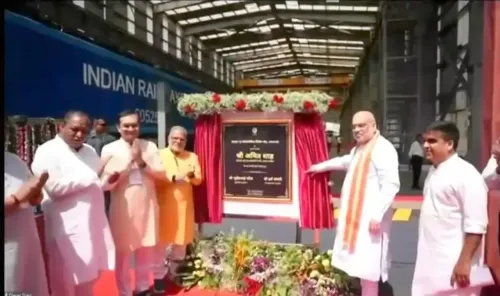
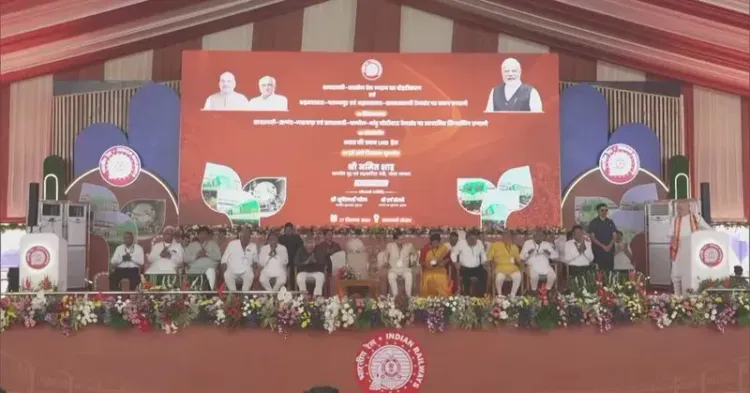
Union Home Minister Amit Shah joined live from Ahmedabad on September 27, 2026, to inaugurate India's first LNG-powered train, the redeveloped Sabarmati Railway Station under the Amrit Bharat Scheme, and a new WAG 12 freight locomotive maintenance shed — three rail milestones in a single event.
Key Takeaways
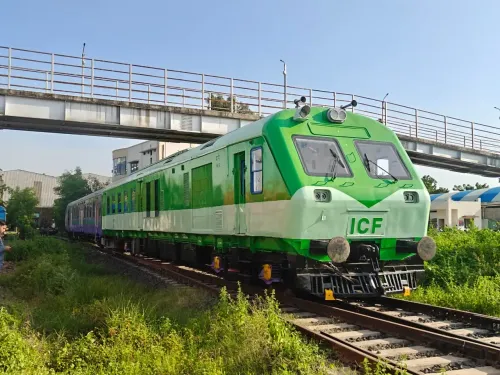
India's first LNG (Liquefied Natural Gas) powered train was launched in Ahmedabad on September 27, 2026 .
The redeveloped Sabarmati Railway Station was formally unveiled as part of the Amrit Bharat Stations Scheme , which covers over 1,000 stations nationally.
A new WAG 12 locomotive maintenance shed — supporting Indian Railways' most powerful freight engine class — was also inaugurated at the same event.
Indian Railways had been discussing LNG as an alternative fuel for its decarbonisation roadmap since 2021-22 ; Ahmedabad is the first operational trial.
Gujarat continues to serve as the primary testbed for India's flagship rail infrastructure projects ahead of national rollout.
A new chapter in Indian Railways history opened on Sunday, September 27, 2026, in Ahmedabad, as Union Home Minister Amit Shah went live from the city to mark the simultaneous launch of three landmark rail projects: the country's first LNG (Liquefied Natural Gas) powered train, the redeveloped Sabarmati Railway Station, and a new WAG 12 locomotive maintenance shed.
India's first LNG train rolls out from Gujarat
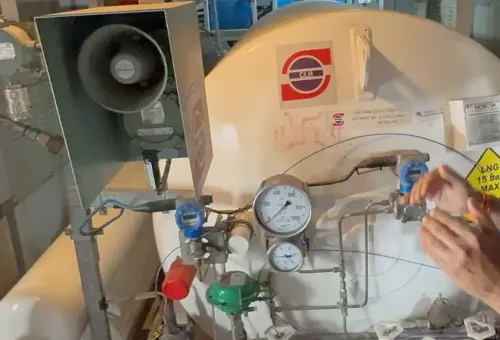
The headline event is the debut of India's first LNG-powered train — a milestone that moves the national railway network from decades of diesel and electric dependency toward cleaner alternative fuels. Indian Railways had been exploring LNG locomotives as part of its broader decarbonisation roadmap since 2021-22, and the Ahmedabad launch marks the transition from policy discussion to operational trial. LNG burns significantly cleaner than conventional diesel, offering lower particulate and carbon emissions — a meaningful step for a network that hauls hundreds of millions of passengers and billions of tonnes of freight every year.
Sabarmati Station's new face under Amrit Bharat Scheme
Running parallel to the LNG debut is the formal unveiling of the redeveloped Sabarmati Railway Station, one of the major nodes in Ahmedabad's commuter and intercity rail network. The station's transformation is part of the Amrit Bharat Stations Scheme, launched in 2023, which targets comprehensive upgrades — modern concourses, improved passenger amenities, better accessibility — across more than 1,000 stations nationwide. Sabarmati's facelift signals that Gujarat's urban rail infrastructure is catching up with the state's broader economic profile as one of India's fastest-growing industrial corridors.
WAG 12 maintenance shed: muscle behind the freight push
The third element of the day's triple inauguration is the new WAG 12 maintenance shed. The WAG 12 is Indian Railways' most powerful electric freight locomotive class, designed for heavy haulage on critical goods corridors. A dedicated maintenance facility means faster turnaround, reduced downtime, and a more reliable supply chain for industries across western India. Together, the three projects frame a single strategic argument: that rail modernisation in India is happening simultaneously on fuel technology, passenger experience, and freight logistics fronts — not in isolation.
Gujarat as the testbed for national rail ambition
It is no accident that all three launches land in Ahmedabad. Gujarat has repeatedly served as the pilot state for flagship infrastructure ideas — from the first operational stretch of the Mumbai-Ahmedabad High Speed Rail corridor to multiple Amrit Bharat station upgrades. Centering India's first LNG train trial here extends that pattern, giving the government a controlled, high-visibility environment to demonstrate and refine the technology before a wider national rollout. If the LNG pilot performs on fuel efficiency and emissions metrics, the blueprint could be replicated across diesel-dependent route segments elsewhere in the country.
The question now is how quickly the LNG train data feeds back into procurement decisions — and whether Sabarmati's upgrade becomes the template that accelerates the remaining Amrit Bharat stations from blueprint to brick-and-mortar.
Point of View
Passenger infrastructure, and freight logistics — rather than treating them as sequential priorities. Anchoring all three in Gujarat reinforces the state's role as a showcase corridor for national infrastructure ambition, lending political and optics value to what are also genuine operational milestones. The LNG train pilot is the most watched element: its performance data will directly shape whether Indian Railways can credibly claim a decarbonisation pathway for the roughly 4,000-plus diesel locomotives still in its fleet. The Amrit Bharat timeline pressure, meanwhile, is real — with over 1,000 stations in the pipeline, Sabarmati's completion is both a deliverable and a benchmark.
NationPress
27 Sept 2026
Frequently Asked Questions
What is India's first LNG train and where was it launched?
India's first LNG (Liquefied Natural Gas) powered train was launched in Ahmedabad, Gujarat, on September 27, 2026, as part of Indian Railways' effort to trial cleaner alternative fuels and reduce emissions from its locomotive fleet.
What is the Amrit Bharat Stations Scheme?
The Amrit Bharat Stations Scheme, launched in 2023, is an Indian Railways programme to comprehensively redevelop more than 1,000 railway stations across India with modern amenities, improved passenger facilities, and better accessibility. Sabarmati Railway Station in Ahmedabad is one of the stations covered under this scheme.
What is the WAG 12 locomotive?
The WAG 12 is Indian Railways' most powerful electric freight locomotive class, designed for heavy haulage on major goods corridors. The new maintenance shed inaugurated in Ahmedabad is dedicated to servicing these locomotives, aiming to reduce downtime and improve freight reliability.
Why is Ahmedabad chosen for these railway inaugurations?
Gujarat and Ahmedabad have consistently served as pilot locations for major national infrastructure projects, including rail initiatives. The state's industrial and logistical profile makes it a practical and high-visibility testbed before wider national rollouts.
How does LNG compare to diesel for trains?
LNG burns significantly cleaner than conventional diesel, producing lower particulate matter and carbon emissions. Indian Railways has been exploring LNG as part of its decarbonisation roadmap since 2021-22, and the Ahmedabad launch is the first operational trial of an LNG-powered train in India.