Amit Shah highlights 12 years of Modi govt welfare schemes
Synopsis
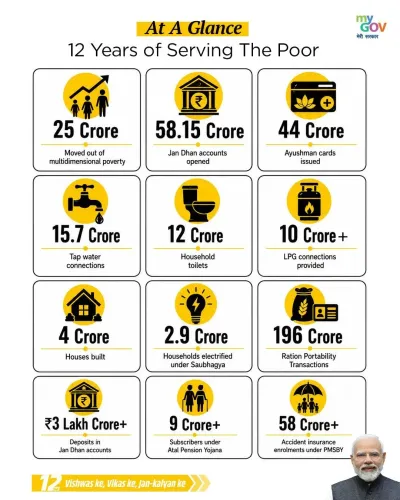
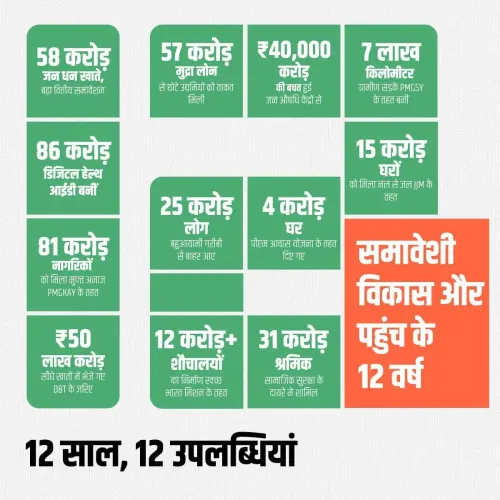
Union Home Minister Amit Shah marked 12 years of the Modi government's welfare record on June 8, 2026, highlighting Jan Dhan, PM Awas, Mudra, and SVANidhi as instruments linking crores of poor citizens to banking, housing, and self-employment under the Viksit Bharat vision.
Key Takeaways
Amit Shah posted on June 8, 2026 , framing poor welfare as the Modi government's highest priority over 12 years in office.
Pradhan Mantri Jan Dhan Yojana (launched August 2014 ) expanded banking access to previously unbanked households.
Pradhan Mantri Mudra Yojana (launched April 2015 ) provides collateral-free micro-loans to small businesses and micro-enterprises.
Pradhan Mantri Awas Yojana (launched June 2015 ) targets permanent housing for economically weaker sections in rural and urban areas.
PM SVANidhi (launched June 2020 ) extended working-capital loans to urban street vendors hit by pandemic restrictions.
All schemes are positioned as building blocks for the government's Viksit Bharat goal of a developed India by 2047 .
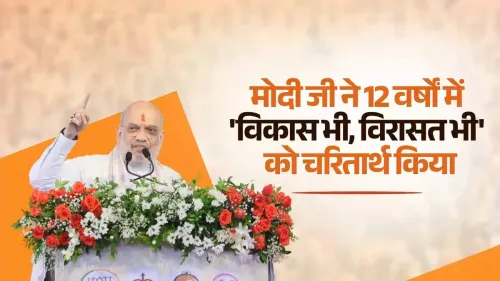
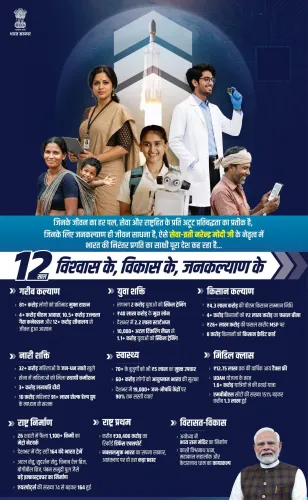
Union Home Minister Amit Shah on Monday, June 8, 2026, invoked the ruling government's twelve-year welfare record, asserting that poverty alleviation remains the Modi government's highest priority and that flagship programmes have connected crores of citizens to banking, financial security, and self-employment opportunities.
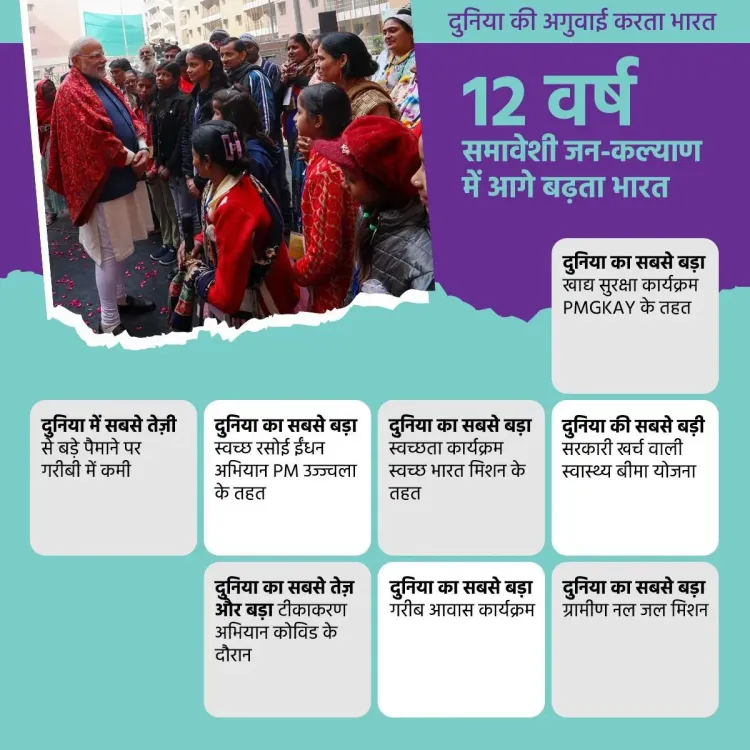
Posting under the hashtag #12YearsOfGaribKalyan (12 Years of Poor Welfare), Shah wrote: 'Poor welfare is the highest priority of the Modi government. In these 12 years, welfare schemes such as the food scheme, PM Awas, Jan Dhan, Mudra loans, and PM SVANidhi have connected crores of citizens to banking facilities, financial security, and self-employment opportunities.' He added that by linking the country's poor to the economic mainstream through basic amenities, social security, and a better standard of living, 'a strong foundation of Viksit Bharat is being built.'
Context
The post marks a political communication exercise timed to the BJP-led NDA government's twelfth year in office, which began in May 2014. The ruling party has periodically used such milestones to consolidate its welfare narrative ahead of electoral and budgetary cycles. Shah's enumeration of five specific schemes — food security, housing, financial inclusion, micro-credit, and street-vendor support — reflects a deliberate effort to highlight the breadth of the government's direct-benefit architecture.
Policy Backdrop
The schemes Shah cited span more than a decade of social-policy layering. Pradhan Mantri Jan Dhan Yojana, launched in August 2014, was designed to open bank accounts for previously unbanked households, creating a delivery channel for subsidies and transfers. Pradhan Mantri Mudra Yojana, introduced in April 2015, extended collateral-free micro-loans to non-corporate small businesses and micro-enterprises.
Pradhan Mantri Awas Yojana, launched in June 2015, targets the construction of pucca (permanent) houses for economically weaker sections in both rural and urban areas. PM SVANidhi, announced in June 2020 during the pandemic, provided working-capital loans to urban street vendors whose livelihoods had been disrupted by lockdown restrictions. Together, these programmes form the government's stated strategy for formal economic inclusion of low-income households.
Stakeholders and Impact
The primary beneficiaries of the schemes cited are poor rural and urban households, micro-entrepreneurs, and informal-sector workers, particularly street vendors. By routing benefits through Jan Dhan accounts, the government has sought to reduce leakage in subsidy delivery and build financial histories for populations previously outside the formal banking system. Self-employment schemes such as Mudra and SVANidhi aim to convert welfare recipients into economically active participants.
The broader political context is the government's Viksit Bharat vision — a stated goal to transform India into a developed nation by 2047, the centenary of independence. Welfare mainstreaming is positioned as the foundational layer of that long-term ambition, with successive budgets tracking cumulative beneficiary counts as a metric of progress.
What's Next
Attention will now turn to the next Union Budget debate, where welfare outlays, fresh coverage targets under housing and financial inclusion schemes, and any new programme announcements will be closely watched. The Ministry of Housing and Urban Affairs and the Ministry of Finance are expected to present updated beneficiary data as the government continues to build its pre-2047 development narrative. Shah's post signals that welfare messaging will remain a central plank of the BJP's political communication in the months ahead.
Point of View
Anchoring the BJP's electoral identity to a twelve-year welfare delivery record as the government enters its second decade. By naming five distinct schemes across banking, housing, credit, and street-vendor support, the messaging attempts to demonstrate policy breadth rather than reliance on any single programme. The invocation of 'Viksit Bharat' connects near-term welfare spending to a long-horizon national aspiration, insulating the narrative from short-term criticism about poverty persistence. This pattern — milestone posts cataloguing scheme beneficiaries — has become a standard instrument of governance communication for senior BJP leaders ahead of budget seasons and electoral cycles.
NationPress
20 Sept 2026
Frequently Asked Questions
What is the #12YearsOfGaribKalyan campaign about?
The #12YearsOfGaribKalyan hashtag marks the BJP-led NDA government's twelfth year in office since May 2014, with senior leaders highlighting welfare schemes launched during this period to connect poor citizens to banking, housing, and self-employment.
What is PM Jan Dhan Yojana and who benefits from it?
Pradhan Mantri Jan Dhan Yojana, launched in August 2014, is a financial inclusion programme that opens zero-balance bank accounts for unbanked households, enabling them to receive government subsidies and direct benefit transfers.
What is PM SVANidhi scheme?
PM SVANidhi is a micro-credit scheme launched in June 2020 to provide working-capital loans to urban street vendors whose livelihoods were disrupted by pandemic-related restrictions.
What is Viksit Bharat and when is its target year?
Viksit Bharat is the Indian government's vision to transform India into a fully developed nation by 2047, the centenary of independence, with welfare mainstreaming cited as a foundational pillar of that goal.
What did Amit Shah say about Modi government welfare schemes?
Amit Shah stated on June 8, 2026, that poor welfare is the Modi government's highest priority and that schemes such as Jan Dhan, PM Awas, Mudra, and SVANidhi have connected crores of citizens to banking facilities, financial security, and self-employment opportunities over 12 years.