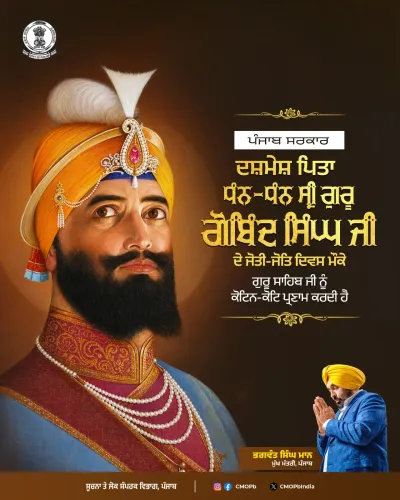
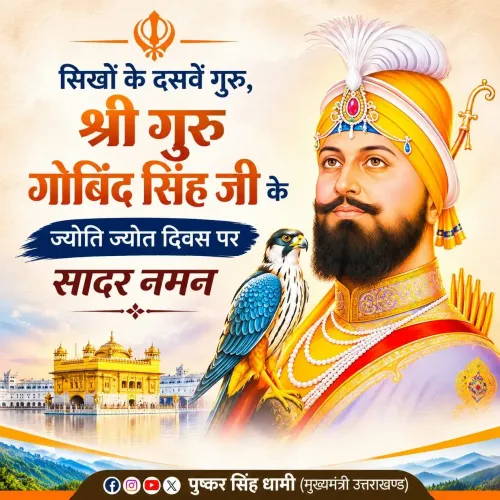
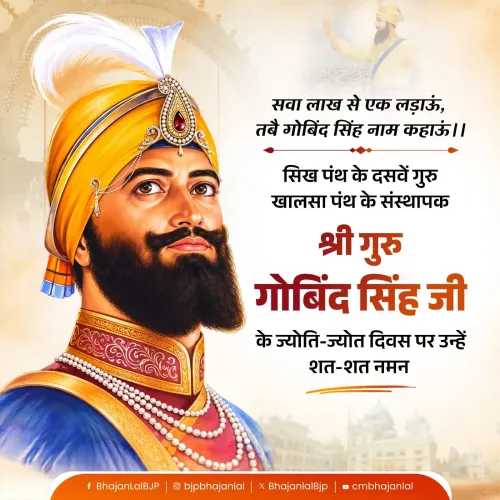
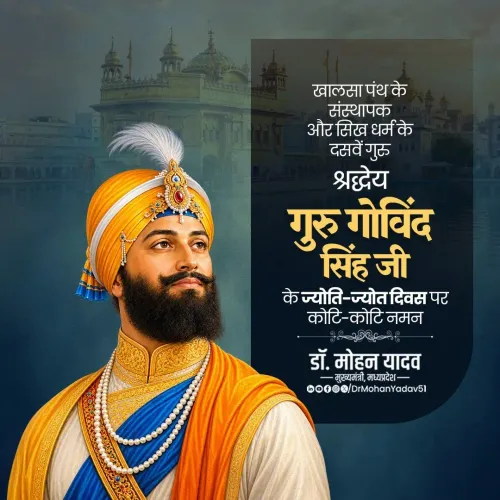
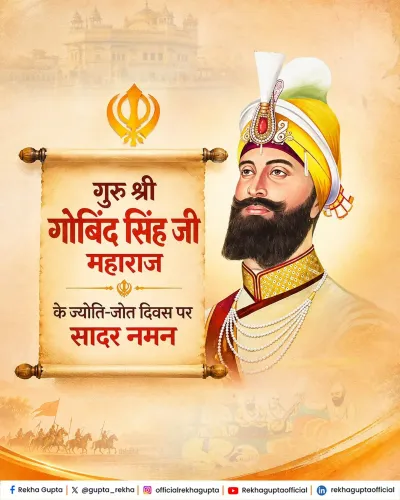
Amit Shah pays tribute on Guru Gobind Singh's Jyoti Jyot Divas
Synopsis
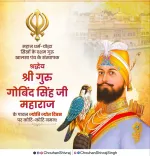
Union Home Minister Amit Shah offered heartfelt tributes to Guru Gobind Singh Ji on Jyoti Jyot Divas, posting in Hindi and Punjabi to honour the Tenth Sikh Guru's unparalleled sacrifice of his entire family and his founding of the Khalsa Panth in 1699 as a pillar of service and defence.
Key Takeaways
Amit Shah paid tribute to Guru Gobind Singh Ji on Jyoti Jyot Divas, 14 November 2026 , posting in both Hindi and Punjabi.
The Guru is referred to as Sarbansadani — one who gave his entire lineage, including his father, mother, and all four sons.
Shah highlighted Guru Gobind Singh's founding of the Khalsa Panth in 1699 , which made Sikhism a powerful pillar of both service and defence.
Jyoti Jyot Divas marks the anniversary of the Guru's passing into eternal light, observed with prayers and kirtan at gurdwaras worldwide.
The tribute described the Guru's sacrifice as an 'unparalleled record of renunciation and dedication' that will guide every generation for eternity.
He gave his father, his mother, and all four sons — and still did not waver. On the occasion of Guru Gobind Singh Ji's Jyoti Jyot Divas on Saturday, 14 November 2026, Union Home Minister Amit Shah paid solemn tribute to the Tenth Sikh Guru, honouring him as the supreme symbol of courage against oppression and injustice.
Posting in both Hindi and Punjabi, Shah offered koti-koti naman (salutations of a million millions) to the Guru, calling him Sarbansadani — the one who gave his entire lineage. The tribute read: 'Even after sacrificing his father, mother and all four sons, he did not deviate from the path of faith and culture. The record of sacrifice and devotion he set is unparalleled.'
Who was 'Sarbansadani' — and why that word carries everything
Guru Gobind Singh Ji, born in 1666, was the Tenth Guru of Sikhism. The title Sarbansadani — literally 'the one who donated his entire clan' — encapsulates perhaps the most agonising chapter of his life: the martyrdom of his father Guru Tegh Bahadur Ji, his mother Mata Gujari Ji, and all four of his sons, the Char Sahibzade, in the struggles against Mughal persecution. Despite that devastating toll, the Guru neither surrendered his faith nor his people.
The Khalsa Panth: service fused with the sword
Shah's tribute also highlighted the founding of the Khalsa Panth in 1699 — a moment that redefined Sikhism as both a spiritual and martial force. By establishing the Khalsa, Guru Gobind Singh transformed a community of devotees into what the Home Minister described as 'a powerful pillar of defence alongside service,' a Panth committed equally to seva (selfless service) and the protection of the weak and the oppressed.
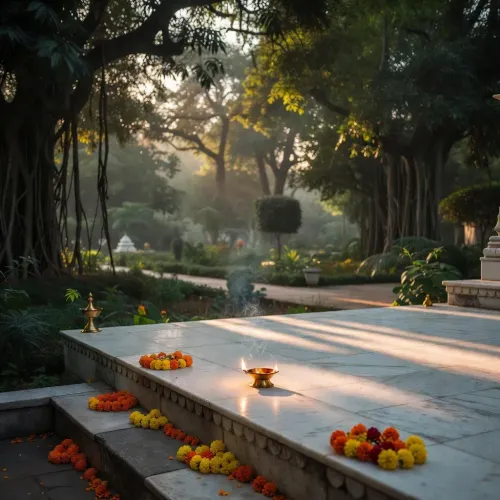
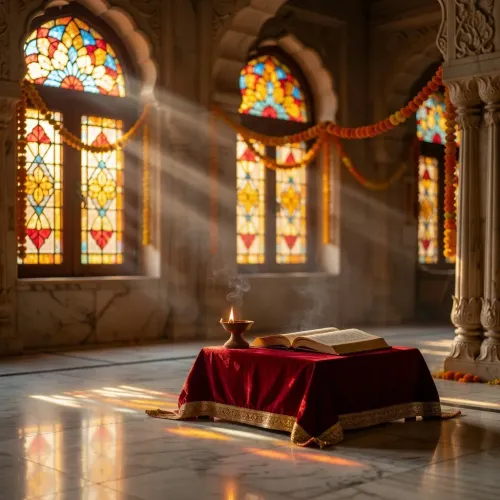
Jyoti Jyot Divas marks the anniversary of the Guru's passing into the eternal light — observed with prayers, kirtan and community gatherings at gurdwaras across India and around the world. The word Jyoti Jyot itself, meaning 'merging of a flame into the eternal flame,' reflects the Sikh theological understanding of the Guru's departure not as death but as continuity.
A tribute rooted in a wider pattern of remembrance
Senior Indian leaders across parties regularly mark the anniversaries of the Sikh Gurus, recognising their role in shaping ideals of social equality, resistance to tyranny, and service to humanity. Shah's post, written in both Hindi and Punjabi, signals an inclusive reach — a gesture toward the Sikh community in its own language of devotion.
The Home Minister closed with a thought that transcended the political moment: 'The life of the Tenth Guru, who offered everything for the protection of humanity, will guide every generation for eternity.'
Courage without survivors, faith without wavering — the Guru's life remains a standard no history can diminish.
Point of View
Particularly significant given Punjab's electoral weight. Shah's invocation of Sarbansadani and the Khalsa's martial ethos resonates beyond ceremony — it frames the BJP's engagement with Sikh identity around themes of sacrifice and national cultural heritage. The tribute fits a broader pattern in which the ruling dispensation seeks to position itself as the inheritor of India's composite spiritual tradition. What it signals, above all, is that anniversaries of the Sikh Gurus remain high-priority moments for top BJP leadership.
NationPress
14 Nov 2026
Frequently Asked Questions
What is Jyoti Jyot Divas of Guru Gobind Singh?
Jyoti Jyot Divas marks the anniversary of Guru Gobind Singh Ji's passing into the eternal light — a day observed with prayers, kirtan and community gatherings at gurdwaras across India and globally. The term 'Jyoti Jyot' reflects the Sikh belief that the Guru's light merged with the divine eternal flame.
Why is Guru Gobind Singh called Sarbansadani?
Guru Gobind Singh Ji is called Sarbansadani — meaning 'one who gave his entire clan' — because he sacrificed his father Guru Tegh Bahadur Ji, his mother Mata Gujari Ji, and all four of his sons (the Char Sahibzade) in defence of faith and justice, yet never abandoned his mission.
When did Guru Gobind Singh found the Khalsa Panth?
Guru Gobind Singh Ji founded the Khalsa Panth in 1699 , establishing a community committed to both selfless service ( seva ) and the martial defence of the oppressed and of faith.
What did Amit Shah say about Guru Gobind Singh on Jyoti Jyot Divas 2026?
Amit Shah posted in Hindi and Punjabi honouring Guru Gobind Singh Ji as a symbol of courage against oppression, praising his founding of the Khalsa Panth and calling his sacrifice of his entire family an 'unparalleled record of renunciation and dedication' that will guide every generation for eternity.
Who are the Char Sahibzade?
The Char Sahibzade are the four sons of Guru Gobind Singh Ji — Baba Ajit Singh, Baba Jujhar Singh, Baba Zorawar Singh, and Baba Fateh Singh — all of whom were martyred in defence of faith during the Guru's lifetime, making their sacrifice central to Sikh history and identity.