Amit Shah Slams Rahul Gandhi's Delhi Event on 1984 Riot Anniversary
Synopsis
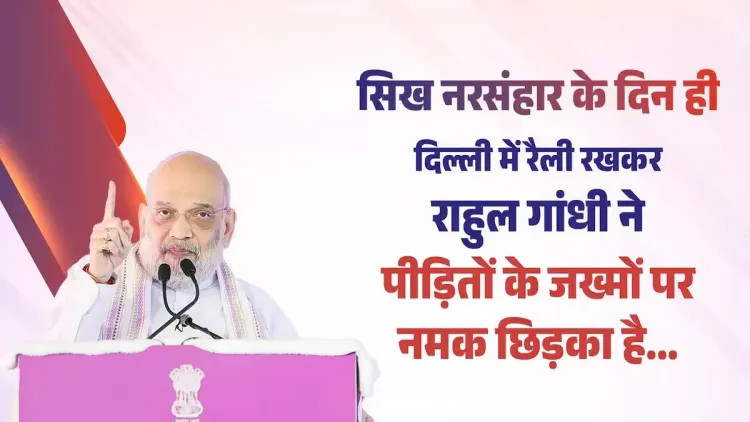
Union Home Minister Amit Shah, on the 42nd anniversary of the 1984 anti-Sikh riots, accused Rahul Gandhi of 'rubbing salt in the wounds' of victim families by holding a festive public event in Delhi on the same date Congress is blamed for the violence.
Key Takeaways
Union Home Minister Amit Shah posted a sharp attack on Rahul Gandhi on 1 November 2026 , the anniversary of the 1984 anti-Sikh riots .
Shah accused Congress of orchestrating the killing of thousands of innocent Sikhs in Delhi on 1 November 1984 .
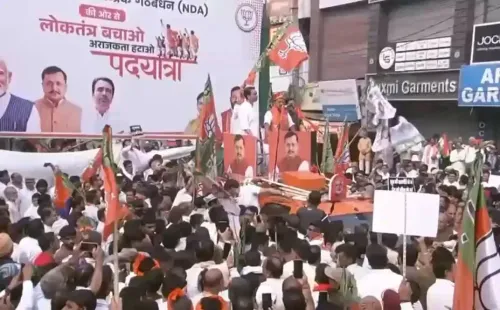
He alleged that Rahul Gandhi holding a public jalsa (celebratory gathering) in Delhi on this date amounted to 'rubbing salt in the wounds' of survivor families.
The Nanavati Commission (2005) documented the role of some Congress leaders and workers in the 1984 violence.
The BJP has consistently cited the 1984 riots to challenge Congress's moral and political record, especially during election seasons.
No formal response from Congress or Rahul Gandhi had been issued at the time of this report.
On the 42nd anniversary of the 1984 anti-Sikh violence, Union Home Minister Amit Shah launched a sharp political broadside on Sunday, 1 November 2026, accusing Rahul Gandhi of inflicting fresh pain on survivors by holding a public event in Delhi on the very date Congress is accused of orchestrating one of independent India's darkest chapters.
In his post on X, Shah wrote: '1 November 1984 ko Congress ne Delhi mein hazaron nirdosh Sikhon ka narsanhar karaya tha' — 'On 1 November 1984, Congress orchestrated the massacre of thousands of innocent Sikhs in Delhi, and today, on that very same date, Rahul Gandhi has held a celebration in Delhi, rubbing salt in the wounds of those victim families.'
The weight of 1 November 1984
The 1984 anti-Sikh riots erupted in Delhi in the immediate aftermath of the assassination of Prime Minister Indira Gandhi on 31 October 1984. Over the days that followed, thousands of Sikh civilians were killed in targeted mob violence across the capital. The Nanavati Commission report of 2005 examined the carnage and documented the involvement of some Congress leaders and workers in instigating and facilitating the violence — a finding that has remained a sore point between the two parties for four decades.
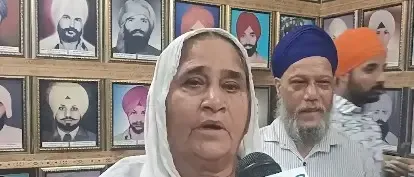
For the Sikh community, November 1 is not a date for festivities. It is a day of mourning, remembrance, and, for many survivor families, unhealed grief. Shah's post frames Rahul Gandhi's Delhi event — described with the word 'jalsa', connoting a festive public gathering — as a deliberate affront to that grief.
BJP's long-running accountability argument
The BJP has consistently deployed the 1984 riots as a central plank in its critique of the Congress party's legacy — invoking it on anniversaries, in Parliament, and on the campaign trail. The charge is structural: that Congress has never fully accepted institutional responsibility for the pogrom despite four decades of judicial and parliamentary scrutiny.
Shah's intervention on this anniversary sharpens that argument by personalising it — directing it not at the party in the abstract, but at Rahul Gandhi, Congress's most prominent face and its de facto political anchor heading into the electoral season. The timing, tone, and target are all deliberate.
Congress yet to respond
As of this report, neither the Indian National Congress nor Rahul Gandhi has publicly responded to Shah's remarks. The party's position on the 1984 riots has evolved over the years — leaders have expressed regret, and Prime Minister Manmohan Singh apologised in Parliament in 2005 — but calls for individual accountability and formal justice from survivor families remain unresolved.
With elections in the air and Delhi as the arena, the 1984 wound is once again a live political flashpoint — and this time, the spark has been struck in real time, not in a campaign rally or a parliamentary speech, but in a Sunday afternoon post that landed like a charge sheet.
Point of View
Rather than the party at large, signals an escalation timed to electoral pressure. By framing a Congress public event as an active insult to grieving families, Shah is not merely invoking history; he is attempting to make it a live moral charge in the present. The BJP's consistent return to 1984 reflects a calculation that the wound remains politically potent, particularly with the Sikh community, and that Congress has never fully neutralised it through apology or accountability. Congress's response — or silence — will be closely watched as a measure of how the party navigates this fault line.
NationPress
1 Nov 2026
Frequently Asked Questions
What happened on 1 November 1984 in Delhi?
On 1 November 1984 , large-scale violence erupted in Delhi targeting the Sikh community in the aftermath of Prime Minister Indira Gandhi's assassination on 31 October 1984. Thousands of Sikh civilians were killed in mob attacks. The Nanavati Commission (2005) found evidence implicating some Congress leaders and workers in inciting the violence.
What did Amit Shah say about Rahul Gandhi on 1 November 2026?
Union Home Minister Amit Shah posted on X accusing Rahul Gandhi of holding a festive public event ( jalsa ) in Delhi on the anniversary of the 1984 anti-Sikh riots , calling it an act of 'rubbing salt in the wounds' of victim families.
What did the Nanavati Commission find about the 1984 riots?
The Nanavati Commission , which submitted its report in 2005 , examined the 1984 anti-Sikh violence and noted the role of some Congress leaders and workers in instigating the attacks, making it a major reference point in the ongoing political debate over accountability.
Has Congress apologised for the 1984 Sikh riots?
Then Prime Minister Manmohan Singh apologised in Parliament in 2005 for the 1984 violence, saying he felt 'ashamed.' However, survivor families and political opponents, including the BJP , have continued to demand stronger individual accountability and formal justice.
Why does the BJP keep bringing up the 1984 Sikh riots?
The BJP has made the 1984 anti-Sikh riots a recurring political argument to challenge Congress 's moral legacy and its claim to represent minority communities. The issue is especially prominent around anniversaries and during election campaigns, when the party invokes it to question Congress's accountability.