Amit Shah: UP-made BrahMos, Amethi AK-203 keeping enemies awake
Synopsis
Union Home Minister Amit Shah credited Uttar Pradesh's defence manufacturing base — BrahMos missiles and Amethi-produced AK-203 rifles — as active deterrents against Pakistan and internal armed groups, signalling Atmanirbhar Bharat's operational impact across both external and internal security fronts.
Key Takeaways
Amit Shah cited BrahMos missiles made in Uttar Pradesh as a deterrent that 'keeps Pakistan awake at night.' The AK-203 assault rifle produced at the Indo-Russia Rifles Private Limited plant in Amethi was credited with already rattling Naxalites and terrorists.
Uttar Pradesh's Defence Industrial Corridor was one of two such corridors announced in the 2018 Union Budget (the other in Tamil Nadu).
The AK-203 factory in Amethi was established under a 2019 Indo-Russian inter-governmental agreement as part of the Make in India programme.
Shah's remarks frame UP's corridor as delivering both conventional deterrence against a state adversary and counter-insurgency capability internally.
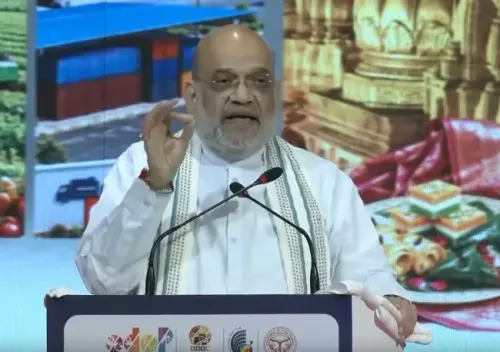
Two weapons, one state, and a pointed message — Union Home Minister Amit Shah on Friday, 25 September 2026 invoked Uttar Pradesh's defence manufacturing credentials in a single sharp line that named both a supersonic missile and an assault rifle as instruments of deterrence, external and internal alike.
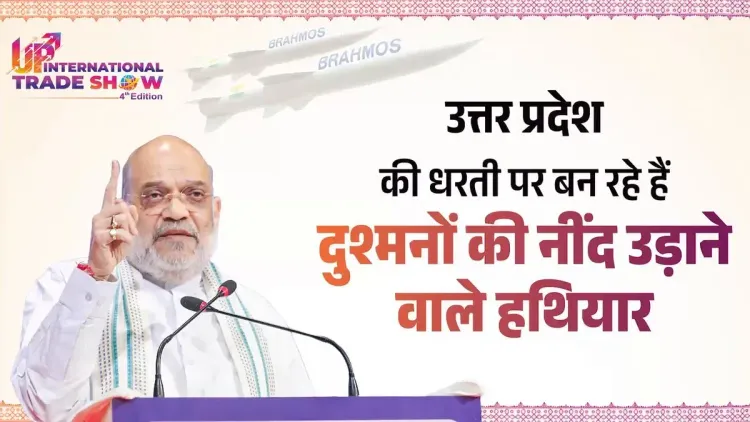
Shah wrote in Hindi: 'Uttar Pradesh mein bane BrahMos Pakistan ki neend ura dete hain aur Amethi mein bani AK-203 assault rifle naxaliyon va aatankiyon ki neend ura chuki hai' — ('The BrahMos missiles made in Uttar Pradesh keep Pakistan awake at night, and the AK-203 assault rifle made in Amethi has already shattered the sleep of Naxalites and terrorists.')
BrahMos in UP: the missile behind the message
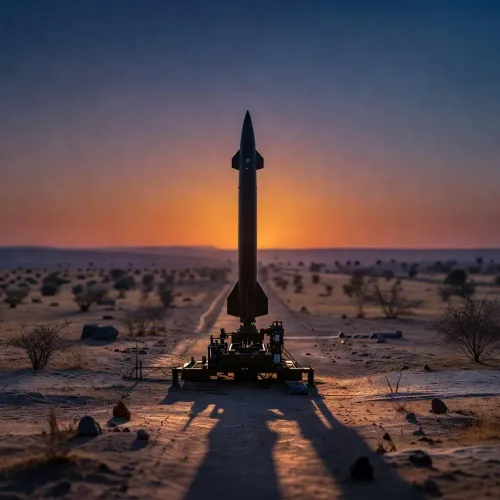
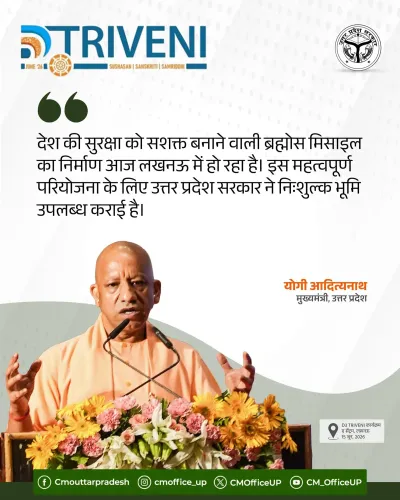
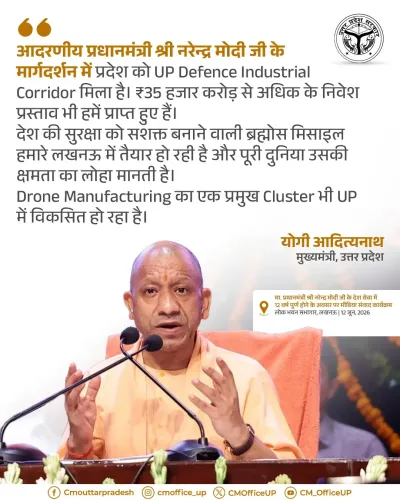
BrahMos is an Indo-Russian joint venture that produces the world's fastest in-service supersonic cruise missile. Its production infrastructure is linked to Uttar Pradesh's Defence Industrial Corridor, one of two such corridors — the other in Tamil Nadu — announced in the 2018 Union Budget to anchor domestic arms manufacturing. The corridor was designed to draw both public-sector units and private players into a single integrated supply chain, with BrahMos emerging as its marquee tenant.
The missile's range, speed, and precision have made it a centrepiece of India's conventional deterrence posture along its western front — and Shah's reference to 'Pakistan's lost sleep' lands squarely in that strategic register.
The AK-203 factory in Amethi: Make in India's small-arms milestone
The second weapon Shah cited carries equal symbolic weight on the internal-security front. The AK-203 assault rifle — a modernised variant of the Kalashnikov family — is manufactured at the Indo-Russia Rifles Private Limited plant in Amethi, Uttar Pradesh, under a licence-production deal finalised through an inter-governmental agreement signed in 2019. The factory was set up under the Make in India programme specifically to equip Indian armed forces and paramilitary units with a domestically produced, battle-proven platform.
By pairing the AK-203 with Naxalites and cross-border terrorists in the same breath, the Home Minister frames the rifle as both a counter-insurgency tool and a symbol of the state's reach into the country's most volatile conflict zones.
Atmanirbhar Bharat's dual-threat dividend
The broader arc Shah is drawing on is India's Atmanirbhar Bharat drive in defence — a policy push to cut import dependence by scaling domestic production across missiles, small arms, and platforms. Uttar Pradesh's corridor has been positioned as the northern anchor of that ambition, housing strategic systems that address threats at both ends of the security spectrum: state-level conventional deterrence and ground-level counter-insurgency.
What makes the Home Minister's framing notable is the deliberate pairing: a missile that signals to a neighbouring adversary, and a rifle that has already been deployed against internal armed groups. The message is not just industrial — it is operational. UP's defence corridor, Shah is saying, is already delivering results on both fronts.
Whether that claim prompts a fresh push for production-capacity disclosures or parliamentary updates on indigenisation timelines is the next thing to watch — because in Indian defence policy, the gap between aspiration and audit has always been where the real story lives.
Point of View
One aimed inward — and anchors both to Uttar Pradesh, a politically significant state the BJP has consistently showcased as a model for its governance and economic agenda. By invoking operational outcomes ('has already shattered sleep') rather than just policy intent, he shifts the discourse from aspiration to claimed delivery, a register that will be tested as parliamentary scrutiny of indigenisation targets intensifies. The pairing of Pakistan and Naxalites in one sentence also signals a unified 'threats to India' framing that serves both the Home Ministry's internal-security brief and the BJP's broader electoral positioning. Expect the opposition to probe production-volume data and deployment figures to contest or validate those claims.
NationPress
25 Sept 2026
Frequently Asked Questions
Where is the BrahMos missile manufactured in Uttar Pradesh?
BrahMos production infrastructure is linked to Uttar Pradesh's Defence Industrial Corridor, one of two such corridors announced in the 2018 Union Budget to drive domestic arms manufacturing.
Where is the AK-203 assault rifle made in India?
The AK-203 is manufactured at the Indo-Russia Rifles Private Limited plant in Amethi, Uttar Pradesh, set up under a 2019 Indo-Russian inter-governmental agreement as part of the Make in India programme.
What is India's Defence Industrial Corridor in Uttar Pradesh?
It is a government-designated zone in Uttar Pradesh, announced in the 2018 Union Budget alongside a second corridor in Tamil Nadu, designed to cluster defence manufacturers — public and private — to reduce India's dependence on imported arms.
What did Amit Shah say about BrahMos and Pakistan?
Shah wrote in Hindi that 'BrahMos missiles made in Uttar Pradesh keep Pakistan awake at night,' framing the missile as a conventional deterrent produced on Indian soil.
What is the AK-203 rifle used for in India?
The AK-203 is a modernised Kalashnikov-variant intended to equip Indian armed forces and paramilitary units; the Home Minister specifically cited its role in counter-insurgency operations against Naxalites and terrorists.