Amit Shah vows drug-free India by Dec 31, 2029
Synopsis
Union Home Minister Amit Shah has pledged to make India drug-free by December 31, 2029, placing state police forces at the centre of the campaign. The declaration extends the Nasha Mukt Bharat Abhiyan's mandate with a hard deadline, raising the stakes for national enforcement coordination.
Key Takeaways
Union Home Minister Amit Shah set a firm deadline of December 31, 2029 for making India drug-free.
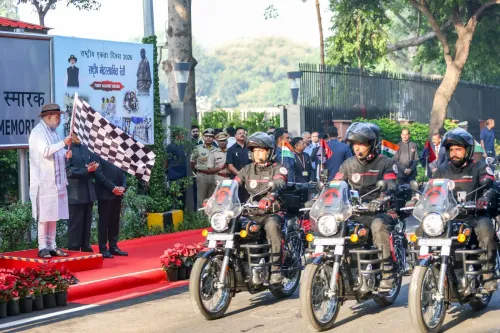
State and national police forces are named as the primary instruments of this campaign.
The pledge builds on the Nasha Mukt Bharat Abhiyan , launched in 2020 , which combined awareness and enforcement across high-vulnerability districts.
The foundational legal framework remains the Narcotic Drugs and Psychotropic Substances Act of 1985 .
The Narcotics Control Bureau's annual reports will serve as key benchmarks for measuring progress against the 2029 target.
The deadline links drug control to broader internal security priorities including border management and organised crime.
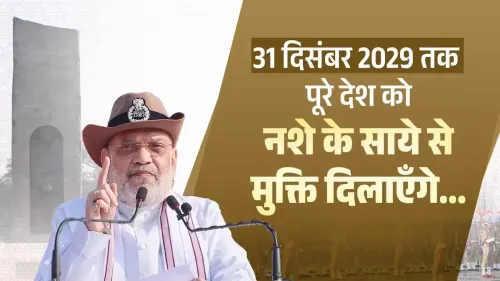
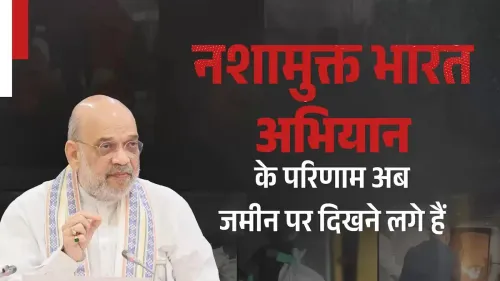
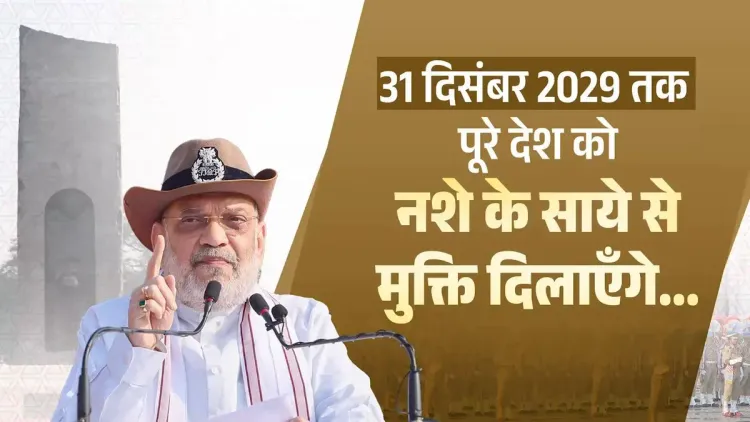
A deadline has been set — and it is specific enough to be held to. Union Home Minister Amit Shah declared on Wednesday, October 21, 2026 that India will be freed from the shadow of drugs by December 31, 2029, with the nation's police forces driving the campaign from the front.
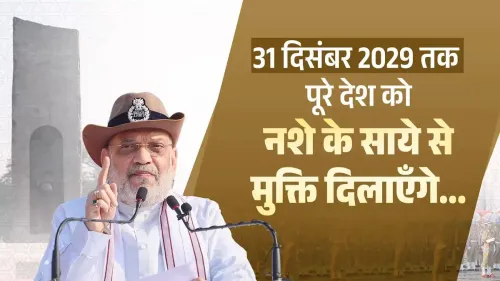
In his post, Shah wrote: 'Deshbhar ki police ki madad se 31 December 2029 tak pure desh ko nashe ke saaye se mukt karenge' — ('With the help of police forces across the country, we will free the entire nation from the shadow of drugs by December 31, 2029.')
Why police coordination sits at the centre of this pledge
The Home Ministry's framing is deliberate. Drug enforcement in India is a shared battlefield — state police handle street-level seizures, while central agencies track smuggling networks and border flows. Shah, who oversees both internal security architecture and coordination with state forces, has consistently positioned narcotics control as an organised-crime and border-management issue, not merely a public-health one.
The Narcotic Drugs and Psychotropic Substances (NDPS) Act of 1985 remains the foundational legal instrument, but enforcement gaps have persisted for decades. The Nasha Mukt Bharat Abhiyan, launched in 2020, built a multi-ministry framework combining awareness drives with enforcement, particularly targeting districts identified as high-vulnerability zones. Shah's 2029 deadline now attaches a hard terminus to that ongoing effort.
The weight of a named year
Putting a calendar date on a social objective is a governance bet. It sharpens accountability — the Narcotics Control Bureau's annual seizure reports, state-level action plans, and rehabilitation data will all be read against this benchmark going forward. It also signals to state governments and their police leaderships that the Centre expects measurable progress, not just periodic drives.
Drug trafficking has remained one of the most persistent internal security challenges, with supply corridors linked to India's borders — particularly the northwest and northeast — feeding both urban and rural markets. Coordinating dozens of state police forces toward a single, time-bound outcome will require institutional alignment well beyond awareness campaigns.
What the 2029 clock means in practice
Three years and roughly two months remain on Shah's clock. The watch items are clear: seizure volumes tracked by the NCB, the pace at which states align their anti-narcotics units with central directives, and whether new legislative or operational mechanisms emerge to give the deadline enforcement muscle. A target stated at this level of specificity, by the minister who controls the Home Ministry's operational levers, will be difficult to quietly retire.
India's drug-free ambition has been declared before. The difference this time is the name, the date, and the institution — the country's police forces — placed squarely in the frame.
Point of View
It positions the BJP's internal security record ahead of what will be an election-proximate period by late 2029. Substantively, the emphasis on police coordination reflects a Home Ministry philosophy that treats drug trafficking as a law-and-order continuum rather than a standalone public-health problem. The real test will be whether institutional mechanisms — joint operations, data-sharing, rehabilitation infrastructure — are built to match the rhetoric of the deadline.
NationPress
21 Oct 2026
Frequently Asked Questions
What did Amit Shah say about making India drug-free?
Amit Shah declared that with the help of police forces across the country, the entire nation will be freed from the shadow of drugs by December 31, 2029.
What is the Nasha Mukt Bharat Abhiyan?
Nasha Mukt Bharat Abhiyan is a nationwide campaign launched in 2020 to combat drug abuse in India, combining public awareness drives with active law enforcement across districts identified as high-vulnerability zones.
Which law governs drug offences in India?
The Narcotic Drugs and Psychotropic Substances (NDPS) Act of 1985 is the primary legislation regulating and penalising drug-related offences in India.
Who is responsible for drug enforcement in India?
Drug enforcement is a shared responsibility between state police forces, which handle local seizures, and central agencies such as the Narcotics Control Bureau, which tracks larger trafficking networks and border-linked supply routes.
How will progress toward a drug-free India be measured?
Annual reports from the Narcotics Control Bureau on seizure trends, along with state-level action plans and rehabilitation data, are expected to serve as key benchmarks against the 2029 deadline set by the Home Minister.