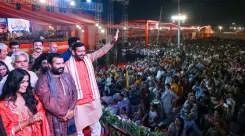
Amrit Prayas Conclave: Unlocking 'Middle India' investment potential
Synopsis
At an invitation-only conclave in New Delhi, policymakers and industry leaders made the case that India's next growth frontier is not its megacities but its overlooked districts. The Amrit Prayas model — built around Deoria — positions participatory, data-driven district development as a blueprint that could be replicated nationwide.
Key Takeaways
The Amrit Prayas Conclave was held on 6 June at Shangri-La, New Delhi , focusing on investment in 'Middle India' districts.
Shashank Mani , MP from Deoria , outlined a district-centric development framework aligned with the Viksit Bharat vision and 'Sabka Prayas' principle.
A panel titled 'Investment in Middle India' examined how Centre-state coordination can reduce investment risk in emerging districts.
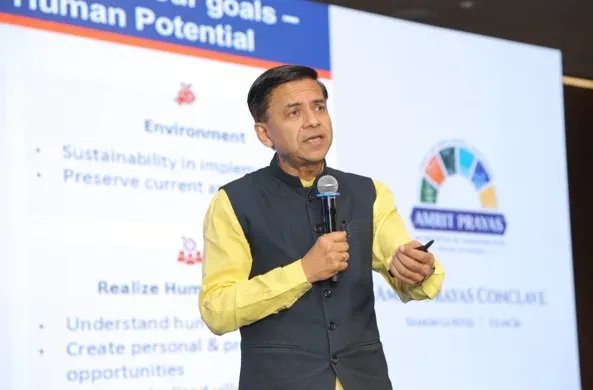
Saurabh Garg , Secretary, MoSPI , stressed data-driven governance and private-sector participation as key to local development outcomes.
The initiative spans sectors including healthcare, tourism, education, skilling, manufacturing, and agriculture.
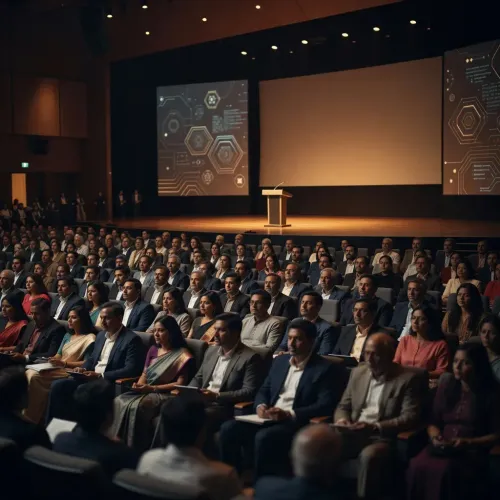
Senior leaders from industry, government, and policy institutions convened at Shangri-La, New Delhi, on 6 June for the Amrit Prayas Conclave, an invitation-only forum that placed India's long-overlooked districts — collectively termed 'Middle India' — at the centre of the country's investment and development agenda. The gathering marked a significant push to redirect capital and policy attention toward district-level growth engines beyond India's metropolitan corridors.
The Initiative and Its Vision
Organised under Amrit Prayas, a decade-long economic development initiative anchored to the Deoria Lok Sabha constituency, the conclave brought together corporate leaders, policymakers, and institutional stakeholders spanning healthcare, tourism, education, skilling, manufacturing, and agriculture. The central focus was on designing strategies to unlock district-level growth and build replicable sustainable development models.
Delivering the Vision Address, Shashank Mani, Member of Parliament from Deoria, outlined a district-centric development framework aligned with Prime Minister Narendra Modi's vision of Viksit Bharat and the principle of 'Sabka Prayas' — collective effort as the foundation of national transformation. He described Amrit Prayas as a structured platform enabling government, industry, and citizens to co-create economic growth and social progress.
What the MP Said
Mani noted that sustained efforts to improve infrastructure, enhance ease of doing business, and promote balanced regional development — backed by both the Central Government and the Uttar Pradesh Government — have created favourable conditions for districts such as Deoria to emerge as new engines of growth.
Emphasising the importance of janbhagidari (people's participation), he argued that the initiative's success depends on active community involvement — from farmers adopting modern agricultural practices and youth engaging in skilling programmes to local stakeholders shaping development outcomes.
'This is not growth delivered to a district; it is growth built with the district,' Mani said, highlighting a deliberate shift from beneficiary-based development models toward participatory, locally driven frameworks.
Panel Discussion: Investment in Middle India
A key highlight of the evening was a panel discussion titled 'Investment in Middle India', featuring industry and government leaders Masoom Ali Sarwar, William Bessel, J.D. Giri, and Sheetal Arora. The discussion examined how coordinated Centre-state efforts can reduce investment risks in emerging districts, and how policy support, infrastructure development, and local implementation capacity can together create attractive investment destinations.
Government's Data-Driven Governance Push
Delivering special remarks, Saurabh Garg, IAS, Secretary, Ministry of Statistics and Programme Implementation (MoSPI), underscored the crucial role of districts in achieving India's long-term economic aspirations. He highlighted the importance of data-driven governance, institutional convergence, and private-sector participation in translating national development goals into tangible local outcomes, noting that initiatives such as Amrit Prayas can serve as important catalysts in this process.
This comes amid a broader national conversation about inclusive growth, with policymakers increasingly acknowledging that India's aggregate GDP targets cannot be met without activating the economic potential of its hundreds of smaller districts. The Amrit Prayas model — if it scales — could inform how future constituency-level development initiatives are structured across the country.
Point of View
But constituency-led development initiatives have historically struggled to outlast electoral cycles. The real test is whether the participatory framework Mani describes can be institutionalised — and whether MoSPI's data infrastructure will be deployed to measure outcomes rather than just activities. Without that accountability layer, 'Middle India' risks becoming another aspirational phrase in a long line of regional development slogans.
NationPress
21 Oct 2026
Frequently Asked Questions
What is the Amrit Prayas Conclave?
The Amrit Prayas Conclave is an invitation-only forum organised under Amrit Prayas, a decade-long economic development initiative for the Deoria Lok Sabha constituency. It brings together industry leaders, policymakers, and institutional stakeholders to discuss strategies for district-level growth across sectors including healthcare, manufacturing, and agriculture.
Who is behind the Amrit Prayas initiative?
The initiative is led by Shashank Mani, Member of Parliament from Deoria, and draws institutional backing from both the Central Government and the Uttar Pradesh Government. It is designed as a structured platform for government, industry, and citizens to co-create local economic and social progress.
What is 'Middle India' in the context of this conclave?
'Middle India' refers to India's smaller, long-overlooked districts that lie outside the country's major metropolitan centres. The conclave positions these districts as untapped growth engines whose development is essential to achieving national targets such as Viksit Bharat.
What role did the MoSPI Secretary play at the conclave?
Saurabh Garg, IAS, Secretary of the Ministry of Statistics and Programme Implementation, delivered special remarks emphasising data-driven governance, institutional convergence, and private-sector participation as critical tools for converting national development goals into local outcomes.
How does the Amrit Prayas model differ from traditional development programmes?
Unlike conventional beneficiary-based models where development is delivered to communities, Amrit Prayas emphasises participatory, locally driven growth — involving farmers, youth, and local stakeholders as active co-creators. MP Shashank Mani summarised this as 'growth built with the district, not delivered to it.'