Maha Navami 2026: Animal sacrifice continues at Tripura's Durgabari temple under court rules
Synopsis
At Agartala's Durgabari temple — tied to the Manikya royal dynasty since 1949's merger agreement — a buffalo and goats were sacrificed on Maha Navami 2026 under court-mandated safeguards. The ritual survived a 2019 Tripura High Court ban (stayed by the Supreme Court) and an administrative suspension, making its continuation this year a marker of how deeply royal-era religious customs remain embedded in Tripura's state apparatus.
Key Takeaways
A buffalo and several goats were sacrificed at Durgabari temple , Agartala , on Maha Navami, 20 October 2026 .
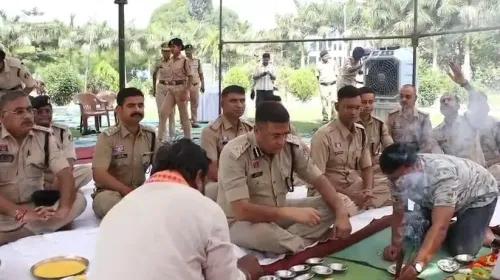
The ritual was conducted under the supervision of West Tripura District Magistrate Vishal Kumar , with the site covered from public view and hygiene protocols observed.
The 150-year-old Durga Puja is organised by the West Tripura district administration on behalf of the former Manikya dynasty .
A Tripura High Court ban on animal sacrifice in 2019 was subsequently stayed by the Supreme Court , with restrictions imposed.
A 1949 merger agreement between Maharani Kanchan Prabha Devi and Indian authorities protects certain royal religious traditions.
On Vijaya Dashami , police will present a guard of honour and the holy pitcher will be escorted to Ujjayanta Palace for the farewell ceremony.
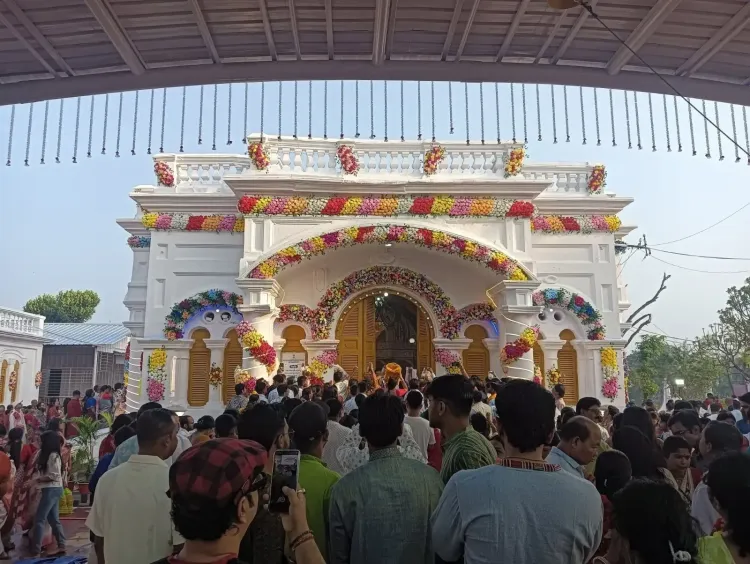
A buffalo and several goats were sacrificed at the historic Durgabari temple in Agartala on Tuesday, 20 October, as part of Maha Navami rituals during Durga Puja, continuing a century-old tradition linked to Tripura's former Manikya dynasty. The ritual was conducted under the direct supervision of the West Tripura district administration, which put in place measures to comply with directions issued by the courts.
How the ritual was conducted
The animal sacrifice site was covered to prevent public viewing, with district administration officials specifically ensuring that children could not witness the proceedings. Hygiene protocols and prescribed procedural norms were maintained throughout.
West Tripura District Magistrate Vishal Kumar confirmed that all judicial directions had been adhered to. 'All directions issued by the court have been followed. The premises have been covered, proper hygiene has been maintained, and healthy animals are brought for sacrifice in accordance with the prescribed protocols,' Kumar said.
A tradition backed by centuries of royal custom
Head priest Jayanta Bhattacharjee described animal sacrifice as an inseparable part of Maha Navami worship at the temple. 'We have a century-old tradition of sacrificing animals to Goddess Durga on the day of Maha Navami as part of the worship. The ritual was conducted at a site concealed from public view. In fact, worshipping of Goddess Durga will remain incomplete without animal sacrifice,' he said.
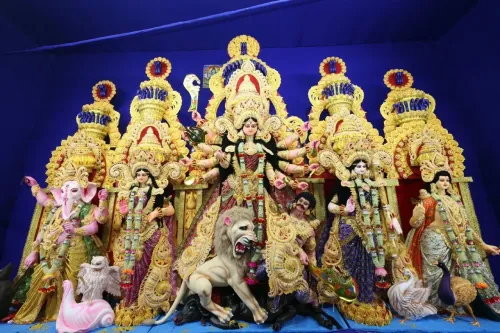
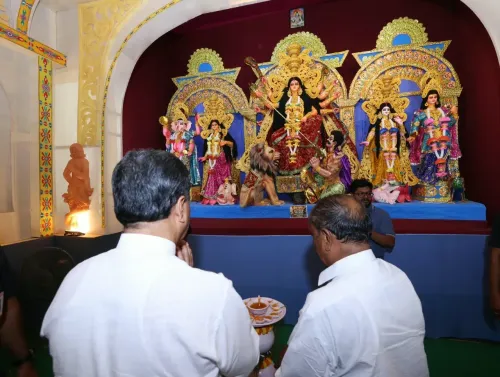
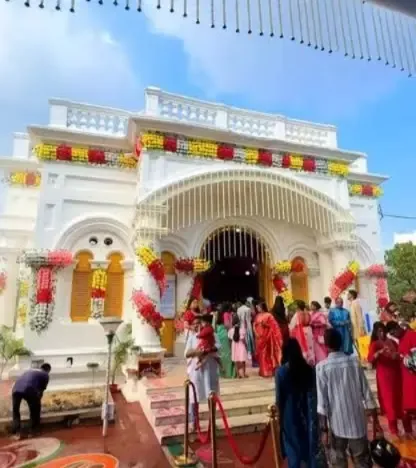
The 150-year-old Durga Puja at Durgabari temple, located near the magnificent Ujjayanta Palace — the former royal residence — draws thousands of devotees each year, including visitors from across India and neighbouring Bangladesh. The Durga Puja itself is organised by the West Tripura district administration on behalf of the former royal family.
The legal backdrop
The practice of animal sacrifice at Tripura's temples came under judicial scrutiny in 2019, when a division bench of the Tripura High Court banned animal and bird sacrifices at religious institutions, including the revered Tripura Sundari temple in Gomati district, southern Tripura. The Supreme Court subsequently stayed the High Court's order following a petition, while imposing certain restrictions on the practice.
The sacrifice ritual at Durgabari had also been suspended for a period for administrative reasons before resuming two years ago, according to officials. This year's resumption represents the continuation of a tradition that has survived legal challenges, administrative interruptions, and changing political governments.
Cultural and historical significance
Historian and writer Panna Lal Roy noted that government support for worship at temples associated with the former royal family has remained uninterrupted across successive Left and non-Left administrations in the state. He pointed to the merger agreement signed in 1949 between Maharani Kanchan Prabha Devi, the then regent, and Indian authorities, which provided for the continuation of certain royal religious customs.
The temple's rituals reflect cultural and religious traditions shared by both Bengali and tribal communities in Tripura, officials noted. Bhattacharjee added that offerings at the temple are governed entirely by devotee donations and religious practice, with no restriction on meat or fish. 'We offer Goddess Durga whatever devotees donate or sacrifice at the temple. There is no bar on meat and fish here,' he said.
What follows on Vijaya Dashami
On Wednesday, the day of Vijaya Dashami, the police are scheduled to present a formal guard of honour to Goddess Durga at the temple in the early morning. The holy pitcher will then be escorted to Ujjayanta Palace, where members of the erstwhile royal family will bid farewell to the deity, marking the close of the Durga Puja observances for the year.
Point of View
Which benefits neither animal welfare advocates nor temples seeking clarity. Until the apex court delivers a definitive ruling, every Maha Navami will arrive with the same procedural uncertainty.
NationPress
21 Oct 2026
Frequently Asked Questions
What happened at Durgabari temple on Maha Navami 2026?
A buffalo and several goats were sacrificed at the Durgabari temple in Agartala on 20 October 2026 as part of Maha Navami rituals during Durga Puja. The ritual, continuing a century-old tradition linked to Tripura's former Manikya royal family, was supervised by the West Tripura district administration under court-mandated restrictions.
Is animal sacrifice at Tripura temples legal?
The legal status remains contested. The Tripura High Court banned animal and bird sacrifice at religious institutions in 2019, but the Supreme Court subsequently stayed that order following a petition, while imposing certain restrictions. The practice is therefore technically permitted under those Supreme Court conditions, pending a final ruling.
What precautions were taken during the sacrifice ritual?
The sacrifice site was covered to prevent public viewing, particularly by children. District Magistrate Vishal Kumar confirmed that hygiene protocols were maintained and only healthy animals were used, in compliance with all directions issued by the court.
What is the historical significance of Durgabari temple?
The Durgabari temple in Agartala is associated with the erstwhile Manikya dynasty, which ruled Tripura before the 1949 merger with India. The 150-year-old Durga Puja there is now organised by the West Tripura district administration on behalf of the former royal family, and a 1949 merger agreement provides for the continuation of certain royal religious customs.
What are the Vijaya Dashami rituals at Durgabari temple?
On Vijaya Dashami, the day following Maha Navami, police are scheduled to present a formal guard of honour to Goddess Durga at the temple early in the morning. The holy pitcher will then be escorted to Ujjayanta Palace, where members of the erstwhile royal family will perform the traditional farewell to the deity.