Anurag Thakur champions India's heritage tourism and #WedInIndia push
Synopsis
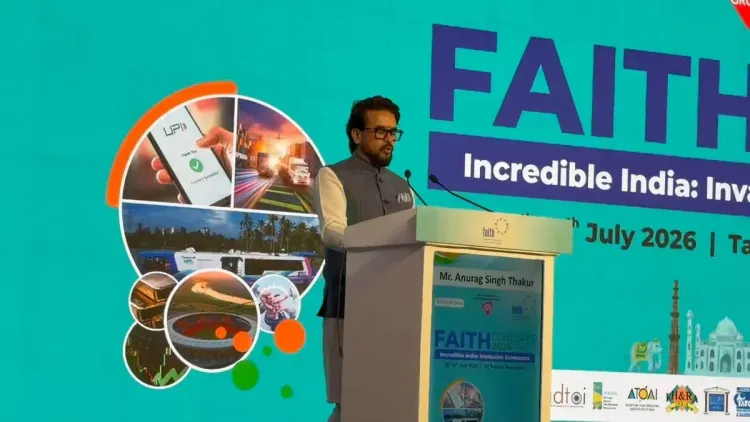
BJP MP Anurag Thakur has backed India's cultural tourism potential, invoking Atithi Devo Bhava and citing Kumbh Mela logistics, the global yoga industry, and PM Modi's #WedInIndia campaign as evidence that heritage is India's greatest economic asset.
Key Takeaways
BJP MP Anurag Thakur posted from New Delhi on 19 July 2026 championing India's cultural and spiritual tourism credentials.
He cited Vrindavan , Ujjain , and the Himalayas as global draws for visitors seeking peace, knowledge, and spiritual fulfilment.
Thakur referenced the construction of a temporary Kumbh city and a global yoga industry to argue that heritage is India's 'greatest economic asset'.
He endorsed PM Modi's #WedInIndia call, describing a 'massive shift' toward domestic celebration of milestones.
The UN International Day of Yoga , declared on 21 June following an Indian resolution in 2014 , underpins India's global wellness branding strategy.
Formal policy details for #WedInIndia incentives and next Kumbh preparatory timelines remain to be announced.
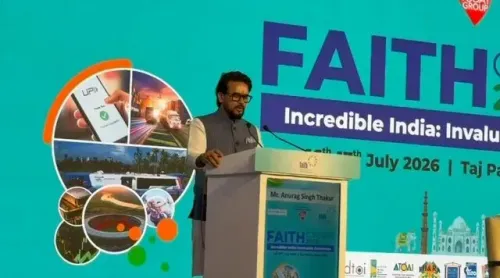
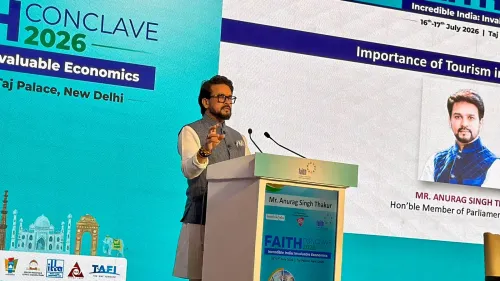
BJP MP Anurag Thakur on Sunday, 19 July 2026, invoked the ancient Indian principles of Atithi Devo Bhava (the guest is god) and Padharo Mhare Desh (welcome to my land) to make a case for positioning India's cultural and spiritual heritage as a major economic driver, anchoring his argument in spiritual tourism, the Kumbh Mela's infrastructure scale, the global yoga movement, and the emerging #WedInIndia campaign championed by Prime Minister Narendra Modi.
Context
Thakur, the Lok Sabha MP from Hamirpur, Himachal Pradesh and former Union Minister of Information and Broadcasting, posted from New Delhi, framing India's hospitality tradition as both a civilisational identity and an untapped commercial opportunity. He cited Vrindavan in Uttar Pradesh, Ujjain in Madhya Pradesh, and the Himalayas as magnets drawing global visitors in search of peace, knowledge, and spiritual fulfilment. 'People from across the world come to India seeking peace, knowledge, and spiritual fulfillment,' he wrote, noting that the principle of Atithi Devo Bhava underpins an 'unmatched' hospitality culture.
The post comes amid a sustained governmental push to convert India's spiritual and heritage circuits into high-value tourism corridors. Religious sites such as the Mahakaleshwar temple in Ujjain and the Krishna pilgrimage town of Vrindavan have seen significant infrastructure investment in recent years, part of a broader effort to upgrade the visitor experience at India's most-visited sacred destinations.
Policy Backdrop
Thakur pointed to the construction of a temporary city for the Kumbh Mela — one of the world's largest human gatherings — as evidence of India's logistical and cultural ambition, describing the feat as building an entire city 'in just 45 days.' The Kumbh Mela, held periodically at sites including Prayagraj and Ujjain, requires vast temporary infrastructure spanning roads, utilities, sanitation, and accommodation for tens of millions of pilgrims.
On yoga, Thakur referenced a '$100 billion global Yoga industry', framing India's role as the originator of the practice as a strategic economic asset. The United Nations General Assembly declared 21 June as the International Day of Yoga in 2014 following an Indian resolution, a diplomatic milestone the government has used to anchor its global wellness branding. Thakur described heritage as India's 'greatest economic asset,' a formulation that aligns with the government's broader cultural-economy thesis.
Stakeholders and Impact
The post's most forward-looking element is its endorsement of the #WedInIndia initiative, which Thakur attributed to a call by Prime Minister Modi. The campaign targets the high-value destination-wedding market, encouraging Indian families to hold milestone celebrations domestically rather than at overseas venues. Thakur described this as 'a massive shift towards celebrating our milestones right here at home,' signalling that the initiative is gaining visible political momentum.
The tourism and hospitality sectors stand to benefit most directly. Destination weddings are a high-spend category, drawing on catering, accommodation, travel, décor, and entertainment services, and retaining even a fraction of ceremonies currently held abroad could translate into significant revenue for domestic businesses. Cultural and spiritual tourism similarly feeds a wide supply chain from local guides and priests to hotel chains and airlines.
What's Next
Formal policy instruments underpinning #WedInIndia — such as incentives, visa facilitation for foreign guests, or dedicated tourism ministry guidelines — are yet to be publicly detailed, and parliamentary or ministry-level announcements will be closely watched. Preparatory timelines for the next Kumbh Mela cycle will also test the government's stated ability to deliver large-scale temporary infrastructure. Thakur's post signals that cultural and spiritual tourism will remain a recurring political and policy talking point as India seeks to diversify its economic growth story beyond manufacturing and services.
Point of View
Framing ancient hospitality principles as contemporary policy instruments rather than mere symbolism. By linking Kumbh logistics, yoga diplomacy, and destination weddings under a single economic thesis, he is reinforcing the BJP's effort to convert civilisational identity into measurable GDP contribution. The #WedInIndia reference is particularly pointed — it positions domestic celebration as patriotic consumption, a framing that could gain traction ahead of any formal policy rollout. Taken together, the post reflects a broader pattern in which senior BJP figures use social media to build public consensus around cultural-economy ideas before they crystallise into legislation or scheme launches.
NationPress
20 Jul 2026
Frequently Asked Questions
What is the #WedInIndia campaign?
#WedInIndia is an initiative promoted by Prime Minister Narendra Modi encouraging Indian families to hold weddings and milestone celebrations within India rather than at overseas venues, aiming to retain high-value spending in the domestic economy.
What did Anurag Thakur say about Indian tourism?
Anurag Thakur said India's tourism is rooted in two principles — Atithi Devo Bhava and Padharo Mhare Desh — and argued that spiritual destinations like Vrindavan, Ujjain, and the Himalayas, combined with Kumbh Mela infrastructure and the global yoga industry, make heritage India's greatest economic asset.
What is Atithi Devo Bhava?
Atithi Devo Bhava is a Sanskrit phrase meaning 'the guest is god.' It is a foundational principle of Indian hospitality culture and has been adopted as the tagline for India's official tourism promotion efforts.
Why is the Kumbh Mela significant for Indian tourism?
The Kumbh Mela is one of the world's largest religious gatherings, drawing tens of millions of pilgrims to sites such as Prayagraj and Ujjain. Its organisation requires large-scale temporary infrastructure and showcases India's logistical capacity for mass religious tourism.
When was International Day of Yoga declared?
The United Nations General Assembly declared 21 June as the International Day of Yoga in 2014, following a resolution proposed by India, cementing the country's role as the global home of yoga.